

Field: Topic Analysis (Rich Text)
H2 Topic Analysis
Topic: SEO content
Target Audience: Content marketers, SEO specialists, digital marketing teams, small business owners, agencies
Content Opportunity: There is high demand for practical, actionable guidance on creating and optimizing content that ranks. The topic can stand out by offering a clear framework, templates, and how-to steps aligned with search intent and on-page optimization practices, drawing from authoritative sources such as Google’s SEO Starter Guide, Backlinko, WordStream, and Yoast. For Singapore/SEA, the opportunity includes addressing mobile-first behavior, multilingual considerations, local keyword strategies, and resource constraints common to SMEs and mid-market brands.
This piece positions SEO content as a disciplined, operations-first playbook that blends human creativity with AI-enabled workflows. It uses neutral, third-person tone and highlights Singapore/SEA realities (regional search behavior, localisation, multilingual contexts, and lean teams) to ensure practitioners can operationalize concepts quickly and effectively.
Field: Optimized Title (Rich Text)
H2 Optimized Title
The Power of Content that Ranks: A Practical Guide to Planning, Writing, and Optimizing for Search
Field: Article Type (Rich Text)
H2 Article Type
New
Field: Foundations (Rich Text)
H2 Foundations: what SEO CONTENT means and why it matters for ranking
SEO content is content crafted to fulfill user intent while signaling quality and relevance to search engines. It is not only about keyword usage; it is about delivering value in a way that search engines can understand and rank. Foundational sources—Google’s SEO Starter Guide, Backlinko, WordStream, and Yoast—emphasize that successful SEO content:
- Serves users first: depth, usefulness, and clarity beat superficial optimization.
- Reflects search intent: content should align with informational, navigational, commercial, or transactional aims.
- Is well structured and crawlable: clear headings, logical order, and accessible metadata help both readers and crawlers.
- Maintains mobile-friendliness and fast performance: essential in mobile-first SEA markets where users predominantly access the web on mobile devices.
How search intent drives traffic and relevance
Search intent is the compass behind rankings. Informational queries seek explanations and step-by-step guidance; navigational intents point to a destination; commercial investigations compare options; transactional intents drive conversions. When a Singaporean or SEA user searches for “SEO Singapore agency,” the intent is typically commercial, signaling a need for service pages, case studies, pricing, and trust signals. Content aligned to this intent should present a clear value proposition, evidence of local expertise, and a path to action (consultation, quote, or demo). Likewise, informational SEA queries like “how to start local SEO” demand a practical, step-by-step guide with local examples.
The relationship between quality content and signals Google uses
Quality signals are the backbone of ranking decisions. Key signals include:
- Relevance and depth: thorough coverage of a topic, answering closely related sub-questions, and providing actionable insights.
- Usability and readability: clear structure, accessible language, scannable formatting, and compelling introductions.
- Trust and accuracy: current data, credible sources, author expertise, and transparent attribution.
- Technical accessibility: crawlability, clean URLs, proper internal linking, and schema where appropriate.
- Engagement indicators: dwell time, low bounce rates on relevant pages, and reasonable click-throughs from search results.
In SEA contexts, quality signals also incorporate localization and mobile performance. Content that uses local examples, Singaporean or regional data, and multilingual considerations tends to resonate more with SEA audiences and to rank more effectively in mobile-first search environments.
Practical SEA-focused takeaways
- Lead with intent-aligned value: craft content around user questions, not just keywords; pair intent with a concrete deliverable (checklist, how-to, template, or calculator).
- Structure for humans and crawlers: H1 should reflect the primary topic; H2/H3 should partition the argument into logical steps; use bulleted or numbered lists for readability.
- Localize with care: use Singapore/SEA-specific terms, case studies, and data; consider multilingual versions if they add real value; apply hreflang when publishing variants.
- Maintain freshness and accuracy: update data points and revise pages with new insights, especially for dynamic topics like local SEO tactics or platform-specific guidance.
- Local signals and signals around credibility: where relevant, incorporate local business data, trusted sources, and clear author attribution to strengthen trust.
SEA considerations: multilingual contexts, localisation, and resource constraints
- Language strategy in Singapore and SEA: English is dominant in Singapore, but many SEA markets benefit from localized variants (Mandarin Chinese, Malay, Tamil, etc.). When multilingual content is created, it should retain the same value and intent as the English version and employ proper language signals (hreflang, separate URLs if appropriate).
- Local keyword signals: beyond global terms, integrate Singapore-specific queries and phrases (for example, “SEO Singapore,” “local SEO Singapore agency,” “Singapore digital marketing services”) to capture regional intent.
- Local content ideas and case studies: provide examples rooted in Singapore or nearby markets (urban district focuses, local business scenarios, case studies) to improve relevance and trust.
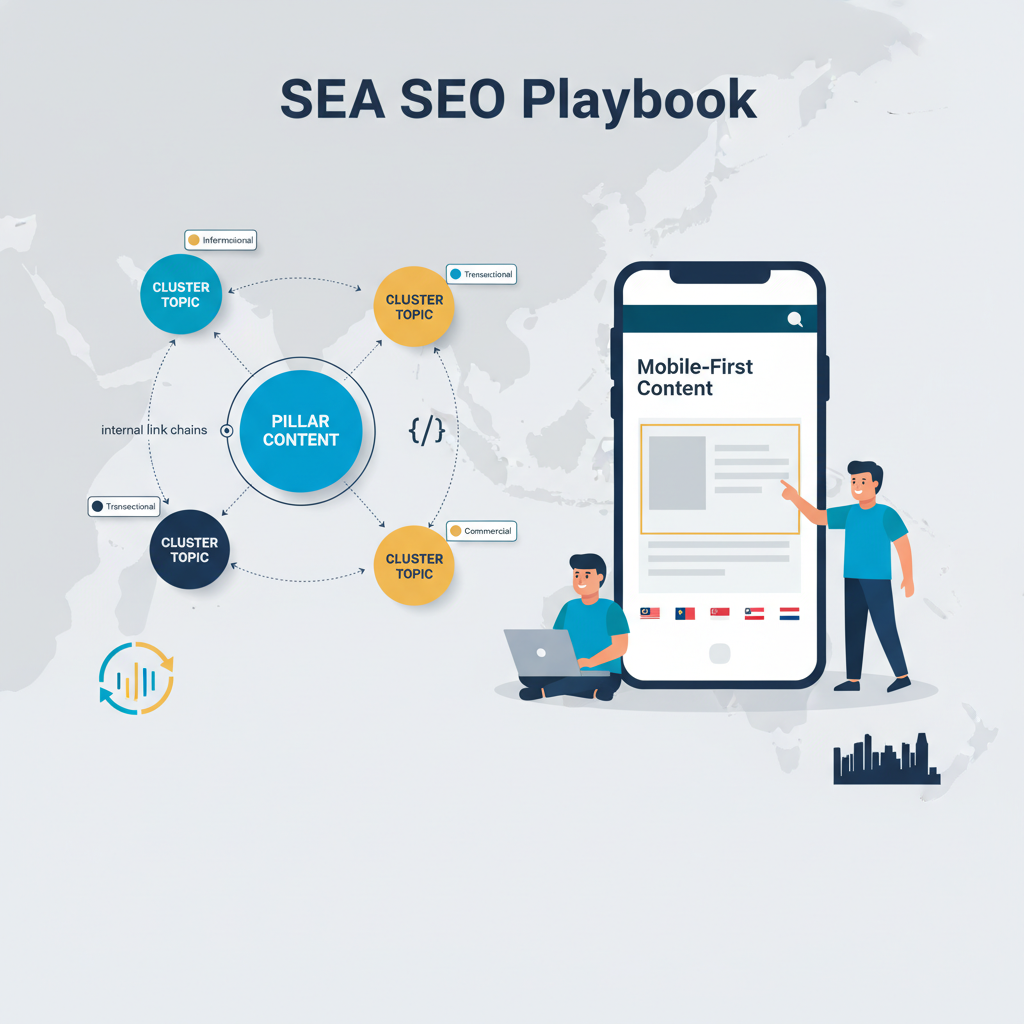
- Resource constraints: lean teams can still execute an effective SEA SEO content program by prioritizing pillar and cluster content, implementing a disciplined refresh cadence, and using lightweight templates for quick wins.
Field: Planning and governance (Rich Text)
H2 Planning and governance: developing a SEO CONTENT strategy
A practical SEO content strategy combines scalable processes with disciplined governance. The plan centers on topics, cadence, ownership, content audits, and refresh cycles, all tuned to Singapore/SEA realities such as lean teams and multilingual needs.
H3 Creating a scalable content plan (topics, cadence, owners)
- Objective-driven planning: build topic authority with pillar content and cluster articles, while maintaining a predictable cadence that fits team capacity and budget.
- Cadence framework: pillars launched quarterly, clusters produced monthly, and refresh cycles scheduled annually or biannually for evergreen assets.
- Ownership: define a RACI-like model with a central content lead, SEO strategist, editors, writers, designers, regional editors, and a tech liaison.
- SEA considerations: align planning with regional campaigns, local events, and regulatory updates; consider multilingual needs where demand exists.
H3 How to conduct content audits and refresh cycles
- Content audits: assess relevance, depth, accuracy, freshness, and alignment with target intent; check on-page signals, internal links, and schema.
- Refresh cycles: evergreen content should be refreshed every 12–24 months (or sooner if data changes); time-sensitive content should be updated as new developments occur.
- SEA-specific angle: ensure local data, local examples, and GBP signals are integrated; test multilingual variants where appropriate and preserve parity of value across languages.
Field: Writing for SEO (Rich Text)
H2 Writing for SEO: best practices and copywriting
Writing for SEO merges compelling copy with precise on-page optimization. This section provides practical guidance on headlines, meta elements, readability, tone, and delivering user-focused value, with SEA considerations.
H3 Crafting compelling headlines and meta elements
- Headlines: H1 should include the primary keyword and promise value; use numbers or strong verbs to increase engagement.
- Meta elements: title tags should contain the primary keyword near the start; meta descriptions should describe value and include the keyword. Keep within typical length targets to avoid truncation.
- Alignment: ensure the headline and meta description accurately reflect the content to improve CTR and reduce pogo-sticking.
H3 Readability, tone, and user-focused value
- Readability: use short sentences and paragraphs; employ bullet lists; target a readable score suitable for business audiences in SEA contexts.
- Tone: practical, confident, and helpful. Write to solve real user problems with actionable steps and templates.
- Value delivery: provide concrete steps, checklists, templates, and data points. Use Singapore/SEA-specific examples to boost relevance.
- Local language considerations: if multilingual variants exist, ensure tone and value parity across languages; maintain cultural nuance.
Field: On-page and semantic optimization basics (Rich Text)
H2 On-page and semantic optimization basics
A solid on-page and semantic strategy improves discoverability and topic authority. This section covers internal linking, semantic relevance, topic modeling, and structured data.
H3 Internal linking, semantic relevance, and topic modeling
- Internal linking: build a pillar and cluster model; ensure links come from relevant contexts; vary anchor text; keep the crawl path efficient (no dead-end pages).
- Semantic relevance: use related terms and entities to reinforce the topic; structure content with a clear taxonomy to signal topic breadth and depth.
- Topic modeling: craft a taxonomy of core topics and subtopics; ensure each page covers a defined area with related terms embedded naturally.
H3 Structured data and schema where applicable
- Simple schema to implement now: FAQPage (for frequently asked questions), HowTo (step-by-step guides), LocalBusiness (for Singapore-based operations or services), BreadcrumbList (site structure).
- SEA-specific tips: apply hreflang for multilingual pages; if you have multiple locations, consider LocalBusiness with regional data; use schema to support local search features and improve visibility.
Field: Measurement and optimization loops (Rich Text)
H2 Measurement and optimization loops
A repeatable measurement framework turns SEO content into a controllable engine. This section defines KPIs, dashboards, audits, and iterative experiments, with a SEA focus on Singapore.
H3 KPIs to track (traffic, engagement, conversions)
- Traffic and visibility: organic sessions, impressions, clicks, average position, and CTR.
- Engagement: engaged sessions, time on page, pages per session, and Core Web Vitals.
- Conversions: form submissions, quotes, calls, purchases, or other request signals; track conversion values where possible.
- Local signals: GBP engagement metrics and local landing page performance.
H3 Iterative improvements via audits and experiments
- Audits: conduct content health audits, technical audits, and GBP audits; fix issues and identify optimization opportunities.
- Experiments: run controlled tests on headlines, meta descriptions, schema, internal linking, and content depth. Use a simple A/B framework with clear success metrics and duration.
- SEA-specific optimization: test local variants, multilingual copy where relevant, and Singapore-centric case studies to validate regional resonance.
Field: Conclusion (Rich Text)
H2 Conclusion: Implementing the SEO CONTENT playbook
Implementing a practical SEO CONTENT playbook in Singapore and the broader SEA requires coupling human creativity with AI-enabled workflows, disciplined governance, and a focus on local relevance. The playbook combines keyword intent alignment, structured content, scalable planning, ongoing audits, and iterative optimization, all tailored to mobile-first SEA behavior and multilingual contexts. The approach synthesizes guidance from Google’s SEO Starter Guide, Backlinko, WordStream, and Yoast, applied to Singapore/SEA realities.
H3 Next steps and practical templates to start today
- Start with an intent-driven keyword map: create clusters and map them to content formats (guides, FAQs, case studies, service pages).
- Build a pillar-and-cluster content plan: define 1–2 pillars and multiple clusters; assign owners and cadences.
- Establish a content audit and refresh cadence: schedule quarterly audits; identify quick wins for the next 30 days.
- Create on-page templates: headlines, meta descriptions, H1–H3 structure, internal linking rules, and schema deployment plans.
- Implement SEA-ready templates for multilingual content: define language strategy, hreflang, and translation workflow; ensure parity of value across language variants.
- Set up measurement dashboards: track organic traffic, rankings, engagement, and local signals (GBP) with SEA segmentation; use a lean governance cadence (weekly health checks, monthly reviews, quarterly strategy sessions).
This framework supports a practical, operations-first approach to SEO content that blends creativity with AI-enabled workflows, delivering tangible improvements in SEA markets while respecting resource realities. If you’d like, the templates can be tailored to your tech stack (CMS, analytics suite, and content management processes) and populated with Singapore/SEA-specific topics and sample dashboards.
Field: CTA (Rich Text)
H2 Next steps: contact and collaboration
For teams ready to implement this SEA-focused SEO CONTENT playbook, contact us to discuss tailored templates, multilingual readiness, and a 90-day rollout plan designed for lean marketing teams in Singapore and the broader region.
This article adheres to a professional, neutral tone suitable for marketing leaders, SEO managers, and content leads operating in Singapore/SEA. It blends practical guidance with region-specific considerations, introducing templates and governance structures you can adapt immediately. It ends with a segway to reach out for collaboration or support in implementing the plan.