

\n
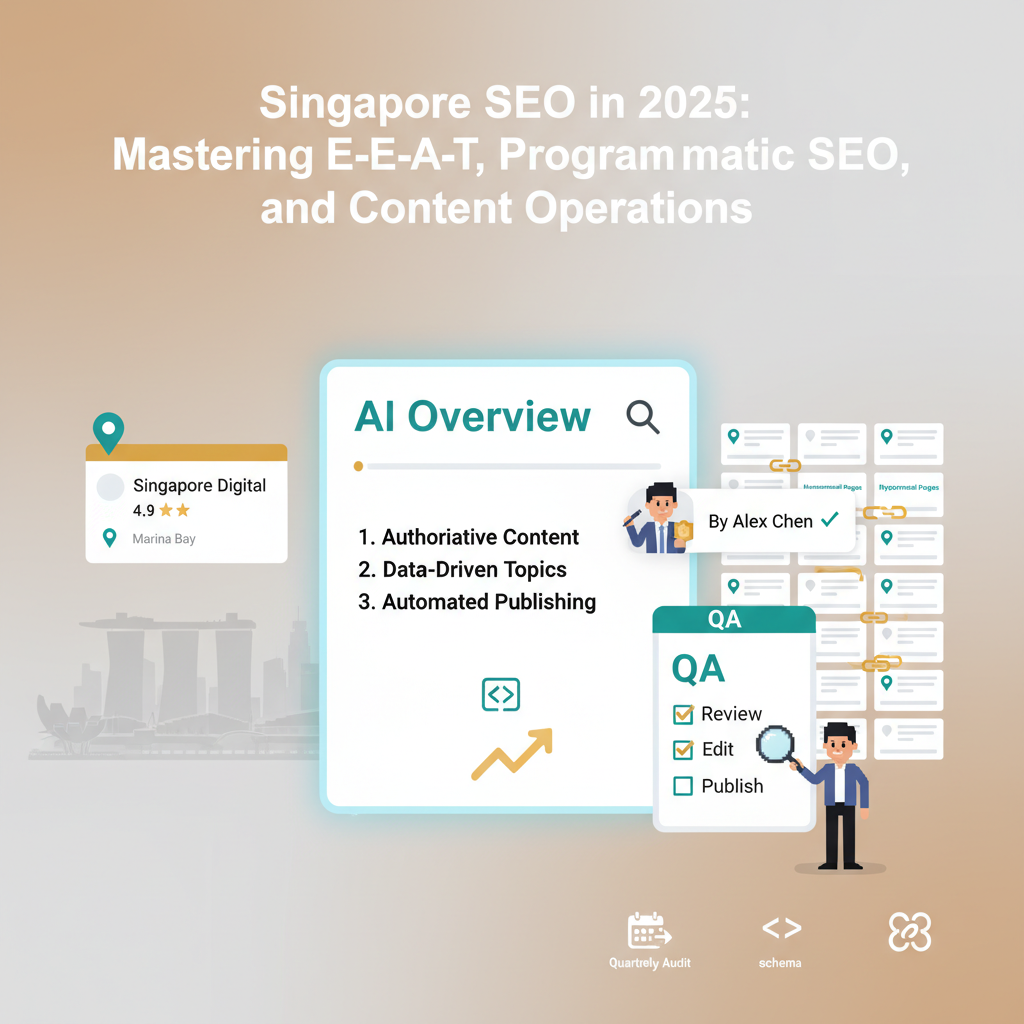
Singapore SEO in 2025: Mastering E-E-A-T, Programmatic SEO, and Content Operations
\n
\n
\n\n
Introduction to Singapore SEO in 2025
\n
This long-form playbook walks Singapore and Southeast Asia teams through the practical SEO priorities for 2025: establishing E‑E‑A‑T for local brands, scaling responsibly with programmatic SEO, optimizing for AI-driven search features, and running disciplined content operations. Expect checklists, template patterns, and Singapore-centered examples you can apply to service pages, Google Business Profile (GBP) work, and content governance.
\n
Singapore is compact, highly connected and mobile-first — the market rewards localized, high-trust content that converts both online and in-person. Well-executed local SEO drives maps visibility, phone leads and foot traffic in a way that national campaigns often can’t match. Practically, that means investing in local authority signals, structured data, and content operations that keep pages accurate and defensible as search evolves into generative, AI-driven experiences.
\n\n
E-E-A-T foundations for Singapore brands
\n
E‑E‑A‑T (Experience, Expertise, Authoritativeness, Trustworthiness) is not an abstract SEO checkbox — it’s the practical standard Google uses to evaluate content quality, and it matters most in local, high-stakes contexts. Implementing E‑E‑A‑T means showing who made the content, why it’s reliable, and evidence of experience. For Google’s guidance on this people‑first approach, see creating helpful, reliable, people-first content. For how raters interpret these concepts, see the Search Quality Rater Guidelines.
\n\n
Local authority signals and author bios
\n
- \n
- Add clear bylines and link to detailed author pages that list relevant Singapore credentials (local licenses, professional affiliations, years of experience working in Singapore).
- Use author pages as trust hubs: include a photo, short bio, links to publications/case studies, and contact details. Link the author Person entity in your Article/BlogPosting schema.
- Use the “Who / How / Why” framing from Google: who created the content, how it was produced (disclose AI assistance if used), and why it helps users. That transparency directly addresses E‑E‑A‑T signals measured by raters.
\n
\n
\n
\n
Practical elements to include on each article
\n
- \n
- Visible byline and author summary at top of page.
- An author page linked from every byline.
- Citations to Singapore authorities or reputable local sources for factual claims.
- Display of business credentials (e.g., licensed, insured), strategic case studies, and client outcomes where allowed. Explore our digital marketing services and branding services to reinforce these signals with strong creative and content.
\n
\n
\n
\n
\n\n
YMYL considerations in Singapore
\n
Your Money or Your Life (YMYL) topics — finance, legal, medical, safety, significant financial decisions — demand higher editorial rigor. Involve locally credentialed experts, provide authoritative citations to Singapore regulators and bodies, and display credentials and review history prominently. See Google’s Search Quality Rater Guidelines for how raters assess such content.
\n\n
Local citations, trust signals, and case studies from Singapore
\n
- \n
- Media mentions and awards: show logos and link to coverage on a dedicated press/case-study section.
- Case studies: include outcome metrics, dates, and anonymized customer data where appropriate. Local outcomes (e.g., district-level improvements) increase trust. See our portfolio for examples.
- Local citations: ensure consistent NAP across your site, GBP, and reputable Singapore directories.
\n
\n
\n
\n\n
Programmatic SEO for Singapore
\n
Programmatic SEO (templated, data-driven pages at scale) can capture many neighborhood and long‑tail queries in Singapore’s dense urban market. The key constraint: avoid thin or near‑duplicate pages. Every generated page must offer unique, verifiable local value — data, case studies, FAQs, or structured facts.
\n\n
Templates for geo-targeted pages
\n
- \n
- Use data‑driven templates that require localized inputs (district name, response time, pricing bands, local testimonial, nearest landmark).
- Avoid generic text blocks that repeat across pages; require a unique local insight or data point on every page.
- Include LocalBusiness and Organization structured data and an FAQ block (FAQPage) where appropriate.
\n
\n
\n
\n
Sample blocks to require:
\n
- \n
- Localized hero with district name and one unique local fact.
- Quick facts: service hours, typical cost range in SGD, response times.
- Local proof: testimonial or micro-case study from a Singapore client.
- District FAQ with hyperlocal queries.
\n
\n
\n
\n
\n\n
Data-driven keyword expansion and localization
\n
- \n
- Start with service seed keywords, append Singapore modifiers (districts, MRT stations, property types such as HDB, condominiums).
- Cluster keywords by intent and map each cluster to a template (pillar, district page, FAQ).
- Use local search signals (Search Console queries, Google Trends geo=SG) to prioritize volume and seasonality.
\n
\n
\n
\n\n
AI-assisted content creation with human QA
\n
Use AI to draft templated copy and populate data fields, then enforce a strict human QA path: pull local facts from a single source of truth, require a local editor to validate details, and disclose AI involvement as recommended in Google’s people-first guidance (creating helpful, reliable, people-first content).
\n\n
Practical Singapore SEO strategies for 2025
\n\n
On-page optimization for local queries
\n
- \n
- Title patterns: “Best [service] in Singapore | Brand” or “24/7 [service] in [district], Singapore — Brand”.
- H1 must match primary intent (e.g., “Emergency plumber in Bedok”).
- Use H2s to address intent: “What to expect”, “Service areas”, “Pricing in Singapore”, “FAQs”.
- Place NAP, opening hours and map links on every geo page.
- Use FAQPage schema for common local questions.
\n
\n
\n
\n
\n
\n\n
Structured data and local schema
\n
Implement Organization and LocalBusiness schema and, where appropriate, FAQPage markup. See Google’s documentation on structured data and Local business structured data.
\n\n
Internal linking to pillar pages and topic clusters
\n
Build a hub-and-spoke architecture: pillar pages provide comprehensive overviews; cluster pages (district or service variations) link back to the pillar. Use descriptive, natural anchor text. For inspiration, view our portfolio and browse our blog.
\n\n
Local and hyperlocal SEO in Singapore
\n\n
Google Business Profile optimization
\n
Claim, verify, and fully populate your profile — categories, attributes, photos, and regular updates matter. Google’s official guidance on what influences local visibility: Improve your local ranking on Google.
\n\n
Maps ranking and local link-building
\n
- \n
- Relevance (category and description), distance (proximity to searcher), and prominence (reviews, links, citations) drive results.
- Build local citations in reputable Singapore directories and pursue partnerships with local venues and media for editorial mentions.
- Sponsorships or community events provide natural opportunities for local backlinks and GBP posts.
\n
\n
\n
\n\n
Neighborhood-specific content campaigns
\n
- \n
- Create district landing pages with unique facts and local FAQs.
- Run neighborhood content campaigns timed to local events (e.g., Chinese New Year, school terms) and promote via GBP posts.
- Use local video content to increase discovery — see our video production in Singapore services.
\n
\n
\n
\n\n
AI SEO and GEO for Singapore
\n\n
GEO (Generative Engine Optimization) concepts
\n
AI Overviews summarize the web for users; Google explains their role and limitations here: About AI Overviews in Search. To be GEO-ready, structure pages so a reliable summary is obvious: a concise lead, bulleted local facts, clear citations, and a FAQ that answers common follow‑up questions.
\n\n
AI-assisted optimization with local signals
\n
- \n
- Encode entities: local organization names, district names, official SG institutions.
- State facts clearly: licensed status, opening hours, local case study outcomes.
- Cite authoritative Singapore sources to provide grounding.
\n
\n
\n
\n\n
QA oversight for accuracy
\n
Maintain a single source of truth for local facts and require editors to verify AI drafts against that dataset. Map every factual claim to a verifiable source. Google advises verifying AI-provided information and flags the possibility of errors in AI summaries (About AI Overviews).
\n\n
Content operations and governance in Singapore
\n\n
Editorial workflows, briefs, and QA checklists
\n
- \n
- Define roles: content owner/manager, strategist/SEO lead, writers/researchers, editor/fact-checker, CMS/admin.
- Every brief should include the target SG keyword, district focus, required SG sources, and author credentials.
- Pre-publish checklist: local accuracy, citations, author byline, schema verification, GBP consistency.
\n
\n
\n
\n\n
Citations, author bios, and schema markup
\n
- \n
- Use Article/BlogPosting with author Person schema, including datePublished and dateModified.
- Deploy Organization and LocalBusiness schema; see Google’s structured data overview and Local business documentation.
- Keep a citation map for each page mapping claims to Singapore sources.
\n
\n
\n
\n
Need hands-on help with briefs, governance, and production? Explore our content marketing services, digital marketing services, branding, and advertising.
\n\n
Update cadence and quarterly audits
\n
- \n
- Quarterly micro-audits: check top evergreen pages for factual drift, update citations, validate schema and confirm GBP details are current.
- Annual deep refresh: update strategic pillar content and republish with a new dateModified. Log changes to measure impact.
- Monitor Google algorithm changes at the Search Status Dashboard – ranking updates.
\n
\n
\n
\n\n
Conclusion: Singapore SEO takeaways for 2025
\n
- \n
- E‑E‑A‑T matters locally: show who authored content, list Singapore credentials, and cite local authorities (helpful, reliable content; Quality Rater Guidelines).
- Programmatic SEO is a force multiplier if pages add unique local value and follow a strict QA workflow.
- Structured data and GBP optimization remain foundational for local visibility (Local business structured data; Improve your local ranking on Google).
- Prepare for AI Overviews by creating concise, well-sourced summary blocks and explicit local signals (About AI Overviews).
- Keep governance tight: quarterly audits, clear briefs, author bios and schema are not optional in 2025.
\n
\n
\n
\n
\n
\n\n
FAQ
\n
What is the single most important change Singapore businesses should make to SEO in 2025?
\n
Focus on E‑E‑A‑T: ensure visible author credentials, Singapore-sourced citations, and local proof (case studies/reviews). Combine that with accurate LocalBusiness schema and a verified GBP.
\n\n
Can I use AI to generate my local pages at scale?
\n
Yes — but only as an assist. Use AI to draft and populate templates, and require human editors to verify local facts, citations, and tone. Disclose AI use where appropriate following Google’s people-first guidance.
\n\n
How do I stop programmatic pages from being considered thin or duplicate?
\n
Design templates that require a unique local data point, a testimonial or case snippet, and district-specific FAQs. Use canonical tags where necessary, and ensure each page serves a distinct user intent.
\n\n
How often should I audit evergreen local content?
\n
Quarterly micro-audits and an annual strategic refresh are recommended. Each audit should verify SG facts, update citations, validate schema, and confirm GBP consistency.
\n\n
What signals most impact Google Maps ranking in Singapore?
\n
Relevance, distance, and prominence — driven by GBP completeness, category choice, high-quality photos, reviews, local citations and editorial mentions. See Google’s guidance on improving your local ranking.
\n\n
Ready to apply Singapore SEO best practices?
\n
If you want help building pillar/cluster maps, geo-targeted templates, or a robust content operations playbook tailored to Singapore and SEA, our team can help — from digital campaigns to branding and video that support your SEO goals. Learn how we work on our digital marketing services page, see who we are, and view our portfolio. For creative support, explore our branding services, advertising services, or video production in Singapore.
\n
Contact us to start a 90‑day Singapore SEO program.
\n