

Brand Storytelling in Singapore: Strategies, Techniques, and Local Success Stories
Introduction: Why Brand Storytelling Matters in Singapore
In Singapore’s hyper-competitive marketplace, where consumers are bombarded with over 5,000 marketing messages daily, brand storytelling has emerged as the critical differentiator between brands that thrive and those that merely survive. For marketing leaders, brand managers, and SME owners navigating this sophisticated market, the ability to craft compelling narratives isn’t just a creative luxury—it’s a business imperative.
Singapore’s unique multicultural landscape presents both unprecedented opportunities and complex challenges for brands seeking to connect authentically with diverse audiences. The city-state’s consumers, among the most digitally savvy in Southeast Asia, demand more than functional benefits from the brands they choose. They seek meaning, connection, and stories that resonate with their values and aspirations.
Recent market research indicates that brands employing strategic storytelling approaches see significantly higher engagement rates and customer loyalty compared to those relying solely on product-focused messaging (B2B content marketing benchmarks).
Understanding Brand Storytelling: Core Concepts and Benefits
What is Brand Storytelling?
Brand storytelling is the strategic practice of using narrative techniques to communicate your brand’s purpose, values, and unique value proposition in ways that create emotional connections with your target audience. Unlike traditional advertising that focuses on product features and benefits, brand storytelling weaves together elements of conflict, character development, and transformation to create memorable experiences that influence purchasing decisions and build long-term loyalty.
For foundational thinking, see Introduction to Brand Storytelling and our Brand Storytelling Framework to align teams before execution.
Key Benefits for Brands in Singapore
The business impact of strategic storytelling extends across loyalty, differentiation, and efficiency. Authentic narratives help build trust and preference in markets where consumers reward value alignment (Edelman Trust Barometer 2024), while credible, story-driven content improves engagement and organic reach (CMI benchmarks).
In categories where functional benefits are commoditised, narrative becomes a unique moat competitors cannot easily replicate. Consistent narrative systems also increase marketing efficiency by repurposing message pillars across digital marketing, social media, and video production.
The Role of Culture in Storytelling in Branding for Singaporean Audiences
Local Values and Consumer Expectations
Harmony, inclusivity, and family-centricity shape expectations. Singaporeans appreciate narratives that celebrate diversity credibly and combine emotional appeal with practical value. Trust remains pivotal, as audiences scrutinise whether brand actions match brand words (Edelman 2024).
Adapting Global Narratives for Local Relevance
Use festivals, local food culture, language sensitivity, and partnerships to achieve authentic localisation. For a deeper Singapore-focused primer, see Brand Storytelling in Singapore.
Essential Brand Storytelling Techniques for Singapore Brands
Crafting Authentic Brand Narratives
Anchor narratives in a genuine purpose and demonstrate consistency across product, service, and culture. Founder and employee stories often resonate well, especially when they reflect Singapore’s entrepreneurial spirit and community contribution.
Encourage customer co-creation for credible social proof and align all touchpoints to your narrative to avoid “marketing theatre.”
Using Emotional Branding to Connect with Audiences
Tap into pride and belonging, aspiration and achievement, security and trust, nostalgia and heritage, and joy and celebration—balanced with authenticity. Singapore audiences value reliability and tangible benefits; claims should be backed by proof and consistent experiences.
How to Build a Compelling Brand Narrative: Step-by-Step Guide
Identifying Your Brand’s Core Message
Conduct stakeholder interviews, analyse customer language, map competitors, and distil a single, memorable core message. Validate with target audiences for comprehension and resonance before full rollout.
Structuring Your Story for Maximum Impact
Apply frameworks such as the Hero’s Journey, the Golden Circle, and Before–After–Bridge. Maintain the customer as hero and your brand as guide. Use conflict–resolution structure, define your brand “character”, and illustrate with specific, sensory details. See our Brand Storytelling Framework for a step-by-step approach.
Real-World Brand Storytelling Examples from Singapore
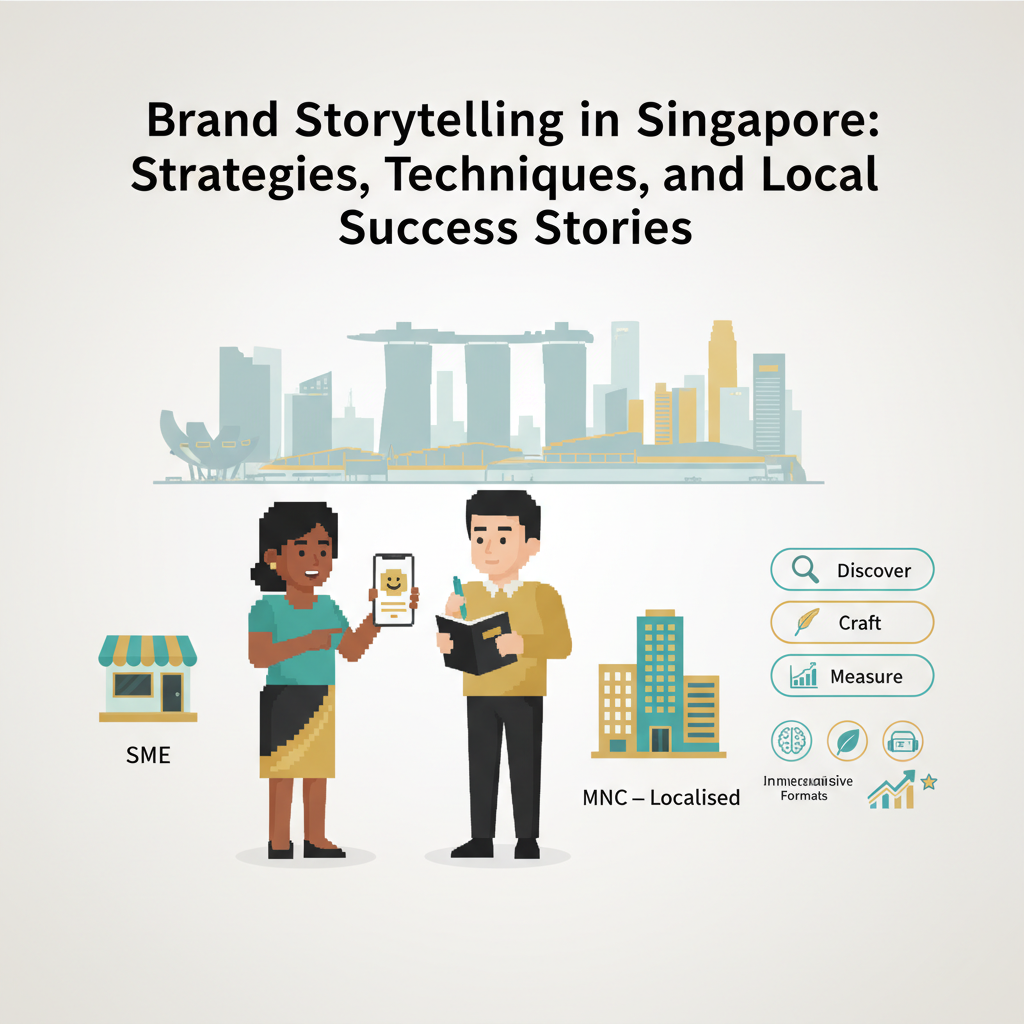
Case Study 1: Local SME Success
BreadTalk’s founder narrative, playful product naming, and transparent in-store production created an authentic, scalable story rooted in Singapore’s food culture. The approach drove brand talkability and trust, illustrating how SMEs can compete with distinctive, localised narratives.
Case Study 2: International Brand Adapting to Singapore
McDonald’s localises a global brand through festival campaigns, local settings, and employee and community stories—maintaining global consistency while achieving cultural relevance. This supports long-term brand health and category leadership (Nielsen: trust & perceptions).
Choosing a Brand Storytelling Agency in Singapore
What to Look for in an Agency Partner
Prioritise strategic storytelling systems, cultural fluency, transmedia creative capabilities, measurement rigor, and senior team involvement. Demand clear KPIs and reporting for narrative performance (CMI benchmarks).
Questions to Ask Before Hiring
- How do you translate business objectives into narrative frameworks?
- What are your examples of cultural authenticity in Singapore?
- What measurable results did your storytelling campaigns achieve?
- What KPIs and attribution methods will you use?
- Who exactly will work on our account and how is the process managed?
- How do you handle cultural missteps or crisis scenarios?
Conclusion: The Future of Storytelling Marketing in Singapore
AI-driven personalisation enables story delivery at scale while demanding authenticity and restraint (McKinsey on AI in marketing). Sustainability and social impact narratives must be evidenced by real action. Employee-generated content and immersive formats will grow, but fundamentals—emotional truth, cultural relevance, and consistent delivery—remain decisive.
Frequently Asked Questions
How long does it take to develop an effective brand storytelling strategy?
A comprehensive strategy typically takes 8–12 weeks including research, narrative framework creation, and initial content development. Simple positioning can be established in 4–6 weeks.
What budget should Singapore SMEs allocate for brand storytelling initiatives?
Many SMEs allocate 15–25% of their marketing budget to strategy, content creation, and distribution for narrative-led programs.
How do we measure the ROI of brand storytelling campaigns?
Track brand lift, engagement quality, qualified traffic, lead generation, CAC reduction, and LTV growth. Expect compounding effects over 3–6 months of consistent execution.
Should international brands completely localise their stories for Singapore?
Adapt, don’t replace: keep core brand values and personality while integrating local cultural references, festivals, and examples.
What are common storytelling mistakes in Singapore?
Cultural tokenism, inconsistency between narrative and operations, over-promising, ignoring local customs, and feature-led messaging over customer transformation.
How often should we update our brand narrative?
Keep core narratives steady for 3–5 years; refresh campaign expressions and applications quarterly to stay relevant.
Let’s Build Your Singapore Brand Story
Ready to align your brand story with Singapore’s culture and deliver measurable growth? Contact Hamilton & Sherwind to craft an authentic, performance-driven narrative.