

Brand Storytelling: A Practical Framework for Building Authentic Brand Narratives
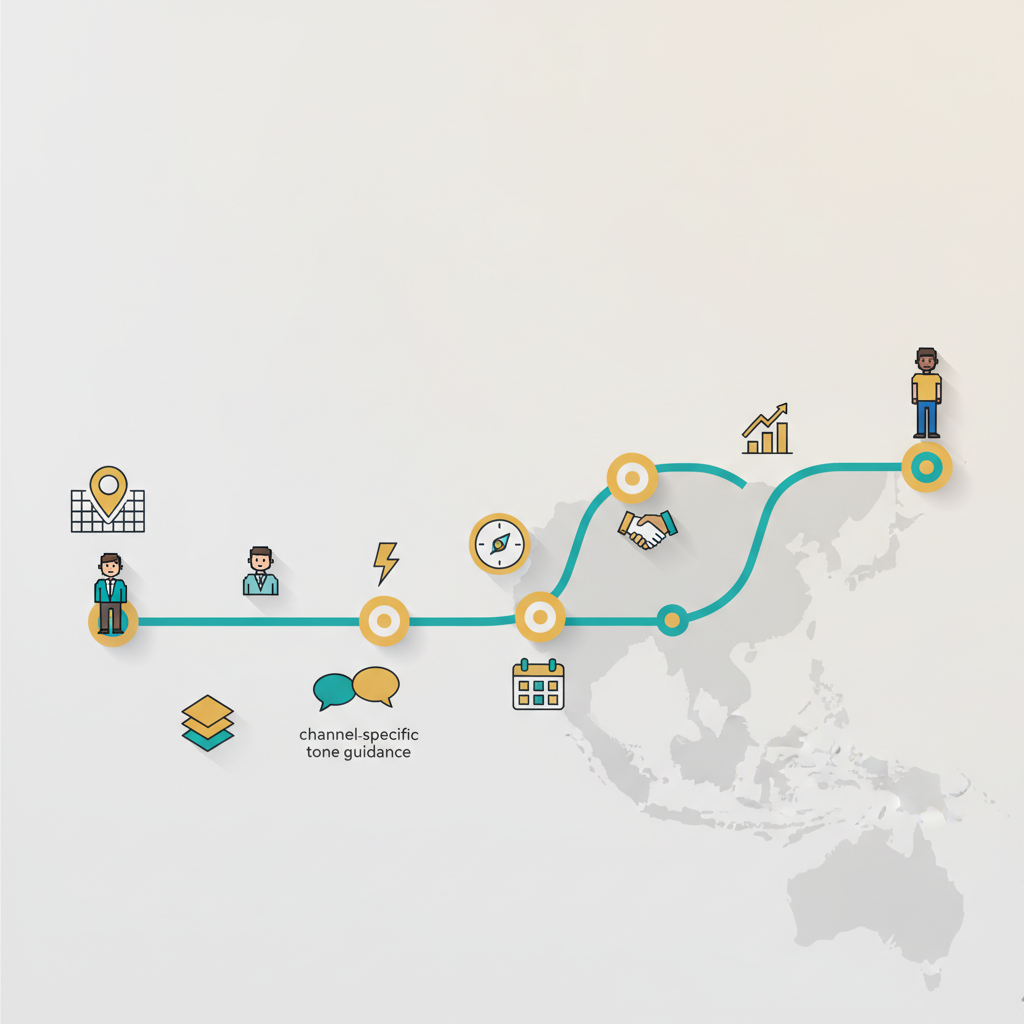
Intro: Why brand storytelling matters in 2025
Brand storytelling is the strategic use of narrative to express who you are, why you exist, and how you help people. It’s more than campaign copy — it’s the thread that ties vision, behaviour, and communications together to build trust, differentiate in crowded markets, and grow long-term brand equity. For marketing leaders across Singapore and Southeast Asia, storytelling matters because audiences now expect clarity of purpose, local relevance, and proof of impact before they commit to a product or service.
Authoritative definitions: Harvard Business School Online guide to brand storytelling and Acquia brand storytelling glossary.
- Trust and scrutiny: Customers research and compare instantly. A clear narrative builds credibility faster than feature lists.
- Differentiation: Many SEA markets are crowded with efficient products. Narrative branding helps organisations stand for something distinct.
- Long-term equity: A repeatable brand narrative compounds over time — increasing awareness, preference and advocacy rather than short-lived campaign lifts.
For structure and systemisation, see the Frontify brand storytelling guide. If you need implementation support across channels, explore our digital marketing services and video production in Singapore.
Define your brand story: purpose, audience, values
Begin by locking down three foundational elements: purpose, audience, and values. Without them, stories drift and audiences don’t take action.
1) Clarify business objectives and brand purpose
- Start with measurable business goals (awareness, consideration, retention, revenue streams).
- Translate goals into a concise purpose statement: why the brand exists beyond profit. This becomes your story’s north star.
- Example: “We make cross-border payments simple so small Singapore exporters can scale across SEA.”
2) Map audiences and moments
- Identify 3–5 key audiences (primary, secondary, influencers, partners).
- List jobs-to-be-done and the moments they care most about (first discovery, decision, onboarding, renewal).
- Map channels, preferred language, and cultural context for each SEA market.
3) Articulate values and proof points
- Define 3–5 core values and operationalise them into behaviours you can show.
- Gather proof: customer outcomes, data, case studies, testimonials, third-party endorsements.
- Build a proof library mapped to narrative pillars.
Checklist: objectives aligned; one-line purpose; 3 personas; 3–5 values + proof; channel/language map; story and evidence repository. For strategy and governance, see our branding services.
Brand storytelling framework: building a narrative architecture
Use this six-part architecture to produce consistent, believable stories:
- Context — scene, market, stakes
- Character — customer hero and brand guide
- Conflict — the core tension or pain
- Turning Point — your intervention (insight, product, experience)
- Resolution — transformed state and outcomes
- Proof — evidence that outcomes are real and repeatable
Complements: the Hero’s Journey and brand archetypes (see Frontify’s guide). Another popular model is the StoryBrand framework.
Narrative architecture and components
Turn the framework into a useable messaging hierarchy:
- Vision — your aspirational future
- Value Proposition — why choose you today
- Narrative Pillars — 2–4 reusable themes
- Signature Messages — channel-ready lines
See narrative applied to real work in our branding portfolio and broader campaign portfolio.
Crafting brand narratives: voice, tone, and messaging
Voice is your consistent personality; tone adapts by context. Build examples per channel during your brand playbook stage and store them centrally. For integrated execution, explore our digital marketing services and advertising capabilities.
- Website: authoritative, informative; long-form proof
- Social: conversational; short stories, UGC
- Video: cinematic or documentary; customer heroes — see video production in Singapore
- Events: live storytelling, demos
Tone map:
Launch: confident/helpful; energetic
Crisis: calm/accountable; empathetic
Campaign: persuasive/clear; respectful urgency
Story elements: plot, characters, conflict
Plot: problem → intervention → outcome (keep it simple and repeatable). Characters: customer hero; brand as guide. Conflict: must be credible (time, cost, complexity). Avoid overpromising or generic drama.
Formats and distribution channels
Choose formats by objective and local platform norms across SEA.
- Short-form social (TikTok/Reels): high reach; strong first 3 seconds
- Long-form blog: SEO, depth, proof — find related thinking on our blog
- Video: empathy, demonstration; subtitle/localise
- Experiential: deep relationships; local partners
When you want category-building content and performance together, see our digital marketing portfolio and advertising portfolio.
4-week content calendar (starter cadence)
- W1: Blog case; short video; carousel
- W2: Thought leadership; Live Q&A; community post
- W3: Mini doc; micro-influencer; paid carousel + LP
- W4: Event recap; email nurture; UGC spotlight
Conclusion: From story to strategy
Operationalise with governance, training, and measurement. Build a brand playbook (voice, tone map, pillars), centralise assets, and measure brand lift, engagement, and assisted conversions. Guidance on assisted conversions: Google Analytics.
Ready to embed a storytelling system that scales across Singapore and SEA? Contact Hamilton & Sherwind for a practical rollout.
FAQ
What is the difference between brand storytelling and narrative branding?
Brand storytelling is the practice of using narrative techniques in messages and content. Narrative branding refers to the strategic way a brand uses an overarching story (purpose, pillars, proof) to shape perception across all touchpoints. They overlap: storytelling is the method, narrative branding is the long-term strategy.
How do I choose the right story archetype for my brand?
Select an archetype that aligns to your purpose and customers. For example, a fintech focused on security may lean into The Caregiver or The Sage; a travel brand may adopt The Explorer. Test tone and visuals with small campaigns before committing broadly. See overview in Frontify’s guide.
How do we measure the ROI of storytelling in SEA markets?
Combine short-term metrics (engagement, assisted conversions) with periodic brand lift studies to capture awareness and preference shifts. Use CRM attribution to connect storytelling touchpoints to downstream revenue. Track both hard and soft metrics monthly and quarterly.
How should we localise stories for different Southeast Asian markets?
Translate language and adapt cultural references. Use local storytellers, choose regionally relevant proof points, and test formats (e.g., short video vs carousel) per market. Keep the core narrative consistent but localise execution.
How often should we refresh our brand narrative?
Core purpose and pillars should remain steady for years. Refresh tactical storylines and signature messages every 12–18 months or when you enter new markets, launch major products, or get new proof points.
Can small teams implement this framework without a big agency?
Yes. Start small: document purpose and pillars, collect 6–10 customer stories, and build channel templates. Use a simple DAM and quarterly training to scale. Bring in specialists for launches or complex localisation if needed.