

AI Marketing Singapore Playbook for SMEs
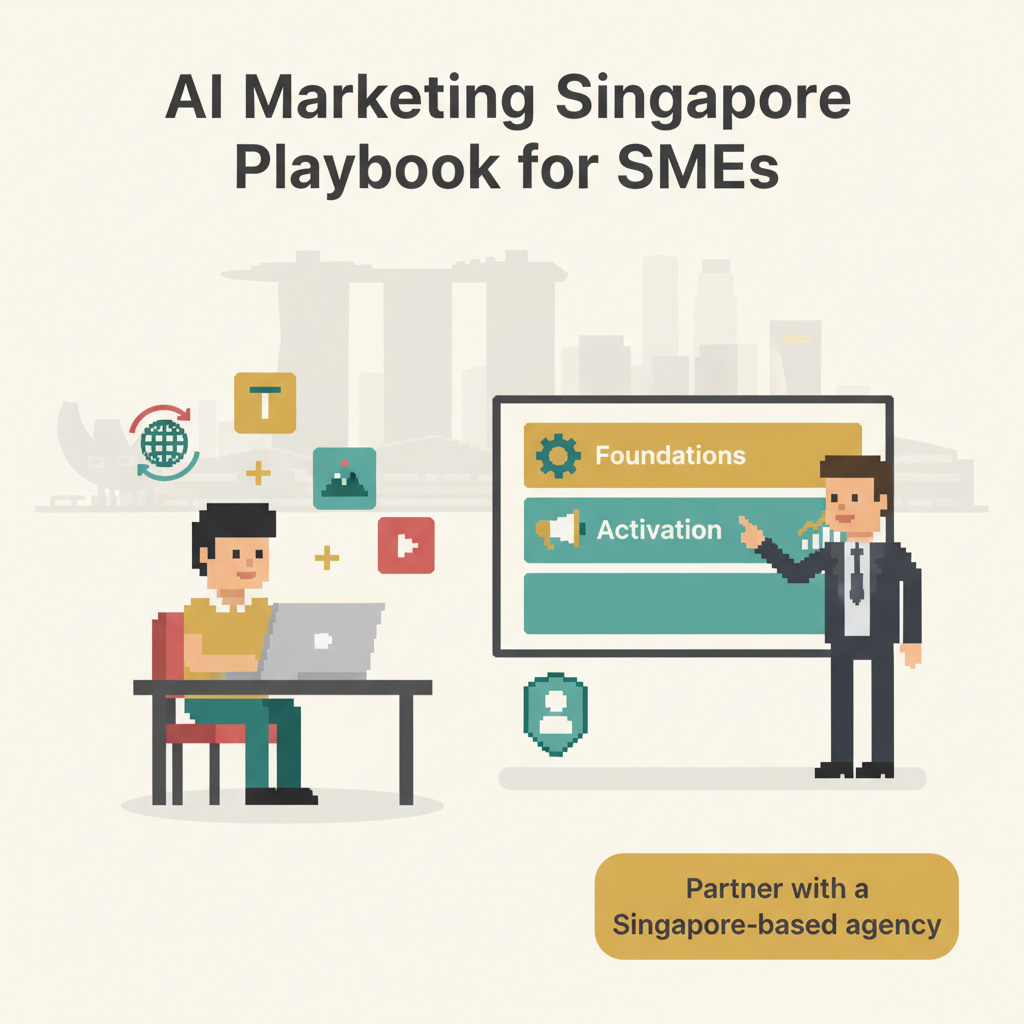
What AI marketing can do for SMEs in Singapore
AI-powered marketing is no longer the realm of large enterprises. For Singapore SMEs, smart use of AI can compress time-to-market, unlock multilingual reach, and optimize campaigns across channels without bloating headcount. This section outlines what AI marketing Singapore can deliver across the funnel, framed for budgets and teams that are common among Singapore and SEA SMEs.
Overview: why AI matters for SMEs in SG
- Faster, more efficient content and campaigns: generating language-localized assets, testing variants, and optimizing spend with minimal manual effort.
- Smarter audience reach in a multilingual market: English is widespread in business, but Mandarin, Malay, and Tamil connect with broader SG audiences and regional SEA shoppers.
- Cross-channel coordination without chaos: unified learnings from ads, websites, and communications help you move prospects from awareness to retention with less manual juggling.
Benefits across the funnel (practical view)
- Awareness: multilingual creative scalability across Meta, Google, and TikTok; localized messaging for SG moments (festivals, local promotions) helps your brand break through faster.
- Consideration: personalized content and language-aware landing experiences improve relevance and reduce bounce on your sites and product pages.
- Conversion: AI-led optimization for bids, creatives, and channel allocation helps smaller budgets achieve better ROAS and lower CAC.
- Retention: language-tailored emails and on-site experiences support repeat purchases and stronger customer relationships.
Singapore-specific constraints and opportunities
- Time, budget, and lean teams: Start with a single high-impact use case (for example, multilingual content generation paired with a multilingual chatbot) and scale as you learn.
- Multi-language content: Use AI to draft and translate content, then QA with native speakers to preserve tone and accuracy.
- Regional platforms: Meta, Google, and TikTok remain core for reach; Shopee/Lazada for marketplace visibility; Grab and other SEA networks for regional reach.
- Privacy and consent mindset: Build consent-first marketing programs with clear opt-ins and preference centers to ensure responsible data use while still enabling personalization.
Key takeaway: An intentional, staged approach to AI marketing Singapore—starting with clarity on language, channels, and metrics—delivers practical wins for SMEs without requiring large teams or extravagant budgets.
Core pillars of AI marketing for SMEs
This section outlines the four pillars that form the backbone of AI marketing for SMEs in Singapore. Each pillar is a practical discipline you can implement with modest resources and clear governance.
Content AI
What it is
Content AI covers generation, localization, and optimization of written content—blogs, product pages, social posts, and SEO-friendly assets—so you can publish in English and expand into Mandarin, Malay, and Tamil as you grow.
What you can do today
- Draft English content quickly: blog outlines, product descriptions, and social posts that follow your brand voice.
- Bootstrap multilingual reach: translate and adapt to Mandarin first, then Malay and Tamil as needed, with native QA to preserve nuance.
- SEO-ready content: create briefs and outlines that map to local keywords and SG-specific search intent, with localized meta titles and descriptions.
Concrete examples
- E-commerce boutique: generate English product pages and a Mandarin variant to capture Mandarin-speaking SG shoppers; test English and Mandarin landing pages for a single product category.
- B2B services: publish an English whitepaper and a Mandarin version to appeal to Mandarin-speaking Singapore-based buyers; use language-specific landing pages to support lead capture.
- F&B chain: craft English posts and Mandarin social copy highlighting promotions, then repurpose best-performing variants across Meta and Google Ads.
What good governance looks like
- QA workflow: editorial review by a native language speaker for Mandarin, Malay, and Tamil variants to ensure accuracy and cultural resonance.
- Brand consistency: maintain glossary for product names, features, and regional terms; update prompts to reflect brand voice.
- Human-in-the-loop (HITL): reserve a quick review for high-stakes content (pricing, terms, guarantees) before publishing.
Explore our latest thinking on AI-powered content creation.
AI-enabled ads and optimization
What it is
Using automation, dynamic creative, predictive bidding, and cross-channel coordination to improve returns on ad spend across SG channels and regional platforms.
What you can do today
- Automate campaigns with smart bidding and budget optimization features aligned to conversions, traffic, or ROAS.
- Use dynamic creative: combine multiple headlines, images, and calls-to-action; let platforms test and serve the best variants to each user.
- Cross-channel learnings: enable signals to flow between Meta, Google, TikTok, and marketplace ads to improve overall results.
Practical SG-focused tactics
- Language-aware creatives: run language-specific ad sets to better align with SG audience segments.
- Marketplace synergy: coordinate promotions on Shopee/Lazada with off-platform ad campaigns to reinforce messaging and boost conversion probability.
- Lightweight measurement: track ROAS, CAC, CTR, and CVR by language and channel; use a shared dashboard to surface top performers and reallocations.
Concrete examples
- SG electronics retailer: run Mandarin and English ad variants on Meta with localized CTAs; synchronize with a Mandarin landing page to improve conversion rates.
- Local artisan brand: test two language variants on Google Shopping and TikTok to find which language resonates best for high-intent shoppers.
What good governance looks like
- HITL for high-stake ads: approve claims about promotions, pricing, or guarantees; ensure language accuracy and brand safety in each language variant.
- Compliance mindset: use consent-based targeting signals and avoid sensitive attributes in targeting to protect consumer trust.
Learn more about our approach to AI-driven ads optimization.
Personalization and segmentation
What it is
Using AI to tailor messages, experiences, and offers by language, channel, and lifecycle stage. The goal is to boost engagement without requiring large datasets or teams.
What you can do today
- Core segments: language-based, engagement level, lifecycle stage, and channel preference.
- Lightweight scoring: implement simple rules-based scoring for next-best message and offer.
- Cross-channel experiences: synchronize language-specific emails with site experiences and ads, creating a coherent user journey.
SG-specific patterns
- Language-first strategy: begin with English baseline and Mandarin for meaningful ROI quickly; expand to Malay/Tamil if the data supports it.
- Website personalization: show language-appropriate hero messages, product recommendations, and localized promos; offer an easy language toggle.
- Email journeys: language-specific welcome flows, product recommendations, and promotions, consistent with language preferences.
See how we approach AI-powered personalization and segmentation within integrated digital marketing programmes.
Analytics and measurement
What it is
A practical framework to understand performance, attribution, and learning across SG channels—ads, site, and email—without requiring a large data science operation.
What to implement now
- A lean measurement spine: GA4 for on-site events and a basic cross-channel dashboard to blend data.
- Language-aware metrics: track ROAS, CAC, CVR, CTR, and revenue by language and channel.
Attribution philosophy
- Start with a simple model (last non-direct or data-driven if data volume allows) and compare to baselines over time.
- Use a blended view to understand assisted conversions across channels and language segments.
Dashboards and reporting
- Executive dashboard: high-level ROAS, CAC, revenue, and language splits.
- Channel dashboards: ads, site, and email performance by language; weekly trend metrics and anomaly alerts.
- Attribution view: cross-channel touchpoints by language to inform budget decisions.
Implementation tips
- Language tagging: add language as a user property in analytics to enable language-aware reporting.
- UTM discipline: consistent language tagging in UTM parameters to support clear cross-channel attribution.
- Data quality: ensure events fire consistently across languages; align event naming and definitions across platforms.
Learn about our analytics and measurement services for performance-focused programmes.
Tools and tech stack for Singapore SMEs
A pragmatic, SME-friendly toolkit helps you realize AI marketing without overcomplication. This section maps tools to capabilities you’ll need: content generation, SEO, ads, analytics, CRM/automation, and chat. It emphasizes accessibility, multi-language support, and practical budgeting for Singapore SMEs.
Content generation and localization
- Writing and content drafts: platforms that support English-first writing with multilingual prompts for rapid blogs, product pages, and social posts.
- Translation and localization: DeepL, Google Cloud Translation, or Microsoft Translator for scalable multilingual content, aided by translation management systems (TMS) for workflow and glossaries.
- QA and localization workflow: human post‑editing where needed; build glossaries for product names and SG terms; maintain consistency with brand voice.
SEO and content planning
- Briefing and optimization assistants for multilingual content and SG search intent.
- Optional competitive tools if you scale SEO beyond basics.
Ads, analytics, and automation
- Analytics and dashboards: GA4 documentation for core analytics; Looker Studio docs for dashboards blending ads, site, and email data.
- Ad platforms: Meta Ads documentation, TikTok Ads documentation—ensure language-targeted assets and proper tracking.
- CRM and automation: HubSpot, Mailchimp—start with starter plans; integrate for lifecycle marketing.
- Chat and support: multi-language chat support platforms; WhatsApp Business API for regional reach.
Cost and procurement guidance
- Start with a lean bundle: content generation, translation workflow, basic analytics, and a CRM/automation starter. Expect tool costs in a few hundred SGD per month for the basics; add channels and translations as ROI justifies it.
- Vendor selection tips: prioritize language capabilities, integrations with GA4 and your CMS/e‑commerce platform, and clear pricing; run short pilots to compare outputs and onboarding speed.
- Integration and governance: align consent flows and language preferences with your stacks; maintain a simple data dictionary and naming conventions.
Explore our broader AI tools and technology stack and how we implement them across campaigns.
90-day implementation blueprint
This blueprint translates the earlier research into a pragmatic, time-bound plan your SME can action today. It uses SG-oriented language and channels and emphasizes governance, lean tooling, and measurable outcomes.
Phase 1: Foundation and baseline (Days 1–30)
- Objectives: establish consent-based marketing practices; set up analytics, language tagging, and a lean tooling stack; build a bilingual content and ad template library; establish a simple governance model.
- Groundwork: English baseline plus Mandarin; GA4 with core events and a simple Looker Studio dashboard; 1–2 English content templates, one bilingual landing asset; assign roles and a weekly cadence.
- Milestones: consent and language preference mechanism ready; dashboards accessible; localization workflow documented; Phase 1 review completed.
Phase 2: Activation and learning (Days 31–60)
- Objectives: launch a small, cross-channel activation in English and Mandarin; validate data flows, attribution basics, and lean personalization in two languages.
- Activities: ad sets and landing pages in two languages; bilingual welcome emails; language-tailored content blocks on landing pages and emails; refine funnels by language in GA4; implement a basic attribution approach; weekly optimization; monthly governance review.
- Milestones: language-enabled attribution in place; 2–3 A/B tests completed; insights captured and applied to prompts and templates.
Phase 3: Optimization and scale (Days 61–90)
- Objectives: expand language coverage and channels; deepen personalization and automation; institutionalize governance, processes, and a scalable operating model.
- Activities: add Malay or Tamil as needed; scale to 2–3 languages across 2–3 channels; launch additional channels (e.g., TikTok, Shopee/Lazada promotions); implement automated journeys across email and site; strengthen cross-channel attribution; publish language-specific KPI dashboards; consider a lightweight Center of Excellence.
- Milestones: language expansion completed; cross-channel attribution used to guide budget decisions; operational playbooks and KPI templates ready.
For a deeper dive into execution detail, see our 90-day AI marketing roadmap resources and case articles.
Governance and responsible AI marketing
Governance and responsible AI marketing ensure you deploy AI with trust, safety, and accountability—without sacrificing speed or results.
- Consent, transparency, and privacy best practices: clear opt-in mechanisms for language preferences and personalization; easy opt-out; accessible privacy notices.
- Data minimization and responsible data handling: collect only what you need for intended marketing purposes; avoid sensitive attributes; anonymize where feasible.
- Prompt governance and HITL: use a library of safe prompts; add human review for higher-risk assets; maintain a versioned prompt catalog.
- Brand safety and cultural sensitivity: guardrails to prevent misrepresentation, inaccuracies, or culturally insensitive content; ensure translations preserve brand voice.
- Human-in-the-loop review: apply HITL for critical content—pricing claims, regulatory statements, health-related content, and localized campaigns—while enabling automation for lower-risk assets.
- Governance cadence: weekly quick checks, monthly reviews, and quarterly audits of prompts, glossaries, and localization quality.
Learn more about our team and approach on Who are we.
Budgets, team roles, and workflows
A practical, SME-friendly view of budgets, staffing, and workflows helps you implement AI marketing without overspending or over-extending your team.
Budgeting basics
- Tooling and platforms: start lean; scale as ROI justifies added cost.
- Media spend: begin with a modest budget on high-ROI channels; reallocate as you learn from language-based performance.
- Localization and translation: budget for translation QA and glossaries; expand coverage with demonstrated returns.
- CRM and automation: starter plans are often sufficient; upgrade as lifecycle marketing matures.
Team and roles (SME-friendly)
- Core team (lean): Marketing Ops/MarTech lead, Content Lead, Channel Owners, and a Data/Analytics function.
- External partnerships: selective partners for localization or high-growth ad campaigns to fill capability gaps.
- Governance practices: simple RACI; weekly optimization huddle; monthly governance review; SLAs with vendors for turnaround and data handling.
Workflows (high-level)
- Brief to publish: clear objectives, audience language, channel, content type, and KPIs; HITL for high-risk assets; language QA and brand voice alignment; publish with proper tracking.
- Measurement and iteration: daily/weekly KPI snapshots; weekly optimization; monthly governance updates to playbooks and glossaries.
- Vendor management: SLAs, pricing transparency, and data handling expectations; short trials for new tools; post‑pilot performance reviews.
Conclusion: Key takeaways and next steps
- Start with a clear language and channel focus. English plus Mandarin is often a practical starting point for SG audiences, with Malay and Tamil added as ROI supports expansion.
- Treat AI marketing as a partnership between lean in-house capability and curated external support. A Singapore AI marketing playbook for SMEs blends content generation, ads optimization, personalization, and analytics into a cohesive continuum.
- Governance and responsible AI marketing are essential to trust, brand safety, and sustainable growth. Embrace consent-based personalization, transparent language use, and HITL where risk is highest.
- Measurable progress beats big promises: set realistic targets for CAC, ROAS, language-driven engagement, and cross-channel attribution. Use short feedback loops to adjust quickly.
Ready to start turning AI into measurable results for your Singapore-based business? Contact Hamilton & Sherwind to explore a pragmatic, SME-friendly AI marketing plan tailored to your goals.