

SEO content operations playbook for Singapore brands: a practical, scalable framework
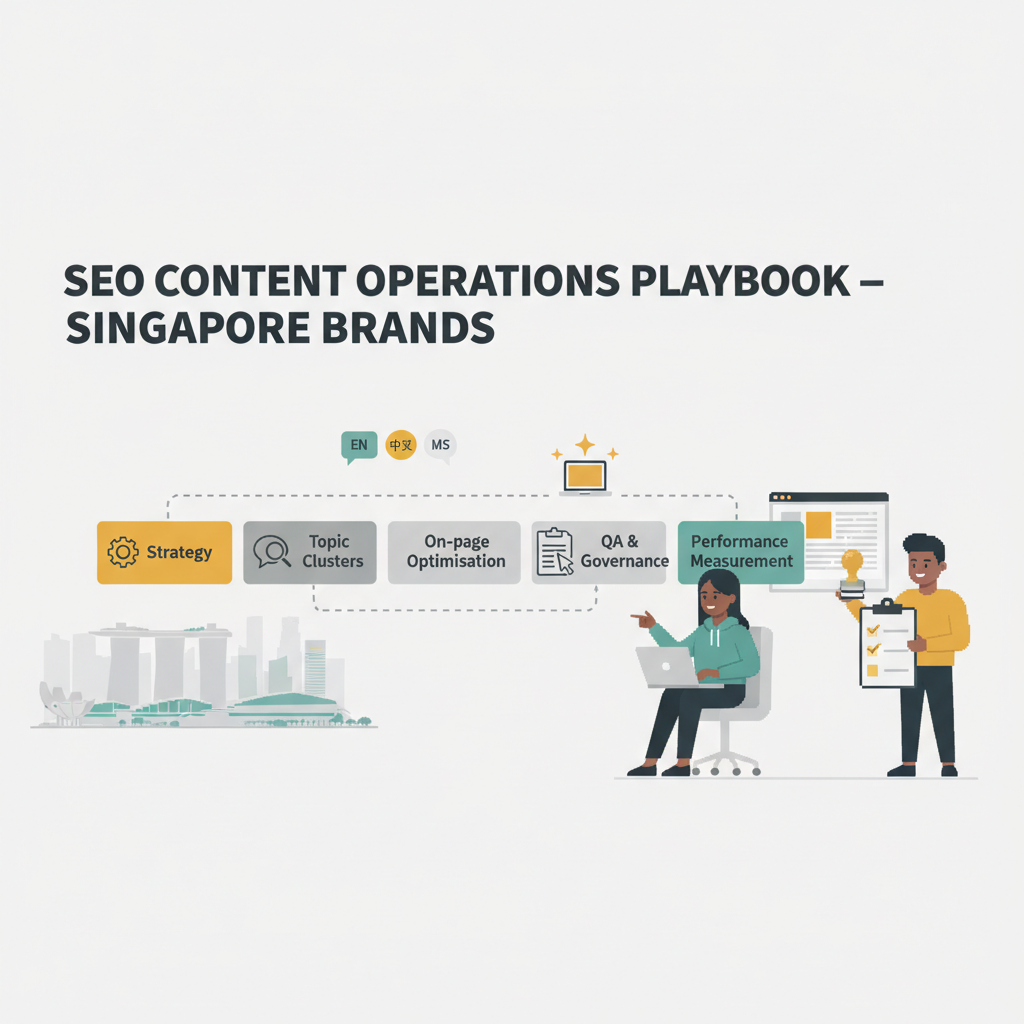
Why Singapore brands need a structured SEO content operations playbook
In Singapore’s fast-moving, multilingual digital landscape, search visibility is a decisive differentiator for growth. A structured SEO content operations playbook gives marketing leaders and content/SEO teams a scalable, repeatable framework to align language strategy, local intent, and content production across stakeholders—from product and engineering to agency partners.
To align with search engine expectations, ground your playbook in people-first content principles and modern ranking signals as outlined in Google’s guidance on creating helpful, reliable, people-first content and the Google ranking systems guide. Ensure content can be discovered and rendered efficiently by implementing technical best practices such as XML sitemaps and correct robots.txt directives, and optimize for user-centric performance using Core Web Vitals with attention to Interaction to Next Paint (INP).
- Define primary audiences and language coverage for Singapore
- Establish baseline KPIs linked to business outcomes
- Create a governance model with RACI
- Map topics to clusters and local intent
- Align content formats with local consumption preferences
Core principles of an SEO content playbook
What it is, who it serves, and expected outcomes
An SEO content playbook codifies how your brand discovers, creates, optimizes, and measures content with a Singapore and SEA focus. It serves marketing leaders, content/SEO practitioners, product and engineering teams, and localization stakeholders to ensure consistency and scale.
- Improve organic visibility for high-value, locale-relevant keywords
- Build a scalable engine aligned with language preferences (English, Mandarin, Malay, Tamil) and local intent
- Accelerate time-to-market via standardized briefs, templates, and governance
- Measure localization readiness and content ROI
The playbook framework for scale
Core artifacts, templates, and governance
- Content Brief Template: objective, audience, language, local intent, required media, success metrics
- Keyword Mapping Sheet: topic clusters, primary/secondary keywords, language variants, geo modifiers, ownership
- Localization Brief: tone, cultural notes, QA checks per language, translation/localization approach
- Editorial Calendar: cadence by language/locale, festival windows, neighborhood relevance
- QA Templates: grammar, factual accuracy, localization correctness, accessibility
- Content Audit Template: baseline and periodic performance and gap analysis
- Governance: RACI matrix and quarterly strategy reviews
For execution support, Hamilton & Sherwind’s Digital Marketing Services can integrate with your internal team to operationalize these artifacts.
- Assemble a cross-functional squad (SEO, content, localization, product)
- Publish a living glossary and master taxonomy
- Centralize templates and briefs
- Run quarterly governance reviews to adapt to search changes
Planning and topic clustering for Singapore markets
Topic clusters, keyword mapping, prioritization
Design clusters around local needs, language preferences, and neighborhood relevance.
- Local services and neighborhoods: “best X in [neighborhood]”, “near me” tied to MRT lines or precincts
- Singapore lifestyle and finance: housing, transport, fintech, education tech
- Multilingual hubs: English hub with Mandarin/Malay/Tamil spokes
- Seasonal and festivals: Chinese New Year, Deepavali, Hari Raya Puasa, year-end holidays
- Create language-specific keyword lists
- Map keywords to clusters, prioritize high-ROI local-intent terms
- Align keywords with page types (guides, how-tos, FAQs, local pages)
- Build a prioritized calendar (quick wins vs. authority pieces)
- Design internal linking across the cluster to build topical authority
Creation and on-page optimization workflows
Writing standards, optimization checklists, collaboration
Adopt professional, confident, and clear tone calibrated for Singapore’s diverse audience. Use scannable headings and bullet lists, and plan bilingual content when necessary.
On-page optimization checklist
- Title and meta description aligned to intent and primary keyword
- Logical H1–H3 structure with natural keyword placement
- Internal links to clusters and relevant services (e.g., Digital Marketing, Video Production in Singapore)
- Descriptive alt text; compressed images
- Appropriate schema (LocalBusiness, Article, Product)
- Language attributes and hreflang for multilingual pages
- Accessibility and readability checks
- Performance aligned to Core Web Vitals and INP
Collaboration workflow
Writer → Editor → Localization Review → QA, with language leads ensuring terminology and tone. Stakeholder sign-offs at draft and final stages.
Lightweight AI usage policy
- Allowed: outlines, first-pass drafts, paraphrasing, ideation, data insights (with human review)
- Human-in-the-loop: editor or language lead reviews every AI-assisted output
- Data handling: avoid confidential or proprietary information
- Transparency: mark AI-assisted sections where relevant
- Localization: AI can suggest variants; human ensures nuance and cultural fit
Quality assurance, audits, and governance
Review cycles, version control, QA templates
- Quick review: 2–3 days for drafts; in-week checks for critical pages
- Cluster QA: monthly cross-language checks
- Quarterly strategic audit: revisit clusters, localization readiness, performance
Maintain version history and standardized QA templates (language quality, factual accuracy, readability, accessibility). Verify cultural relevance and terminology consistency across languages. Ensure approvals are captured before publication.
- Language accuracy and tone alignment
- Factual accuracy with authoritative sources
- Localized relevance and cultural sensitivity
- Accessibility and readability
- Technical SEO readiness and internal linking integrity
Measurement, iteration, and localization readiness
KPIs, dashboards, feedback loops
- Organic traffic by language and locale
- Local keyword rankings and GBP visibility
- CTR from local queries and Featured Snippets
- Engagement (time on page, scroll depth) by language
- Local conversions and micro-conversions
- Localization readiness: % localized content, hreflang accuracy, translation cycle times
Build language- and locale-specific dashboards for traffic, rankings, conversions, and localization status. Set weekly huddles, monthly localization reviews, and quarterly strategy recalibrations.
Authoritative references
Related services and work
FAQ
What is an SEO content playbook?
An SEO content playbook is a structured set of processes, templates, and governance that guides how a brand discovers, creates, optimizes, and measures content to improve search visibility and engagement, particularly with local and multilingual audiences in Singapore.
Why does Singapore require a multilingual approach?
Singapore’s population uses multiple languages. A multilingual approach expands reach, improves relevance, and aligns with local search behavior where users query in English, Mandarin, Malay, or Tamil. Proper localization and hreflang signaling help search engines surface the right language version to the right user.
What are the core artifacts I should start with?
Begin with a Content Brief Template, Keyword Mapping Sheet, Localization Brief, Editorial Calendar, QA Templates, and a Content Audit Template.
How do I handle multilingual SEO technically?
Use hreflang for language-region variants, set canonical URLs appropriately, and ensure language-specific pages have correct metadata and internal linking.
What metrics should drive my local campaigns?
Track organic traffic by language, local rankings, GBP visibility, CTR from local queries, engagement by language, and local conversions.
Is AI allowed in content ops?
Yes, with guardrails: AI assists drafting, ideation, and data analysis, while humans review for factual accuracy, localization nuance, and tone.
Next steps to implement the playbook
To begin your Singapore-focused SEO content operations journey, consider a phased rollout with clearly defined language coverage, topic clusters, and governance. If you’d like a concrete starter brief, keyword map, and a 12-week rollout plan tailored to your brand, get in touch.