

How to Choose the Right Social Media Partner in Singapore: Services, Costs & Checklist
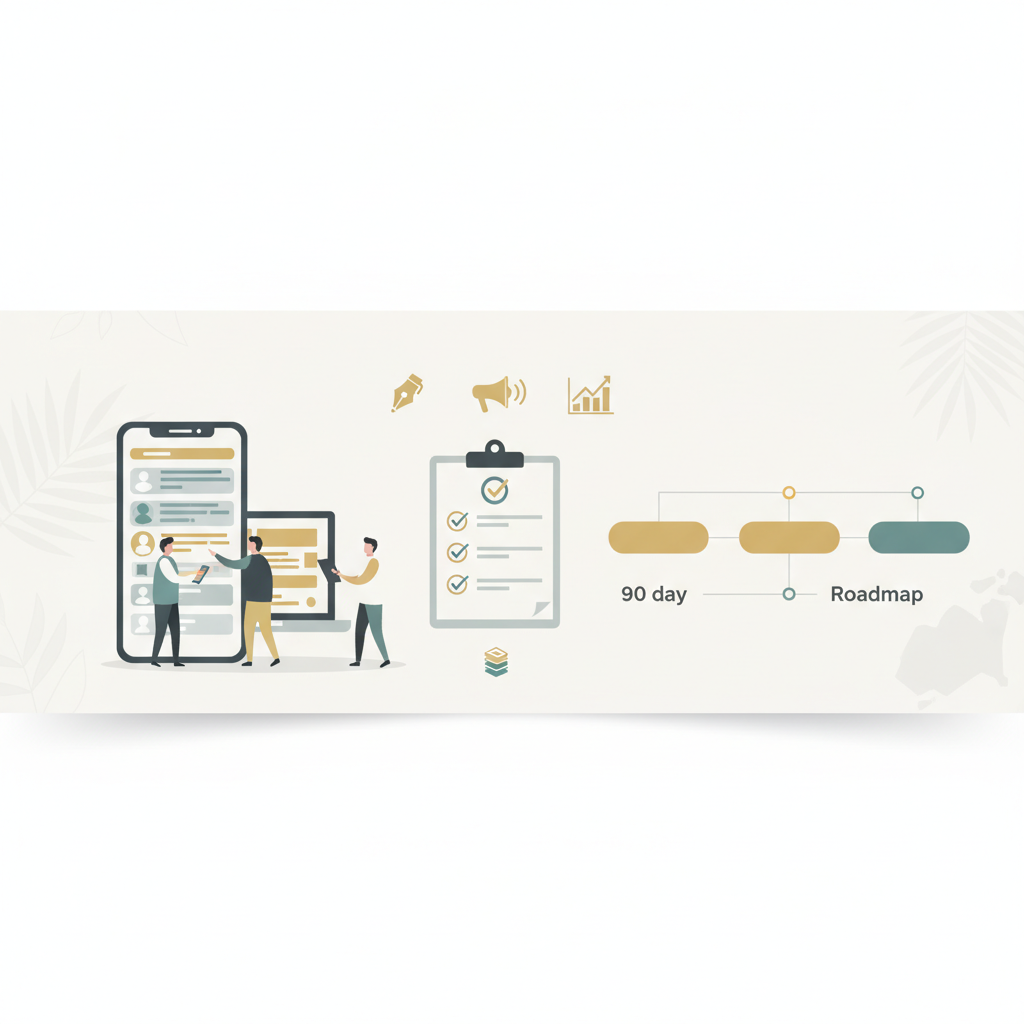
Why your choice of social media marketing agency Singapore shapes brand success
Social media has become the primary discovery and engagement channel for Singapore’s 5.13 million active users—representing 85% of the population. Whether your audience is scrolling through Instagram Reels, watching TikTok videos, or connecting on LinkedIn, the platforms where you show up matter enormously. But so does how you show up.
For many SME founders and marketing managers, the decision to hire an external social media marketing agency Singapore is both exciting and daunting. You know you need a presence on these platforms, but managing content creation, community engagement, paid advertising, and analytics in-house can quickly overwhelm a lean team. The alternative—hiring a specialist partner—promises efficiency, expertise, and measurable results. Yet choosing the wrong agency can waste budget, damage your brand voice, and leave you frustrated.
This guide walks you through everything you need to know: the local landscape, the services that drive real results, how to evaluate agency credentials, and the pricing models that work for Singapore SMEs. By the end, you’ll have a clear framework for selecting a partner that aligns with your goals and budget.
Understanding the local social media landscape
Key platforms and user demographics in Singapore
Singapore’s social media ecosystem is remarkably mature and diverse. According to DataReportal’s Digital 2024 report and Meltwater’s 2025 update, the average Singaporean is active on more than seven platforms and spends approximately 2 hours and 2 minutes per day on social media. However, attention is concentrating into video-first environments. DataReportal – Digital 2024: Singapore
Instagram reaches about 3.15 million people (roughly 52% of the population), with a modest female skew and the largest cohort aged 18–34. It is one of Meta’s fastest-growing apps locally. For B2C brands—especially in lifestyle, fashion, F&B, and travel—Instagram is non-negotiable.
TikTok has exploded, reaching more than 3 million users aged 18+ with a strong year-on-year growth rate. Users in Singapore spend more time on TikTok per month than on most other social networks. The gender split is close to even, and while the 18–24 age group dominates, the 25–34 segment is growing rapidly. For B2C brands targeting younger audiences or experimenting with social commerce, TikTok is now essential. Source: TikTok Ads Manager reach data summarised in DataReportal’s Singapore report.
Facebook still commands reach in the millions, with strong penetration among adults 25–44 and meaningful usage even in the 45+ demographic. Among Singapore SMEs selling to consumers, Facebook ads often account for a significant share of paid-social budgets because of its targeting depth and broad reach. Source: Meta Audience Insights, Singapore.
LinkedIn has one of the highest penetrations globally, with more than 4 million registered members in Singapore. The platform skews professional, with a large share of users aged 25–34. For B2B marketers, LinkedIn is dominant: multiple industry surveys consistently rank it as the number one channel for B2B lead generation. LinkedIn Marketing Solutions – global benchmarks
YouTube reaches the vast majority of internet users here, and time spent on the platform is substantial. Google’s Brand Lift studies in Asia-Pacific have shown meaningful uplifts in ad recall, consideration and purchase intent when brands run consistent YouTube campaigns. Think with Google – YouTube APAC case studies
For B2C brands, a typical media spend allocation might look like:
- Instagram: approximately 20–30%
- Facebook: approximately 20–30%
- TikTok: approximately 15–25%
- YouTube: approximately 15–20%
- LinkedIn: less than 5%
For B2B brands, the stack often flips:
- LinkedIn: approximately 40–50%
- YouTube: approximately 15–25%
- Facebook: approximately 10–20%
- Instagram: approximately 10–15%
- TikTok: experimental or primarily for employer branding
The specific mix depends on your audience, creative assets, and objectives, but any serious social media marketing agency in Singapore should be able to justify its recommended mix with real data, not just preference.
Compliance and cultural nuances marketers must know
Singapore’s regulatory environment is sophisticated, and non-local agencies often stumble here. While this guide won’t dive into PDPA compliance mechanics, it’s worth noting that the Personal Data Protection Act governs how you collect and use customer data on social platforms. Any reputable agency should have basic PDPA literacy and ask about your data practices during onboarding.
Sector-specific considerations matter too. If you’re in financial services, the Monetary Authority of Singapore (MAS) has strict guidelines for how you can advertise investment products, loans, and insurance on social media. Healthcare and education sectors face similar restrictions through governance codes and professional guidelines. A good local agency will flag these constraints early and help you navigate them with appropriate disclaimers, tone and targeting.
Cultural and linguistic nuances are where international agencies often falter:
- Singapore is multilingual: English is the default for business, but Mandarin, Malay, and Tamil are widely spoken.
- Successful campaigns increasingly use bilingual captions (for example, English–Mandarin) on TikTok and Instagram Reels to widen reach.
- The festive calendar is dense and multi-faith: Chinese New Year, Hari Raya, Deepavali, Christmas, National Day, and school holiday periods are all significant moments for consumer engagement.
Common mistakes non-local agencies make include:
- Assuming English-only content is sufficient.
- Overusing generic Western imagery that doesn’t reflect local diversity.
- Missing local holidays or exam periods in campaign planning.
- Not understanding nuances like price sensitivity in different heartland versus CBD audiences.
When evaluating social media marketing agencies, ask them to walk you through a local campaign they’ve run. How did they adapt content for Singaporean audiences? How did they handle comments that touched on culture, race, or religion?
Service pillars that drive results
If you look beyond the buzzwords, most high-performing social media marketing agencies in Singapore deliver value across three core pillars: content and community, paid media, and analytics.
Content creation and community management
A good agency typically handles content creation and community management as the backbone of your presence. This includes:
- Content strategy and calendar
A four- to eight-week content calendar, often shared in tools like Google Sheets, Notion or a project management platform. This should cover themes, formats, platform mix and posting frequency. - Daily or weekly content production
Creating three to five posts per week across your primary platforms, tailored to each channel’s format and audience. For example:- Instagram Reels and carousels for lifestyle storytelling
- TikTok short-form videos for trends and “behind the scenes”
- LinkedIn thought-leadership posts and carousels for B2B
- Facebook updates and community posts for offers and announcements
- Copywriting and visual design
Crafting on-brand captions, hooks and calls-to-action, plus designing or editing images and videos. This is where a creative, full-service partner like Hamilton & Sherwind can integrate social content with broader brand campaigns, instead of treating it as an isolated channel. You can see how this connects with broader creative work in our social media services and digital marketing services. - Community engagement
Responding to comments, direct messages and mentions within agreed service levels (for example, within 4–24 hours on business days). For some sectors (F&B, retail, e-commerce), this is as important as the content itself. - Crisis and escalation workflows
Monitoring for negative sentiment, complaints or potential crises, and escalating to you with recommended responses.
Expected deliverables typically include:
- A monthly content calendar
- Post previews for approval
- Community management summaries (for example, common questions, sentiment themes)
- Quarterly content strategy reviews
Paid advertising options and budget ranges
Social media advertising in Singapore spans multiple platforms, each with distinct strengths:
- Meta (Facebook and Instagram)
Ideal for reach, retargeting, and conversion-driving campaigns. Ad formats include image, video, carousel, collection and Reels ads. - TikTok
Great for awareness, engagement and increasingly for social commerce. Best suited for brands that can create or support authentic, creator-style content. - LinkedIn
The B2B powerhouse for decision-maker reach. Sponsored content, InMail and Lead Gen Forms are typical formats. - YouTube
Strong for both B2C and B2B, especially when you have video assets that can tell a story or demonstrate product value.
Indicative monthly media budgets for Singapore SMEs:
- Early-stage (pre-revenue or less than SGD 1 million annual revenue): SGD 500–2,000 per month
- Growth-stage (SGD 1–10 million): SGD 2,000–10,000 per month
- Established (more than SGD 10 million): SGD 10,000+ per month
How agencies charge for media:
- Flat fee (for example, SGD 1,000–2,000 per month for campaign setup and optimisation)
- Percentage of ad spend (typically 10–20%)
- Hybrid (base retainer plus a percentage of spend beyond a threshold)
If you’re comparing proposals, normalise them by asking: “What would your fee be if we spent SGD X per month on social media advertising in Singapore?”
Analytics, testing and optimisation cycles
Top social media marketing agencies approach analytics systematically. They track metrics across three funnel stages:
- Awareness – impressions, reach, video views, follower growth.
- Engagement – likes, comments, shares, saves, click-through rates, view-through rates.
- Conversion – leads generated, purchases, sign-ups, cost per result (CPL, CPA, ROAS).
A strong agency will:
- Set clear KPIs with you before launching campaigns.
- Run weekly optimisation cycles: pausing low performers, testing new creative, adjusting bids and audiences.
- Provide monthly reports that go beyond screenshots of platform dashboards, offering insights and concrete recommendations.
- Conduct quarterly reviews to re-evaluate strategy, audience segments and content pillars.
Ask potential partners to share anonymised sample reports, or browse their digital marketing portfolio and social media portfolio to see how they talk about performance and learning.
Evaluating agency expertise and fit
Credentials, certifications and industry awards
Not all credentials are created equal. Signals worth paying attention to include:
- Platform partner status – Meta Business Partner, TikTok Marketing Partner, Google Partner. These suggest volume and a baseline of competence.
- Specialist certifications – for example, Meta Certified Media Buying Professional, LinkedIn Marketing Labs badges.
- Industry awards – Cannes Lions, Spikes Asia, local Singapore advertising and marketing awards. These usually celebrate creative excellence.
But the most important indicators for you as an SME are:
- Sector relevance – Have they worked in your industry or with similar audiences?
- Scale match – Do they understand SME constraints, or are most of their case studies from huge regional brands?
- Team depth – Is there an integrated team (strategist, content, paid media, design, analytics), or just a couple of generalists?
You can often infer this by looking at an agency’s portfolio and service pages such as social media or digital marketing.
Decoding case studies and performance metrics
When reviewing an agency’s case studies, look for these elements:
- Clear objectives
Increase online sales by 30% in six months is clearer than grow brand awareness. - Baseline metrics
Where did they start? Without a baseline, percentage lifts are meaningless. - Concrete results
Look for specifics: 45% increase in sales, 8% engagement rate, cost per lead reduced from SGD 60 to SGD 35. - Credible timelines
Sustainable social media growth normally takes three to six months, not three to six days. - Methodology
What did the agency actually do? Were there content experiments, paid strategies, audience refinements?
Red flags:
- Vague language: massive uplift, viral success without numbers.
- No mention of constraints or learnings.
- Case studies that are clearly re-skinned across different industries.
Client service processes and communication style
Ways of working matter as much as creative.
During discovery calls, ask:
- How often will we have check-ins or review calls?
- Who will be my main point of contact day-to-day?
- How do you manage content approvals and revisions (tools, timelines)?
- Whats your reporting cadence and format?
- How do you handle months where results underperform?
Youre looking for:
- Structure – standard processes, but flexible enough to adapt to your internal realities.
- Transparency – clarity on whats included versus billable.
- Chemistry – a team you can imagine working with for at least a year.
If you sense misalignment, it’s usually better to walk away early.
Budget, engagement models and onboarding roadmap
Retainer vs project vs hybrid models
Retainer models
Best for ongoing management. You pay a fixed monthly fee for:
- Strategy and planning
- Content creation and scheduling
- Community management
- Monthly reporting
- Light paid optimisation (depending on scope)
Indicative range for Singapore SMEs: SGD 2,000–8,000 per month, depending on platforms, volume and complexity.
Project-based models
Best for one-off initiatives:
- Product launches
- Seasonal campaigns
- Platform pilots (for example, “let’s test TikTok for three months”)
Fees often range from SGD 5,000–15,000+ per campaign.
Hybrid models
Increasingly common and SME-friendly: a base retainer for always-on activity, plus project fees for major campaigns. This balances continuity with flexibility.
When you receive proposals, compare not just the total retainer, but whats actually included and how much senior time is allocated.
Typical pricing benchmarks and hidden costs
Indicative benchmarks (Singapore context):
- Content-only retainer
Four to six posts per week across one to two platforms, basic community management, simple reporting:
SGD 2,000–4,000 per month - Content plus media buying
Content creation plus management of SGD 3,000–5,000 monthly ad spend:
SGD 4,000–7,000 per month (excluding media) - Full-funnel social campaigns
Strategy, content, media buying, lead funnels or landing pages, advanced analytics:
SGD 6,000–15,000+ per month (depending on complexity and regions targeted)
Common hidden or unclear costs to clarify:
- Number of revision rounds included per asset.
- Rush fees for last-minute requests.
- Video production (shoot days, editing, motion graphics) – usually separate from monthly retainers.
- Stock assets (music, footage, premium fonts).
- Platform or third-party tools (social listening, scheduling, reporting).
Having a clear written scope of work, plus a simple change-order process, prevents surprises later.
90-day onboarding milestones and KPI alignment
A structured onboarding process is one of the strongest signs of a mature agency. A typical 90-day roadmap looks like:
Days 1–14: Discovery and strategy
- Brand and business immersion
- Audit of your current social presence and analytics
- Competitor and category review
- Audience persona refinement
- KPI and measurement framework
- Strategy deck and three- to six-month roadmap
Days 15–30: Foundation and launch
- Profile optimisation (bios, handles, link-in-bio, highlight covers, tracking)
- First four to eight weeks of content calendar
- Content production and publishing
- Initial paid campaigns (if in scope)
- Dashboard setup (for example, Looker Studio, platform dashboards, CRM integration)
Days 31–60: Optimisation and momentum
- Analysis of early results versus benchmarks
- Content and creative testing (formats, hooks, calls-to-action, offers)
- Audience and bidding refinements for paid campaigns
- Mid-quarter strategy tweaks
- Deeper integration with your sales or customer success teams
Days 61–90: Scale and review
- Scale-out of proven campaigns and content formats
- Potential expansion to additional platforms
- Full 90-day review against KPIs
- Planning for the next three to six months with updated goals and budgets
A simple KPI framework could be:
- Awareness (Month 1–2) – impressions, reach, video views, follower growth.
- Engagement (Month 2–3) – engagement rate, saves, shares, comments, clicks.
- Conversion (Month 3+) – leads, sales, booked appointments, cost per result.
Your agency should customise these for your sales cycle and margins.
Making your final selection with confidence
Choosing the right social media marketing agency Singapore comes down to a handful of critical questions:
- Do they understand your business and industry, or are they forcing generic templates on you?
- Can they explain their strategy, pricing and reporting in plain language?
- Do they have relevant local experience and sensitivity to Singapore’s culture and regulations?
- Does their team composition (strategy, creative, media, analytics) match the outcomes you need?
- Do you feel a sense of trust and alignment after your meetings?
The right partner will help you turn social media from a time-consuming obligation into a predictable growth lever—combining strong creative ideas, disciplined media buying and clear reporting.
If you’re exploring potential partners, you can review more of our work in our portfolio and specifically our social media portfolio to see how we’ve helped brands in Singapore and the region. You can also dive deeper into related topics on the Hamilton & Sherwind blog.
When you’re ready to discuss your own social media goals, campaigns you’d like to launch, or how to benchmark agency proposals you’ve already received, we’re happy to help.
Get in touch with the Hamilton & Sherwind team via our contact page: Contact us to discuss your social media strategy.