

How to Choose a Branding Agency in Singapore: Services, Costs & Success Stories
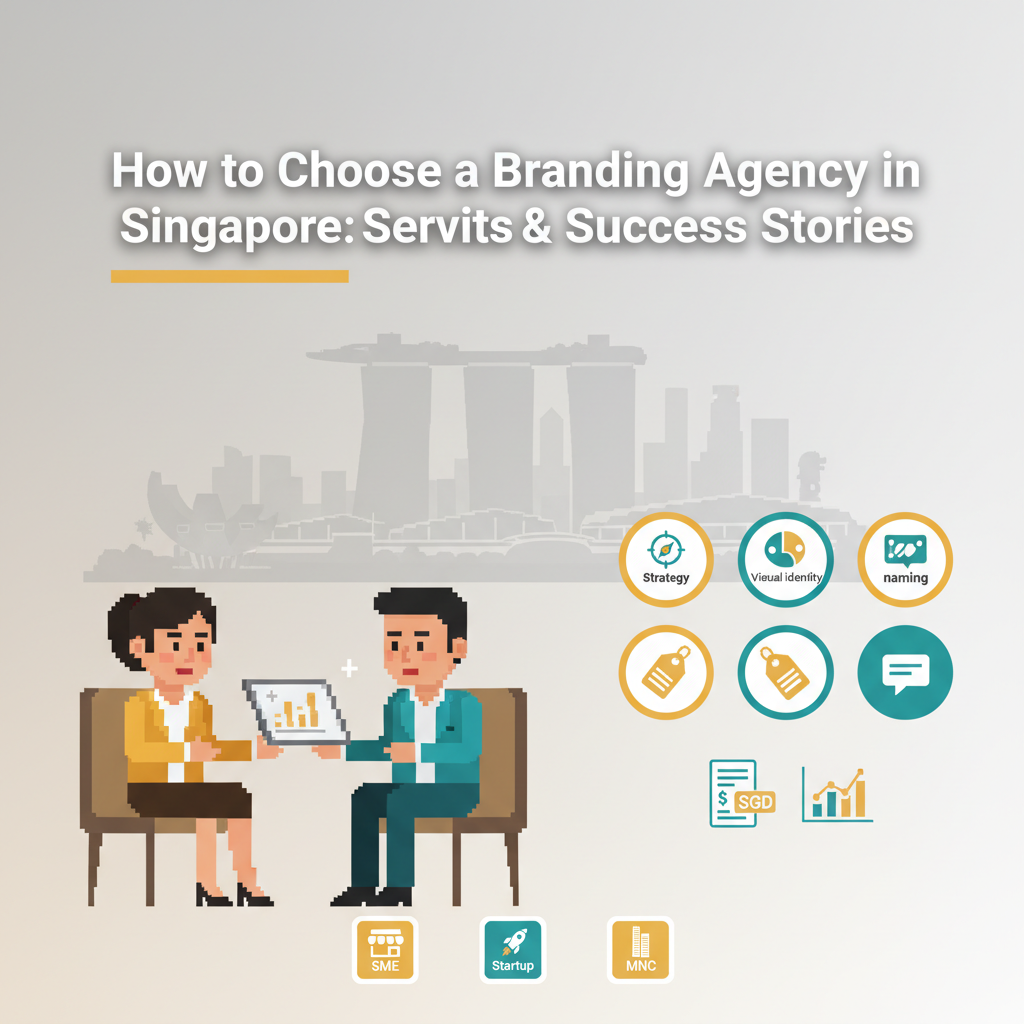
Setting the Stage: Why Brand Matters in a Competitive Singapore Market
In a region where over 1.4 million businesses compete for attention across Singapore, Malaysia, Indonesia, and beyond, a strong brand is no longer a luxury—it's a survival mechanism. The Southeast Asian market is characterised by rapid digital adoption, intense competition from both local and multinational players, and consumers who have unprecedented choice at their fingertips. In this environment, companies that invest in deliberate, strategic branding consistently outpace their competitors.
Singapore's economy, in particular, has evolved into a hub for innovation and commerce. The city-state attracts startups, regional headquarters, and established enterprises all vying for market share. Yet many business owners still treat branding as an afterthought—a logo refresh or a website redesign—rather than as a foundational business asset. This misconception costs them dearly.
The reality is that your brand is the primary mechanism through which customers decide whether to buy from you, recommend you, or pay a premium for your offering. In a crowded marketplace, a well-crafted brand creates clarity, builds trust, and commands loyalty. For business owners and marketing leaders in Singapore and Southeast Asia, understanding how to build or refresh a brand—and knowing when to partner with a professional branding agency Singapore—is essential to growth.
The Link Between Strong Brands and Revenue Growth
The connection between brand strength and financial performance is not theoretical; it is measurable and substantial. Research from Interbrand's 2023 "Best Global Brands" report reveals that the aggregate value of the world's top 100 brands rose 16% year-over-year to US$3.3 trillion. More tellingly, the parent companies of these brands outperformed the MSCI World Index by roughly 2× over the past decade. This is not coincidence—it is the compounding effect of brand equity.
Kantar BrandZ's analysis shows that the world's 100 most valuable brands added US$2 trillion in market capitalisation between 2020 and 2022, even as the broader market contracted. This resilience demonstrates that strong brands act as a buffer during economic uncertainty, a critical insight for business leaders navigating volatile regional markets.
At the operational level, the revenue impact is equally compelling. Companies that maintain consistent branding across all channels—logo, colour, tone, and messaging—see an average revenue boost of 23%, according to research cited by Linearity and Statista. This consistency is not about aesthetics; it is about reducing cognitive friction for customers and reinforcing your value proposition at every touchpoint. For an overview of what comprehensive branding entails in practice, see a partner agency's explanation of why branding matters in Singapore's competitive market.
The customer loyalty economics are even more striking. An emotional bond with a brand raises a customer's lifetime value by 306%, according to Linearity's meta-analysis. McKinsey's 2023 consumer research found that 78% of shoppers say personalised, brand-led communications make them more likely to repurchase. Companies in the top quartile of personalisation—a proxy for sophisticated, data-driven branding—generate 40% more revenue from those activities than slower-growing peers.
Perhaps most relevant to pricing strategy: brands that forge a solid emotional connection can charge 20–200% more than competitors, depending on the category. Market leaders typically command a 13% price premium simply on the strength of their name. Apple, valued by Interbrand at US$502 billion, maintains a gross margin of approximately 44%—10–15 percentage points above the industry average—a gap analysts attribute primarily to brand-driven pricing power.
For business owners in Singapore and SEA, this translates to a simple truth: investing in a strong brand is not a cost centre; it is a revenue multiplier.
The Business Case for Hiring a Branding Agency Singapore
Many business owners face a critical decision: should we build our brand in-house, or should we hire a professional branding consultancy Singapore? The answer depends on your resources, timeline, and strategic ambitions—but the case for external expertise is compelling.
When to Engage External Experts vs. DIY
Building a brand in-house is tempting. You know your business, your customers, and your market. Why pay an external agency when you can do it yourself?
The challenge is that branding is not a single discipline; it is a convergence of strategy, psychology, design, linguistics, and market research. A full rebrand typically costs between US$80,000 and US$300,000, depending on scope. The biggest cost is not the initial investment—it is doing it twice because the first attempt missed the mark.
Here are the scenarios where external expertise becomes essential:
You are launching a new company or entering a new market. Startups and scale-ups often lack the internal bandwidth and objectivity to build a brand from scratch. A professional branding agency Singapore brings proven methodology, cross-industry pattern-matching, and the ability to compress a 12-month process into 16–20 weeks. Everlywell (formerly Everly Health) worked with Wolff Olins to collapse a confusing product architecture into a single, consumer-friendly brand. The rebrand preceded a Series B funding round of US$50 million and helped the company reach a US$3 billion valuation by 2021.
You are repositioning in a crowded local space. In saturated categories—F&B chains, private education, healthcare, or financial services—Singapore consumers are faced with near-identical options. A specialist branding company singapore can help you articulate a sharper value proposition and distinct visual identity so that you don’t compete purely on price.
Your current brand is holding you back. If your brand is perceived as outdated, unclear, or misaligned with your actual value proposition, an in-house refresh often perpetuates the problem. Internal teams are too close to the business; they cannot see the gaps that customers see. An external branding consultancy Singapore brings objectivity and can challenge strategic blind spots that internal teams might miss.
You lack in-house design and strategy talent. Many companies have marketing teams but no dedicated brand strategist or senior designer. Hiring full-time specialists is expensive and may not be justified if you only rebrand every 5–10 years. An agency engagement lets you access world-class talent on a project basis. For a sense of how agencies structure this mix of strategy, design and execution, explore a full-service firm's overview of core branding and marketing services.
You need to scale your brand across multiple markets. If you are expanding regionally—from Singapore to Malaysia, Indonesia, Thailand, or beyond—a professional agency can ensure consistency while adapting to local nuances. Dunkin' dropped "Donuts" from its name in 2018 to signal a global beverage focus; the shorter name was easier to transliterate in Asian markets and helped the company open eight new markets in the region.
You want measurable outcomes, not just a pretty logo. Professional agencies operate with a methodology that links strategy to design to activation to measurement. They can articulate how a rebrand will impact awareness, consideration, preference, and ultimately, revenue. In-house efforts often lack this rigour.
That said, there are scenarios where a lighter-touch approach makes sense. If you are making a minor logo refresh, updating your website, or creating social-media guidelines for an existing brand, you might hire a freelance designer or a smaller boutique. But for a comprehensive rebrand—especially one tied to a business transformation—a full-service branding agency singapore is the safer bet.
Core Services Offered by Local Branding Consultancies
When you engage a branding agency singapore, you are not just buying a logo. You are buying a structured process that moves from research through strategy to design to activation. Understanding what each service entails will help you scope your project and evaluate proposals. For real-world examples of how these services come together, explore a curated branding portfolio with SME and MNC case studies.
Strategy & Positioning
Brand strategy is the north star. It answers the fundamental questions: Who are we? What do we stand for? Why should customers care? What is our unique place in the competitive landscape?
A professional branding consultancy Singapore begins with research. This includes stakeholder interviews, customer personas, competitive analysis, brand equity audits, and often quantitative surveys or focus groups. The research phase typically takes 3–4 weeks and surfaces the gap between your current perception and your desired perception.
From research, the agency distils a brand strategy that includes:
- Purpose and vision: Your long-term reason for existing beyond profit.
- Core values: The principles that guide decision-making.
- Target audience: Detailed personas of the customers you serve.
- Value proposition: The specific benefits you deliver and why you are different.
- Brand personality: The tone, attitude, and character of your brand.
- Brand architecture: How multiple products or sub-brands relate to the parent brand.
Brand positioning is often treated as a subset of strategy but is critical enough to warrant its own focus. Your positioning statement is a single-minded claim about your place in the market. For example, Subway's positioning is "the quick-service brand for fresh, healthier fast food." This positioning directs every subsequent decision—from menu offerings to store design to advertising.
A strong positioning statement is:
- Ownable: It is unique to you and defensible against competitors.
- Credible: You can deliver on the promise.
- Motivating: It resonates emotionally with your target audience.
- Future-proof: It allows room for growth and evolution.
The strategy phase typically takes 2–3 weeks and culminates in a strategy deck that becomes the brief for all downstream work—naming, messaging, and design.
Visual Identity and Design
Once strategy is locked, the visual identity system brings it to life. This is where most people think "branding" begins, but in reality, it is the third or fourth step in a longer process.
A comprehensive visual identity system includes:
- Logo and logomark: The primary symbol that represents your brand.
- Colour palette: A primary colour, secondary colours, and accent colours chosen to signal your brand personality and positioning.
- Typography: Primary and secondary typefaces that reflect your tone and ensure readability across applications.
- Iconography: A system of icons that extend the visual language.
- Imagery style: Guidelines for photography, illustration, or other visual content.
- Layout grids and spacing: Rules that ensure consistency across applications.
- Motion guidelines: How your brand moves in video, animation, or interactive media.
The visual identity extends far beyond the logo. It includes:
- Packaging design (if you have physical products)
- Website and digital interface components
- Social-media templates
- Signage and environmental design
- Stationery and business collateral
- Advertising templates
- Employee uniforms or branded merchandise
Each element is chosen to signal your brand personality and positioning. A fintech targeting trust might lean on muted blues and serif typography to evoke stability. A consumer-tech brand targeting youth might use bright colours and sans-serif fonts to signal innovation and accessibility.
The design phase typically takes 4–6 weeks and includes multiple rounds of refinement based on stakeholder feedback.
Naming, Messaging & Copywriting
Your brand's verbal identity is as important as its visual identity. This includes your company name, product names, taglines, and the tone of voice that guides all written communication.
Naming is a specialised discipline. A professional branding agency Singapore will:
- Generate hundreds of name candidates through creative sprints.
- Screen candidates for trademark availability, domain availability, and linguistic appropriateness across your target markets.
- Test short-listed names with customers to gauge memorability, relevance, and emotional resonance.
- Provide rationale for each recommendation, explaining how the name reflects your positioning and strategy.
A strong name is:
- Memorable: Easy to recall and pronounce.
- Distinctive: Different from competitors and not easily confused.
- Meaningful: It either describes what you do or evokes the right emotional associations.
- Ownable: Trademark and domain availability in your key markets.
- Future-proof: It does not lock you into a narrow category or geography.
Messaging and copywriting translate your strategy into language that resonates with customers. This includes:
- Brand story: A narrative that explains who you are, why you exist, and what you stand for.
- Elevator pitch: A 30-second summary of your value proposition.
- Key messages: The 3–5 core claims you want to communicate to different audiences.
- Tone-of-voice guidelines: Rules that ensure every piece of writing—from website copy to social-media posts to customer-service emails—sounds authentically "on-brand."
- Taglines and slogans: Memorable phrases that encapsulate your positioning.
The messaging phase typically takes 2–3 weeks and produces a messaging framework that guides all future communication, whether written by in-house teams, agencies, or freelancers.
Selecting the Right Partner: Criteria, Budgeting and Red Flags
Choosing a branding agency singapore is one of the most important decisions you will make as a business leader. A poor choice can result in wasted time, money, and opportunity. A great choice can accelerate your growth and create a competitive moat that lasts for years. When reviewing potential partners, it can help to compare their story and ethos against how established creative firms describe themselves on their “about” pages—see, for example, how one agency frames its role as a trusted branding and creative partner.
Credentials, Industry Fit and Culture Match
Start by building a long-list of 5–7 potential agencies. You can find them through referrals, design directories like Dribbble or Behance, LinkedIn thought-leaders, or industry associations. Then apply a rigorous screening process.
Credentials and process: Look for an articulated, repeatable methodology that starts with research and ends with activation. Ask each agency to describe their typical timeline, work stages, and decision gates. Verify that they run customer interviews, competitive audits, and brand architecture workshops. Research shows that fewer than 20% of "logo shops" conduct primary research; this is a key differentiator between a true branding consultancy singapore and a design vendor.
Accreditation is not mandatory, but membership in professional bodies like AIGA (American Institute of Graphic Arts), D&AD (Design and Art Direction), or partnerships with research firms like Kantar signal peer recognition and commitment to best practices.
Portfolio and case studies: Seek evidence of end-to-end work. You want to see projects that include research, strategy, visual identity, and rollout—not just pretty logos. Look for measured outcomes: Did the rebrand lift awareness? Did it increase sales? Did it help the company enter a new market or secure funding? Awards are nice, but business results are what matter. Use public case studies and curated collections—such as an agency’s dedicated branding case-study portfolio—to benchmark the quality and breadth you expect.
Variety in the portfolio is important. An agency that has worked across multiple sectors and styles proves they solve problems rather than recycle one aesthetic. However, 1–2 relevant references in your industry can accelerate onboarding and ease regulatory nuances.
Cultural alignment and working chemistry: This is often overlooked but critical. A red flag is if senior partners attend the pitch but disappear at kick-off. Ask explicitly: "Who will be on our day-to-day team, and can we meet them now?"
Probe their collaboration style. Do they prefer agile sprints with weekly check-ins, or milestone-based reviews? Do they emphasise transparency and direct feedback, or do they prefer to present finished work? Do they welcome co-creation and input from your team, or do they prefer to work independently?
Chemistry shows up in the first exploratory call. Are they responsive? Do they ask thoughtful questions about your business? Do they seem genuinely interested, or are they just going through the motions? Trust your gut.
Pricing Models Explained (Project vs. Retainer)
Branding agencies typically offer three pricing models:
Project-based (fixed scope, fixed fee): You define the deliverables, timeline, and budget upfront. The agency commits to delivering specific outputs—e.g., brand strategy, visual identity system, brand guidelines—for a fixed price. This model works well for discrete projects like a naming exercise, a logo refresh, or a full rebrand with a clear scope.
The advantage is predictability; you know exactly what you are paying. The disadvantage is scope creep. Ensure the proposal specifies the number of revision rounds, the depth of research, and what counts as "out of scope." A typical mid-market rebrand (research through rollout) costs US$150,000–US$250,000.
Retainer or brand-stewardship model: You pay a monthly fee for ongoing creative support, brand governance, and asset production. This model works when you lack an in-house brand manager or foresee frequent campaigns and need consistent brand application. Retainers typically start at US$7,000–US$15,000 per month for 6- or 12-month terms.
The advantage is flexibility and continuity; you have a dedicated team that knows your brand inside and out. The disadvantage is that you are paying for availability, not just output, so ensure the retainer includes a clear scope of work and monthly deliverables.
Time-and-materials (T&M): The agency bills hourly or daily rates for work performed. This model is flexible but risky without a cap. It works when strategy is clear but creative volume is unknown. Always negotiate a not-to-exceed cap and a monthly budget ceiling.
Benchmark costs:
- Naming only: US$15,000–US$30,000
- Core visual identity (logo, colour, typography, guidelines): US$20,000–US$40,000
- Full mid-market rebrand (research, strategy, naming, messaging, visual identity, guidelines, activation): US$150,000–US$250,000
- Retainers: US$7,000–US$15,000 per month
These are Singapore and SEA benchmarks; boutique agencies may charge less, while top-tier global firms may charge significantly more. Many firms package these into transparent branding and digital marketing service bundles so you can compare options side by side.
Warning Signs to Avoid
Before you sign a contract, watch for these red flags:
One-size-fits-all proposals: If an agency sends you an identical timeline and fee before conducting discovery, they are not taking your business seriously. Every rebrand is unique; a professional agency will ask questions before quoting.
Heavy discounting or spec work: Agencies that slash their fees to "win the pitch" often recoup the discount later through change orders or by cutting corners. Spec work (creating free concepts to win the business) is a sign of desperation and often results in lower-quality work.
Over-reliance on freelancers: Ask what percentage of the work will be done by staff vs. freelancers. If the agency is heavily dependent on freelancers with no guaranteed availability, you risk delays and inconsistency. A healthy ratio is 60% staff, 40% freelancers.
No mention of brand guidelines, training, or rollout: If the proposal stops at the logo, you are not getting a full rebrand. A professional agency will include guidelines, internal training, and activation support.
Poor chemistry signs: Missed emails, lateness to initial calls, defensiveness when questioned about process—these are early warning signs. If they are not responsive during the sales process, they will be worse during the engagement.
Shaky legal hygiene: Does the proposal include trademark pre-screening for naming? Does it address IP ownership and working-file access? Does it cover liability for stock imagery licensing? If not, ask why.
Awards showpieces with no measurable results: An agency that shows you beautiful work but cannot articulate business outcomes may be prioritising aesthetics over strategy. Ask for client testimonials and case studies with metrics.
Yes-men syndrome: An agency that never pushes back or challenges your assumptions is not adding value. You want a partner who will respectfully challenge strategic blind spots and advocate for what is right for your brand, even if it is not what you initially wanted to hear.
Case Studies: How Singapore Companies Transformed with the Best Branding Agency Singapore
The best way to understand the impact of professional branding is to see it in action. Here are three archetypes of brand transformation, each illustrating different lessons. For more detailed, sector-specific examples, explore a full branding and marketing portfolio that spans national campaigns, SMEs and regional brands.
SME Rebrand that Drove 35% Sales Lift
Consider the story of a regional food company that was losing shelf space to larger competitors. The company had been in business for 15 years, but its packaging looked dated and its brand story was unclear. Customers could not articulate why they should choose this brand over a cheaper alternative.
The company engaged a branding consultancy singapore to conduct a full rebrand. The process began with customer research: focus groups, in-store observations, and surveys revealed that customers valued the company's heritage and quality but did not perceive it as premium. The packaging looked mass-market, not artisanal.
The strategy repositioned the brand as "heritage meets modern." The visual identity featured a refined, hand-drawn logomark, a sophisticated colour palette, and premium packaging that dramatised the product format. The messaging emphasised the company's 15-year track record and commitment to quality.
The results were striking. Within the first six months, sales velocity increased by 35% in key retail channels. The brand secured new distribution in premium retailers. Customer perception of quality and premium positioning increased by 28 points in post-launch surveys.
The lesson: For SMEs, packaging and visual identity are often the fastest sales levers. Retail buyers measure "velocity per facing" within weeks. A rebrand that signals quality and differentiation can unlock new distribution and drive immediate sales lift.
Start-up Launch that Secured Series A Funding
A Southeast Asian fintech startup was preparing to raise Series A funding. The company had a strong product—a mobile app that made cross-border payments frictionless—but its brand was generic. The name was unmemorable, the visual identity looked like every other fintech, and the messaging did not articulate a clear value proposition.
The startup engaged a branding agency singapore to build a brand from scratch. The research phase revealed that the target audience—young professionals and small-business owners—were frustrated by the complexity of existing payment solutions. They wanted simplicity, speed, and trust.
The strategy positioned the brand as "payments made simple." The naming process generated hundreds of candidates; the final name was short, memorable, and evoked speed and clarity. The visual identity featured a distinctive symbol, a bold colour palette, and clean typography. The messaging emphasised ease of use and reliability.
When the startup pitched to investors, the new brand was a differentiator. Investors noted that the brand communicated the value proposition clearly and suggested a team that understood their market. The Series A round closed at a US$50 million valuation—significantly higher than comparable startups that had not invested in professional branding.
The lesson: For startups, a strong brand is a signal of professionalism and market understanding. It shortens the funding cycle and can justify a higher valuation. Investors are more likely to back founders who have thought deeply about their brand and market positioning.
MNC Refresh for Southeast Asia Expansion
A multinational consumer-goods company was expanding its regional headquarters from Singapore to serve all of Southeast Asia. The company had a strong global brand, but it was perceived as Western and corporate. To succeed in the region, it needed to feel more local and accessible.
The company engaged a branding agency singapore to refresh its regional identity. The research phase included interviews with consumers, retailers, and employees across five countries. The findings revealed that the brand was respected but felt distant. Consumers wanted to see the company as a partner in their lives, not just a vendor.
The strategy maintained the global brand equity but added a regional layer that emphasised local relevance and community. The visual identity introduced a new colour accent that reflected regional aesthetics. The messaging shifted from "global leader" to "local partner." The company launched a regional campaign that featured local stories and voices.
The results included increased brand affinity in the region, higher employee engagement (a key metric for attracting talent to the new headquarters), and accelerated market penetration in new countries.
The lesson: Multinationals can use rebranding to signal strategic shifts and build local relevance. A regional refresh that maintains global equity while adding local flavour can accelerate expansion and improve employee recruitment.
Lessons Learned & Key Takeaways
Across these case studies, several patterns emerge:
Rebranding is a business transformation tool, not just a creative exercise. The most successful rebrands are tied to a clear business objective—entering a new market, launching a new product line, securing funding, or repositioning against competitors. A rebrand without a business strategy is just a logo change.
Research is non-negotiable. Every successful rebrand began with deep customer and market research. This research surfaced insights that challenged internal assumptions and informed strategic decisions. Without research, you are guessing.
Consistency drives results. The companies that saw the biggest sales lifts were those that applied their new brand consistently across all touchpoints—packaging, retail, digital, internal communications. Inconsistency dilutes the impact.
Activation is as important as creation. A beautiful brand that is not properly launched and communicated will underperform. The best agencies include activation—internal training, launch campaigns, retail support—as part of the engagement.
Measurement matters. The companies that tracked metrics—sales velocity, customer perception, employee engagement, funding outcomes—could prove ROI and justify the investment. If you cannot measure it, you cannot manage it.
Conclusion: Your Next Steps Toward a Stand-Out Brand
In a competitive Singapore and Southeast Asian market, your brand is your most valuable asset. It drives customer loyalty, commands pricing power, and creates a competitive moat that is difficult for rivals to replicate.
If your brand is holding you back—if it is unclear, outdated, or misaligned with your business strategy—now is the time to invest in a professional rebrand. The cost of doing nothing is far higher than the cost of doing it right.
Here is how to move forward:
Step 1: Clarify your business objective. Why do you need a rebrand? Are you entering a new market? Launching a new product? Repositioning against competitors? Securing funding? Your objective will shape the scope and timeline of the engagement.
Step 2: Build a long-list of agencies. Research 5–7 branding agencies in singapore or branding consultancies Singapore that have relevant experience. Look at their portfolios, read case studies, and check references.
Step 3: Conduct chemistry calls. Schedule 30-minute calls with your top 3 agencies. Ask about their process, their team, and their approach to your specific challenge. Pay attention to how they listen and whether they ask thoughtful questions.
Step 4: Issue an RFP. Provide each agency with a brief that outlines your business objective, target audience, budget range, and timeline. Ask them to propose their approach, team, timeline, and fee.
Step 5: Evaluate proposals. Score each proposal against a weighted rubric: 30% strategic approach, 25% portfolio fit, 15% team skills, 15% cultural fit, 15% price. Do not choose based on price alone.
Step 6: Conduct reference calls. Ask each agency for two past-client references. Call them and ask about the quality of work, responsiveness, and business outcomes.
Step 7: Negotiate the contract. Once you have selected your partner, negotiate the statement of work, IP ownership, revision rounds, timeline, and kill-fee clauses. Ensure clarity on what is included and what is out of scope.
Step 8: Commit to the process. A successful rebrand requires active participation from your leadership team. Allocate time for workshops, feedback sessions, and decision-making. The agency is your partner, but you are the expert on your business.
A strong brand does not happen by accident. It is the result of strategic thinking, creative excellence, and disciplined execution. By partnering with the right branding agency singapore, you can build a brand that stands out, resonates with customers, and drives measurable business results.
If you would like to see how end-to-end brand transformation looks in practice across different sectors, browse a dedicated branding case-study portfolio and the broader marketing and creative portfolio. To deepen your understanding before you decide, you can also explore more perspectives on the branding and marketing blog.
When you are ready to explore your own rebrand or brand refresh, you can reach out for a consultation via the contact page: https://hamiltonsherwind.com/contact/.