

Branding Agency Singapore: A Complete Buyer’s Guide to Picking the Perfect Partner
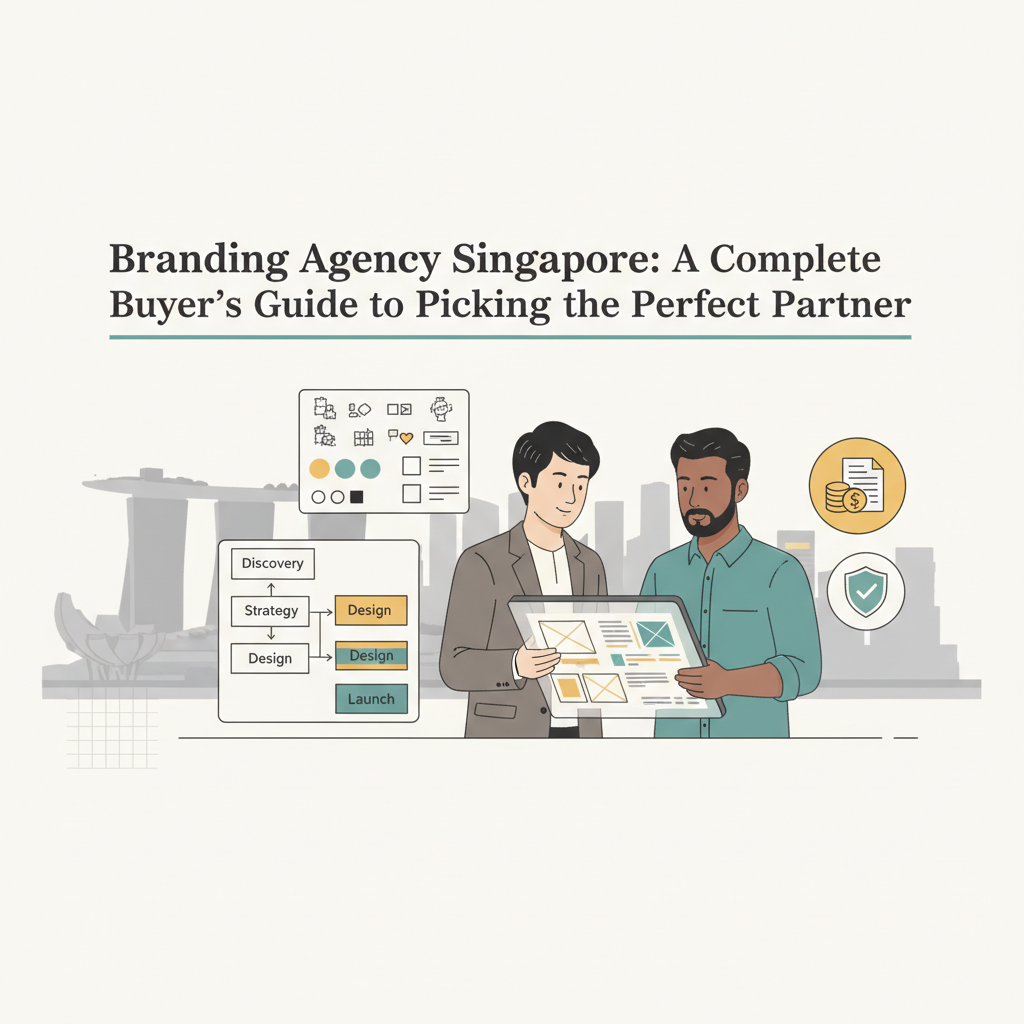
Header image:
Why Branding in Singapore Is Different
Singapore’s branding landscape is unlike anywhere else in Southeast Asia. You’re operating in a market where internet and smartphone penetration are among the highest in the region and consumers often encounter your brand first on mobile before they ever step into a physical location. But that’s just the beginning of what makes branding here uniquely challenging—and uniquely rewarding.
The multicultural fabric of Singapore demands a level of cultural sophistication that many business owners underestimate. With four official languages and a population that seamlessly switches between English, Mandarin, Malay, and Tamil, your brand messaging can’t simply be translated. It must be transcreated—adapted with cultural nuance and local insight. When brands offer multilingual content that genuinely respects the linguistic and cultural context of each audience segment, engagement typically rises significantly; when they treat translation as an afterthought, performance drops.
Beyond language, Singapore’s regulatory environment is among the strictest in the region. The Singapore Code of Advertising Practice (SCAP), administered by the Advertising Standards Authority of Singapore (ASAS), applies to every medium—including social media and influencer partnerships. The principle is unforgiving: all advertising must be legal, decent, honest, and truthful. Breaches can result in removal orders, withheld media space, and public naming. This isn’t a market where you can cut corners on substantiation or make claims without data to back them up.
Your consumers are also increasingly value-conscious. Singaporeans compare prices both in-store and online, yet they willingly pay premiums for health, wellness, sustainability and ethical attributes. This creates a paradox: you must compete on value while simultaneously building emotional equity and trust. A branding agency in Singapore that understands this tension—and can help you navigate it—is worth its weight in gold.
Market Snapshot: Industries Investing Heavily in Brand Building
Not all industries are created equal when it comes to branding investment in Singapore. Understanding where the money is flowing, and why, can help you benchmark your own strategy and identify best practices within your sector.
Food & Beverage (F&B) remains one of the most aggressive investors in brand building. With a dense landscape of hawker centres, quick-service restaurants and specialty concepts, the market is intensely competitive. Emerging brands are investing heavily in visual identity, packaging design, and social media presence to stand out. The F&B sector is also closely watched by regulators, especially around health and nutrition claims targeting children, which means branding agencies must integrate compliance into creative strategy from day one.
Fintech is another major investor. Singapore’s position as a global financial hub has spawned dozens of fintech startups—payments, wealthtech, insurtech and more—competing for consumer trust. In financial services, brand equity directly influences perceived safety and reliability. The challenge here is regulatory: financial promotions must avoid guarantees or misleading representations of returns. A seasoned branding consultancy in Singapore with fintech experience knows how to craft compelling narratives around financial empowerment without overstepping what regulators allow.
Healthcare and wellness is experiencing rapid growth. Singapore’s ageing population and rising health consciousness have created demand for everything from telemedicine platforms to supplement brands to fitness apps. These businesses invest in branding because healthcare is inherently trust-based; a strong brand can reduce perceived risk and accelerate adoption. Companies in this space often work with branding companies in Singapore that understand clinical validation, claims substantiation and the nuances of communicating health benefits responsibly.
Fast-growing SMEs across e-commerce, logistics, education and professional services are increasingly recognising that branding is not a luxury—it’s a competitive necessity. Government support schemes such as the Enterprise Development Grant (EDG), which can defray a portion of strategic branding and marketing costs for eligible firms, have made professional branding more accessible. Smart SME owners are using this window to invest in brand strategy, identity redesigns, and digital asset libraries before their competitors do.
Checklist: Selecting the Right Branding Agency in Singapore
Choosing a branding agency Singapore is one of the most important decisions you’ll make for your business. Use the checklist below to evaluate potential partners objectively.
1. Credentials and industry recognition
Look for agencies that demonstrate commitment to professional standards. Memberships in recognised trade associations, relevant awards, or a track record of long-term client relationships are signals that the agency treats branding as a serious strategic discipline, not just a design exercise. Ask about team credentials: do they have strategists with brand management backgrounds, senior designers who have led complex rebrands, or planners with experience in your category?
2. Portfolio depth and relevance
Don’t just scan for pretty logos on an Instagram feed. Study full case studies. A strong provider of branding services in Singapore should be able to show you the before-and-after impact of their work. Probe for specifics:
- What was the business challenge?
- What insight shaped the brand strategy?
- How did performance change post-launch (awareness, conversion, ticket size, etc.)?
- Have they worked with similar-sized companies or industries?
A boutique agency that’s done several deep-dive rebrands for SMEs can be more valuable than a large shop with many shallow, tactical projects.
3. Local cultural insight
This is non-negotiable. Your agency must understand Singapore’s multicultural nuances, regulatory landscape, and consumer behaviour. Ask about:
- Experience with multilingual branding across English, Mandarin, Malay and Tamil.
- Campaigns aimed at diverse communities (e.g., Chinese New Year, Hari Raya, Deepavali).
- Comfort with topics such as halal positioning, lifestyle sensitivities, and generational differences.
A branding company Singapore that lacks this insight risks creating work that feels generic or, worse, inadvertently insensitive.
4. Digital-first capability
In practice, your brand will live on mobile screens, social feeds and e-commerce listings before it lives anywhere else. Your agency should therefore think digital-first:
- Logos and visual systems that work at tiny sizes and on dark/light modes.
- Social media templates tailored to platforms like Instagram, TikTok, LinkedIn and YouTube.
- Experience creating assets for marketplaces (Lazada, Shopee, Amazon SG) and D2C experiences.
A truly modern brand strategy agency Singapore is comfortable designing not just for print collateral, but for performance-driven digital environments.
5. Transparent process and realistic timelines
A reputable branding consultancy Singapore will walk you through its methodology in detail. They should explain what happens at each stage—discovery, strategy, design, rollout—and who will be involved. Typical ranges:
- 8–12 weeks for a full rebrand (strategy + identity + core assets).
- 6–8 weeks for a brand refresh (updating an existing, clear brand).
If an agency promises a complete strategic rebrand in two or three weeks, they are almost certainly cutting corners, usually in discovery and testing.
6. Pricing clarity and contract terms
Insist on a clear written proposal that spells out:
- Deliverables (e.g., brand strategy, logo, typography system, templates, guidelines).
- Number of concepts and rounds of revisions.
- Project timeline and key milestones.
- Fee structure and payment schedule.
Use this to compare apples-to-apples across different branding agencies in Singapore.
7. References and testimonials
Request 2–3 references for projects similar to yours. When you speak to those clients, ask about responsiveness, clarity, ability to take feedback, and business impact. This qualitative insight is often more revealing than any credential or award.
Behind the Scenes: Typical Branding Process & Timelines
Understanding what actually happens inside a branding project will help you budget time, coordinate internal stakeholders and avoid surprises.
1. Discovery (2–3 weeks)
This is the foundation. A professional provider of branding services Singapore will typically:
- Run workshops with leadership and key stakeholders.
- Interview staff and, where possible, customers or partners.
- Audit existing brand assets and communications.
- Analyse competitors and best-in-class benchmarks locally and globally.
The output is usually a discovery report capturing your current brand perception, market landscape and the strategic problem to solve.
2. Strategy development (2–3 weeks)
Using discovery insights, the agency crafts your brand strategy. This often includes:
- Brand purpose and promise.
- Audience definition and prioritisation.
- Positioning statement and value proposition.
- Messaging pillars and proof points.
- Brand personality and tone of voice.
A strong brand strategy agency Singapore will present this with clear rationale and concrete examples of how the strategy will show up in your communications and experiences.
3. Identity design (2–4 weeks)
Once the strategy is approved, the creative team develops your visual and sometimes sonic identity. This stage typically covers:
- Logo concepts and refinements.
- Colour palette and typography system.
- Photography or illustration style.
- Iconography, patterns and layout systems.
You should expect 2–3 solid directions initially, followed by refinement rounds. The goal is more than aesthetics; every element should reinforce the agreed brand positioning.
4. Asset creation and rollout planning (2–4 weeks)
With the core identity in place, the agency builds a priority set of assets. Depending on your needs, this may include:
- Business cards, letterheads and sales materials.
- Pitch decks and proposal templates.
- Social media templates and content guidelines.
- Website design or redesign concepts.
- Environmental applications (signage, wayfinding, vehicle livery).
A thorough branding company Singapore will also prepare a brand guidelines document covering logo use, spacing, colour, type, imagery, tone of voice and examples of good and bad application.
5. Launch and handover (1–2 weeks)
Finally, the agency supports your go-live. This can involve:
- Coordinating web and social asset switches.
- Providing files to printers and production partners.
- Running internal brand training so staff understand how to live the brand.
By the end of this phase, you should have everything needed to manage your brand day-to-day without constantly depending on the agency for basic tasks.
Budgeting Smart: Costs, Contracts & ROI
Branding is an investment, and like any investment it should be planned strategically. Below is a realistic view of cost structures and how to think about returns.
Common pricing models
- Project-based pricing: Most common for discrete branding projects. In Singapore, a full strategy + identity engagement from an established branding agency Singapore often ranges from roughly S$8,000 to S$50,000+ depending on scope, complexity and agency size.
- Retainer-based pricing: Suitable when you want your agency to act as an ongoing brand guardian—supporting campaigns, product launches and content. Monthly retainers can range from low four-figures for light support to significantly more for enterprise-level needs.
- Value-based pricing: Some advanced agencies tie fees to projected or actual business impact—combining a base fee with performance-linked components. This can better align incentives but requires clear metrics and trust on both sides.
Factors that drive cost
- Scope and deliverables: A logo refresh is far cheaper than a full brand transformation with research, strategy, identity, website and launch support.
- Complexity: Highly regulated sectors like financial services and healthcare require more rigour, reviews and coordination.
- Timeline: Expedited projects often incur rush fees because teams must be reallocated.
- Agency profile: Larger or more specialised agencies charge more but may also bring deeper expertise and broader capabilities.
Thinking about ROI
Unlike direct response campaigns, branding ROI is more longitudinal. Still, you can and should measure it. Typical KPIs include:
- Brand awareness: prompted and unprompted recall in surveys, share of voice in category discussions.
- Brand perception: attributes such as “innovative”, “trustworthy” or “premium” tracked over time.
- Customer behaviour: changes in acquisition cost, conversion rates, average order value and retention.
A capable branding consultancy Singapore will help you establish baselines before engagement and identify which leading indicators are realistic to move within 6–12 months.
Key contract points to clarify
- Who owns the intellectual property and source files once the project is paid for.
- How many concepts and revision rounds are included.
- What happens if the timeline slips due to your internal delays vs. theirs.
- What is considered “out of scope” and how change requests will be costed.
Spending time upfront to align on these details reduces friction and protects the relationship once work begins.
Case Study: From SME to Household Name – A Branding Journey
Consider a realistic scenario. A mid-sized F&B company operates 12 locations across Singapore and generates about S$8 million in annual revenue. After several years of organic growth, performance has plateaued. Newer competitors look fresher online, attract younger diners and are expanding aggressively.
Brand symptoms: the company’s logo exists in multiple versions; signage differs across outlets; the website is dated and not mobile-friendly; social media activity is sporadic and off-brand.
The brief: leadership engages a branding company Singapore to modernise the brand without alienating long-time customers, and to create a foundation for regional expansion.
What the agency does
- Runs customer interviews and discovers that while food quality is highly rated, the brand is seen as “old-fashioned” and “for families only”, not for younger professionals.
- Finds that the supply chain is actually a strength (fresh, local, sustainable sourcing) but almost no one knows this story.
- Positions the brand around “heritage recipes, renewed for today” and makes sustainability a supporting proof point.
- Designs a refreshed identity that retains key visual cues but introduces a bolder, more contemporary typeface and colour palette suited to digital channels.
- Develops a suite of social templates, packaging mock-ups and in-store applications.
Launch and outcome
The refreshed brand is rolled out across signage, menus, uniforms, website and delivery platforms. Over the following 6–12 months, the business tracks:
- Higher prompted awareness in brand studies among the target demographic.
- Significant growth in social following and engagement, particularly on Instagram and TikTok.
- Increases in average transaction value as new items and bundles are introduced under the revamped brand.
- Improved franchise and landlord interest, enabling expansion into better locations.
While results vary by business, stories like this are common when branding is approached strategically rather than as a superficial visual change.
Common Mistakes Businesses Make (and How to Avoid Them)
After years of working with Singapore businesses, experienced branding agencies repeatedly observe the same pitfalls. Here is how to sidestep them.
Mistake 1: Treating branding as a logo-only exercise
Many companies equate branding with designing a logo or choosing colours. In reality, identity without strategy is decoration. To avoid this, insist that any branding agency Singapore you work with starts from positioning, audience and messaging before visual execution.
Mistake 2: Skipping or rushing discovery
Jumping straight into design without understanding your customers, competitors and internal culture usually leads to rework. Reserve enough time and budget for proper research and workshops; they are the cheapest way to avoid expensive misalignment later.
Mistake 3: Ignoring regulatory and category norms
In sectors like F&B, financial services and healthcare, claims and representations are heavily scrutinised. Brands that exaggerate or use vague promises risk complaints and reputational damage. Involve your compliance or legal teams early and ensure your branding consultancy Singapore has experience navigating similar categories.
Mistake 4: Inconsistent implementation
A beautifully crafted identity loses power if some teams cling to old materials or improvise new ones. Solve this through strong brand guidelines, accessible templates and internal training, then assign someone to be your brand guardian.
Mistake 5: Neglecting multilingual and multicultural adaptation
Taglines, metaphors and humour rarely translate one-to-one. Work with an agency that understands transcreation so your brand feels equally strong in Mandarin, Malay and Tamil contexts, not just in English.
Mistake 6: Designing for print first, digital second
If your logo only shines on a large signboard but breaks at 32 pixels on a mobile screen, it is not future-ready. Make sure every identity concept is tested in social feeds, app icons and e-commerce thumbnails.
Mistake 7: Failing to measure brand health
Without data, you cannot tell whether your new brand is working. Before engaging a branding company Singapore, agree on a measurement framework and schedule for check-ins (for example: awareness and preference every six months, digital performance monthly).
Mistake 8: Choosing purely on lowest cost
The cheapest option often leads to hidden costs later—confusion, rework, or a brand that fails to resonate. Assess agencies based on value: strategic depth, category understanding, cultural fit and their ability to execute across channels, not just their day rate.
Conclusion: Your Next Step Toward Brand Growth
Singapore’s market is sophisticated, competitive and fast-moving. In this environment, a strong brand is not a “nice to have”; it is a strategic asset that makes every marketing dollar work harder. A capable branding agency Singapore partner can help you clarify your positioning, express it distinctively, and activate it consistently across on-ground, digital and experiential touchpoints.
Whether you are a startup building your first brand system, an SME ready to refresh and scale, or an established organisation preparing for regional expansion, the best time to invest in branding is before you are forced to by plateauing growth or aggressive new entrants.
If you are considering professional branding services in Singapore and want a partner who understands both strategy and execution, Hamilton & Sherwind can help. Explore our branding and campaign portfolio to see how we have helped organisations across sectors transform their brands into growth engines.
Ready to talk about your own brand challenge? Contact us for a confidential consultation and we will explore what a high-impact, future-ready brand could look like for your business.