

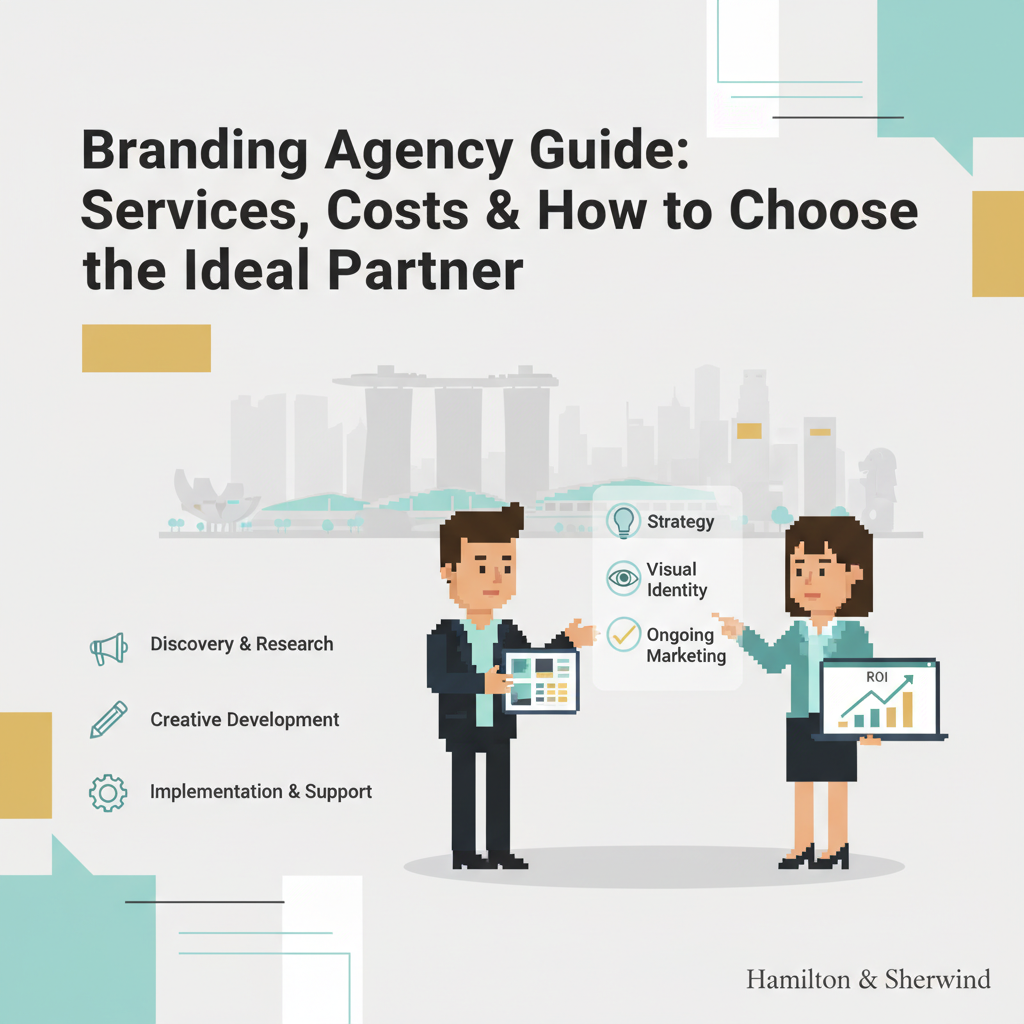
Branding Agency Guide: Services, Costs & How to Choose the Ideal Partner
Introduction: Why Your Brand Needs More Than a Logo
In today's hyperconnected marketplace, a logo alone won't cut it. Your brand is the sum of every interaction a customer has with your business—from the moment they discover you on TikTok Shop to the unboxing experience they share on Instagram. Yet many business leaders still view branding as a design exercise, something to tick off a checklist. The reality is far more strategic and far more valuable.
The global branding agency market reached approximately US$53 billion in 2024 and is projected to grow to US$56 billion in 2025, on its way to US$90 billion by 2033. This explosive growth reflects a fundamental shift: companies now recognize that professional branding isn't a luxury—it's a competitive necessity. Whether you're a Singapore-based fintech startup preparing for Series A funding, a Bangkok-based fashion brand expanding into Indonesia, or a mid-sized manufacturer looking to refresh your market position, the question isn't whether you need branding expertise. It's whether you have the internal resources to build it yourself, or whether partnering with a specialized branding agency makes more business sense.
This guide cuts through the noise. We'll explore what modern branding agencies actually do, decode the costs involved, and provide a practical framework for selecting the right partner for your business.
The Modern Role of a Branding Agency
The branding agency of 2025 bears little resemblance to the design studios of the past. Today's leading agencies operate as strategic architects, experience orchestrators, and growth partners rolled into one.
A modern branding agency doesn't simply "make logos." Instead, it owns the entire brand experience—from foundational market research and competitive positioning through to real-time optimization of campaigns running inside super-app ecosystems like Grab, Shopee, and Tokopedia. In Southeast Asia specifically, this expanded mandate reflects the region's unique market dynamics: over 75% of online traffic is mobile-first, social commerce and livestream shopping dominate consumer behavior, and brands must navigate 11 official languages plus hundreds of dialects while maintaining consistent positioning.
Here's what separates a true branding consultancy from a design vendor:
Strategic depth beyond aesthetics. A branding agency conducts primary and secondary research, performs competitive whitespace mapping, and uses AI-driven segmentation to predict customer buying triggers. They don't start with "What should the logo look like?" They start with "Who are we, why do we exist, and what unique value do we deliver?"
Multidisciplinary expertise. Modern branding services integrate strategy, creative design, data science, content production, and performance measurement. A brand strategy agency in Singapore might have researchers, strategists, designers, copywriters, video producers, and analytics specialists all collaborating on your project—not sequentially, but in parallel.
Always-on optimization. Unlike a one-time rebrand project, leading branding specialists now embed performance dashboards that connect brand-health metrics (awareness, consideration, preference) with lower-funnel business outcomes (conversion rates, social-commerce GMV, customer lifetime value). This allows real-time refinement of messaging, visual identity, and activation tactics.
Regional and cultural fluency. In SEA, a branding consultancy worth its salt understands the nuances of local markets. They know that a campaign resonating with Gen‑Z consumers in Jakarta may need significant adaptation for Bangkok or Ho Chi Minh City. They manage nano-influencer partnerships (1,000 to 10,000 followers), design for super-app mini-shops, and produce content optimized for vertical video and livestream formats.
Purpose and sustainability integration. Younger SEA consumers demand proof, not pledges. Leading branding agencies now embed ESG narratives, sustainability storytelling, and purpose-driven positioning into brand strategy—and they audit claims to prevent greenwashing accusations.
If you are exploring these capabilities in a potential partner, reviewing a specialist page such as a dedicated branding services overview will help you understand how strategy, creativity and execution come together in practice.
Core Branding Services Explained
When evaluating a branding agency, it helps to understand the main service buckets. Most comprehensive branding engagements combine elements from all three categories below, though the emphasis varies based on your business stage and objectives.
Strategy & Positioning
This is the foundation. Brand strategy work answers the fundamental questions: Who are we? Why do we exist? What do we stand for? What unique value do we deliver?
A brand strategy engagement typically includes:
- Market and competitive research. The agency conducts interviews with customers, analyzes competitor positioning, maps market whitespace, and identifies emerging trends in your category. In SEA markets, this often includes social listening across TikTok, Instagram, Shopee, and regional platforms like Zalo and Line.
- Customer segmentation and persona development. Using both qualitative research and AI-driven analytics, the agency builds detailed customer personas that go beyond demographics. They identify psychographic traits, purchase triggers, content preferences, and channel behaviors. For example, a fintech brand might discover that their primary growth segment is "ambitious Gen‑Z professionals in tier‑2 cities who value financial independence and community."
- Brand positioning and messaging architecture. The agency distills your positioning into a clear, defensible statement—your "positioning territory." They then develop proof points and messaging pillars that can flex across different contexts: investor decks, TikTok captions, LinkedIn thought leadership, customer support interactions, and internal culture communications.
- Purpose and values definition. For many brands, especially in SEA where younger consumers are increasingly values-driven, the agency helps articulate your brand purpose (why you exist beyond profit) and core values. This becomes the north star for all downstream decisions.
- Employer brand and culture strategy. A growing part of brand strategy work involves defining how you attract, retain, and engage talent. This is particularly important in competitive SEA markets where Gen‑Z talent expects flexible work, mental health support, and rapid career progression.
Typical deliverables: Brand strategy document (20‑40 pages), positioning statement, messaging framework, customer personas, competitive analysis, brand guidelines, and internal culture playbook.
Timeline: 8‑12 weeks for a comprehensive brand strategy engagement.
Visual Identity & Design
Once strategy is locked, visual identity brings it to life. This is where many people think branding begins—but it's actually the second act.
A comprehensive visual identity system includes:
- Logo design and evolution. The agency develops a primary logo mark, wordmark, and lockup variations. In 2025, this extends beyond static logos to include motion behavior (how the logo animates in Reels, TikTok, and video content), responsive scaling for super-app mini-shops, and even sonic identity (a distinctive sound or audio signature).
- Typography system. The agency selects primary and secondary typefaces that reinforce your brand personality. For SEA brands, this often involves careful consideration of how fonts render across multiple languages—Bahasa Indonesia, Thai, Vietnamese, and Tagalog all have different character sets and spacing requirements.
- Color palette and usage guidelines. Beyond the obvious primary and secondary colors, the agency defines accent colors, neutral palettes, and color psychology principles. They also specify how colors should be applied across digital (RGB), print (CMYK), and super-app environments (which may have specific color limitations).
- Photography and illustration style. The agency develops a visual language for imagery—whether that's a specific photography style (lifestyle, product-focused, documentary), illustration approach, or a blend. This is critical for social commerce, where visual consistency across Shopee, Lazada, and TikTok Shop directly impacts conversion rates.
- Design system and component library. For brands with significant digital presence, the agency creates a reusable design system—buttons, cards, layouts, spacing rules—that allows internal teams and partners to create on-brand content at scale.
- Brand applications. The agency designs how the visual identity appears across key touchpoints: website, mobile app, packaging, business cards, email templates, social media templates, and super-app storefronts.
For examples of how a brand design agency applies identity work across touchpoints, you can review a full branding and design services page as a reference.
Typical deliverables: Brand guidelines (50‑100 pages), logo files in multiple formats, color specifications, typography guidelines, photography/illustration style guide, design system, and application mockups.
Timeline: 6‑10 weeks for visual identity design (often running in parallel with strategy).
Ongoing Brand Marketing Support
Many brands underestimate the value of ongoing branding support. A rebrand is a moment in time, but brand building is continuous. Leading branding agencies now offer:
- Content strategy and production. The agency develops a content calendar aligned with your brand positioning and produces high-volume short-form video, social media content, and livestream scripts. In SEA, this often includes content optimized for TikTok Shop, Shopee Live, and LazLive.
- Social commerce optimization. The agency designs and optimizes your storefronts on Shopee, Lazada, Tokopedia, and other platforms. This includes product photography, listing copy, promotional graphics, and livestream show flow.
- Influencer and creator partnerships. Rather than chasing mega-influencers, leading agencies now manage rosters of nano-influencers (1,000‑10,000 followers) who have authentic connections with niche communities. The agency handles vetting, briefing, compliance, and performance tracking.
- Brand health tracking and reporting. The agency sets up dashboards that measure brand awareness, consideration, preference, and NPS alongside conversion metrics and social-commerce GMV. This allows you to see how brand-building efforts translate to business outcomes.
- Crisis management and reputation monitoring. The agency monitors social sentiment, flags emerging issues, and activates response protocols. In SEA's fast-moving social media environment, this real-time capability is invaluable.
- Localization and regional adaptation. For brands expanding across SEA, the agency manages localization of messaging, visuals, and content across multiple languages and cultural contexts.
Typical engagement model: Monthly retainer (SGD 5,000‑20,000+ depending on scope) or project-based fees for specific initiatives. Many full-service partners combine branding with digital marketing services so strategy and execution stay aligned.
Signs It's Time to Bring in Outside Expertise
Not every business needs a branding agency. But certain situations strongly suggest that professional help will deliver outsized returns:
You're launching a new business or entering a new market. If you're a founder preparing to launch a startup or an established company expanding into a new geography (say, a Thai brand entering the Indonesian market), a branding agency can compress months of trial-and-error into weeks. They bring market knowledge, competitive intelligence, and a proven methodology that dramatically increases your odds of resonating with the target audience.
Your brand positioning is unclear internally. If your leadership team can't articulate your positioning in a consistent way, or if different departments have different understandings of what your brand stands for, it's time for a branding consultancy. This internal misalignment inevitably leaks into customer communications, creating confusion and diluting your market impact.
You're losing market share to competitors with stronger brand positioning. If you're competing on price alone, or if customers can't articulate why they should choose you over alternatives, a brand strategy agency can help you identify and own a defensible positioning that commands premium pricing and customer loyalty.
Your visual identity feels dated or misaligned with your current positioning. If your logo, color palette, or overall aesthetic no longer reflects who you are or where you're going, a rebrand can signal transformation to both internal stakeholders and external audiences. This is particularly powerful for companies pivoting their business model or expanding into new customer segments.
You're preparing for a major milestone. Whether it's Series A funding, an IPO, a merger, or a significant product launch, these moments are ideal times to invest in professional branding. Investors, partners, and customers all form impressions based on how you present yourself. A polished, strategic brand positioning and visual identity can meaningfully impact outcomes.
You're struggling to attract and retain top talent. Your employer brand is part of your overall brand. If you're losing candidates to competitors or experiencing high turnover, a branding agency can help you articulate your culture, values, and career opportunities in ways that resonate with your target talent profile.
You're expanding your product or service portfolio. When you're no longer a single-product company, your brand architecture becomes complex. A branding agency can help you decide whether to use a house-of-brands model (separate brands for each product), an endorsed model (products under a master brand), or something in between.
If several of these signs feel familiar, browsing real-world case work—such as Hamilton & Sherwind's branding projects linked from their services overview—can help you visualize what a partnership might achieve.
How to Evaluate and Compare Potential Partners
Selecting the right branding agency is one of the most important decisions you'll make. Here's a practical framework:
Assess their strategic depth, not just design aesthetics. Review their case studies and ask: Do they articulate the strategic thinking behind the visual design? Can they explain the positioning, target audience, and business objectives? Or do they just show pretty pictures? The best agencies lead with strategy and use design to bring it to life.
Look for relevant industry and market experience. While agencies shouldn't be pigeonholed into one vertical, relevant experience matters. If you're a fintech brand, an agency with a strong fintech portfolio will understand your competitive landscape, regulatory considerations, and customer psychology. For SEA expansion, look for agencies with on-ground teams or deep networks in your target markets.
Evaluate their team composition. Ask who will actually work on your project. Will you have a dedicated strategist, designer, and account lead? Or will you be handed off to junior team members? The best agencies maintain continuity and assign senior talent to client work. For SEA-focused work, confirm they have native speakers and cultural experts for your target markets.
Review their measurement and reporting approach. Ask how they define success and what metrics they'll track. Do they connect brand-building efforts to business outcomes? Can they show examples of how their work has impacted client metrics like awareness, consideration, conversion, or customer lifetime value? Agencies that can't articulate this are likely to deliver beautiful work that doesn't move the needle.
Test their understanding of your market. In initial conversations, do they ask smart questions about your competitive landscape, customer behavior, and business objectives? Or do they jump straight to "Here's what we'd do"? The best agencies spend time understanding your specific context before proposing solutions.
Check references and case studies carefully. Ask for references from clients in similar situations to yours. When reviewing case studies, look for:
- Clear articulation of the business challenge
- Evidence of strategic thinking, not just design execution
- Measurable business outcomes (not just "the client loved it")
- Longevity of the work (did the rebrand stick, or did the client move on quickly?)
Understand their process and timeline. Ask them to walk you through their typical engagement process. How many discovery weeks? How many rounds of revisions? What's included vs. what's extra? A clear, transparent process is a good sign. Vague timelines and undefined scope are red flags.
Assess cultural fit and communication style. You'll be working closely with this agency for months. Do they communicate in a way that resonates with you? Are they collaborative or prescriptive? Do they seem genuinely interested in your business, or are they just going through the motions? Trust your gut here.
Red flags to watch for:
- Agencies that promise guaranteed results or claim they can "make you viral"
- Agencies that can't articulate their strategic approach or methodology
- Agencies that want to start designing before they've done discovery
- Agencies with no experience in your market or industry
- Agencies that are evasive about pricing or scope
- Agencies that don't ask questions about your business, customers, or objectives
A practical way to deepen this evaluation is to compare how different firms present their methodology on their websites. For instance, contrast a generic creative shop with a more structured partner whose branding service description clearly explains discovery, strategy, design and rollout phases.
Budget, Timeline, and Measuring ROI
Let's talk money and timelines—the practical questions that often determine whether a branding engagement happens.
Typical branding agency costs in Singapore and SEA:
The range is wide, but here's what you can generally expect:
- Logo design only (design vendor, not strategy): SGD 2,000‑8,000. This is the low end and typically doesn't include strategy or brand guidelines.
- Brand strategy + visual identity (comprehensive rebrand): SGD 25,000‑80,000+. This is the sweet spot for most mid-sized businesses. It includes discovery, strategy development, visual identity design, and brand guidelines.
- Full brand transformation (strategy + visual identity + brand guidelines + content strategy + initial content production): SGD 80,000‑200,000+. This is typical for companies doing a major rebrand or preparing for significant growth.
- Ongoing brand support (monthly retainer): SGD 5,000‑20,000+ per month. This covers content production, social media management, brand health tracking, and strategic guidance.
- Performance-based or hybrid models: Increasingly common in SEA, where agencies tie a portion of fees to business outcomes (e.g., conversion rate improvements, social-commerce GMV growth). This might look like a base retainer plus a performance bonus.
What influences pricing:
- Scope and complexity. A simple logo refresh costs less than a full rebrand across 50+ touchpoints.
- Geographic scope. A single-market brand costs less than a multi-market, multi-language brand.
- Agency seniority and location. A boutique agency in Bangkok might charge 30‑40% less than a top-tier agency in Singapore, but you may sacrifice strategic depth or regional expertise.
- Timeline. Rush projects cost more. A 4‑week rebrand costs significantly more than a 12‑week rebrand.
- Ongoing support. Agencies that commit to long-term partnerships often offer better pricing than one-off projects.
Typical project timeline:
A comprehensive branding engagement typically takes 12‑16 weeks:
- Weeks 1‑3: Discovery, research, stakeholder interviews
- Weeks 4‑6: Strategy development and positioning workshops
- Weeks 7‑10: Visual identity design and refinement
- Weeks 11‑14: Brand guidelines development and application design
- Weeks 15‑16: Final refinements and handoff
Ongoing support engagements typically start after the initial project concludes, though many agencies now run strategy and execution in parallel to accelerate time-to-market.
Measuring ROI and brand impact:
This is where many companies struggle. Brand building is a long-term investment, not a short-term tactic. That said, you should absolutely measure impact. Here's how:
Brand awareness and perception metrics:
- Aided and unaided brand awareness (measured via surveys)
- Brand consideration and preference (what percentage of your target audience would consider buying from you?)
- Net Promoter Score (NPS) and customer satisfaction
- Brand sentiment analysis (social listening across platforms)
Business metrics:
- Website traffic and engagement
- Social media follower growth and engagement rates
- Email list growth and open rates
- Sales pipeline growth and conversion rates
- Customer acquisition cost (CAC) and customer lifetime value (LTV)
- Social-commerce GMV (for e‑commerce brands)
- Market share and pricing power
Timeline for seeing results:
This varies, but here's a realistic expectation:
- Immediate (0‑3 months): Visual identity refresh generates internal excitement and external awareness. You'll see social media buzz, press coverage, and customer comments.
- Short-term (3‑6 months): Brand awareness metrics begin to shift. Website traffic may increase. Social-commerce conversion rates may improve as the new visual identity rolls out.
- Medium-term (6‑12 months): Positioning and messaging begin to influence customer perception and purchase decisions. You'll see measurable shifts in brand consideration and preference.
- Long-term (12+ months): The full impact emerges. Brands with strong positioning and consistent execution see improved pricing power, customer loyalty, and market share gains.
The key is to establish baseline metrics before the rebrand, then track them consistently afterward. A good branding agency will help you set up this measurement framework and provide regular reporting, often as part of a broader integrated services engagement.
Conclusion: Turning Brand Vision into Business Value
A branding agency is more than a design vendor. It's a strategic partner that helps you clarify who you are, communicate that clearly to your market, and build a sustainable competitive advantage.
In Southeast Asia's fast-moving, mobile-first, super-app-driven marketplace, professional branding has become essential. Whether you're a Singapore fintech preparing for Series A, a Bangkok fashion brand expanding regionally, or a Jakarta e‑commerce company fighting for market share, the right branding partner can compress years of trial-and-error into months of focused execution.
The investment is real—typically SGD 25,000‑200,000+ for a comprehensive rebrand, plus ongoing support costs. But the returns are equally real: stronger market positioning, improved customer loyalty, better pricing power, and a clearer internal culture. Companies with strong brands outperform their competitors, attract better talent, and command premium valuations.
The key is to approach the selection process strategically. Look beyond portfolios and pricing. Assess strategic depth, market expertise, measurement capability, and cultural fit. Ask tough questions. Check references. Trust your instincts.
If you want to see how a regional brand marketing agency structures its work—from foundational strategy through to creative execution and digital rollout—you can explore Hamilton & Sherwind's overview of branding and other connected services.
Ready to explore how professional branding can transform your business in Singapore or across Southeast Asia? Contact us today for a confidential consultation with our branding specialists. We'll help you assess whether a branding engagement makes sense for your business and outline a tailored approach that fits your timeline and budget: https://hamiltonsherwind.com/contact/