

Best Branding Agency Singapore: How to Choose the Right Partner in 2026
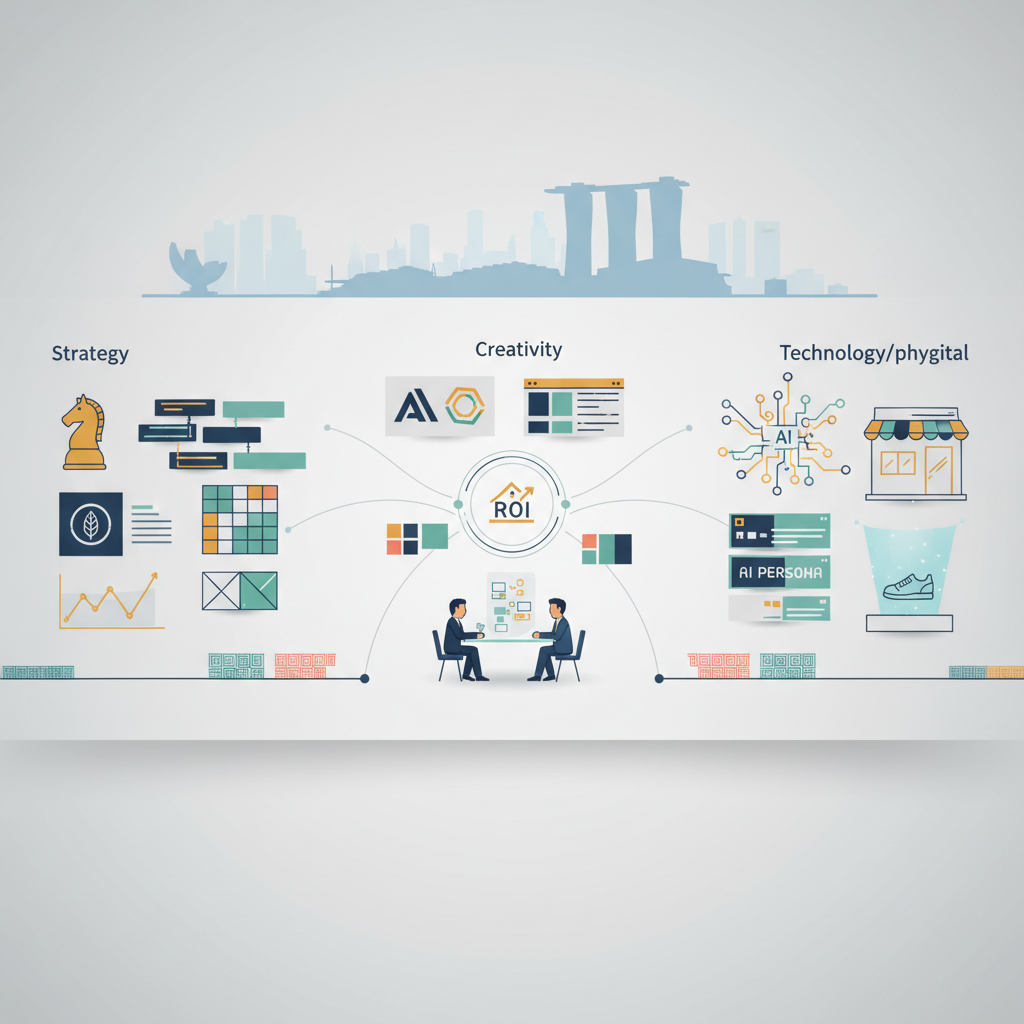
Introduction – Why Strategic Branding Matters for Singapore Businesses
In a city-state where competition is fierce and consumer attention is fragmented across digital and physical channels, your brand is often the only differentiator between market leadership and obscurity. Singapore’s business landscape—whether you’re a fast-growing fintech, a heritage FMCG player, or a B2B services firm—demands more than a logo. It demands a coherent, measurable, and adaptive brand strategy that resonates across your target audience and drives tangible business outcomes.
The stakes have risen considerably since 2024. Singapore’s regulatory environment now expects transparency: listed companies must disclose brand equity as a material intangible asset under SGX Rule 711B, while SMEs seeking Enterprise Development Grant (EDG) support must demonstrate clear ROI on branding investments within 12–18 months. Simultaneously, your customers—whether in Singapore or across Southeast Asia—expect brands to be purposeful, digitally native, and responsive to their evolving values around sustainability and authenticity.
This is where the right branding agency becomes a strategic partner, not just a vendor. A modern branding agency in Singapore combines rigorous market research, culturally aware creative thinking, and data-driven measurement to build brands that endure. But choosing the right partner requires clarity on what you’re actually buying, how to evaluate candidates, and what returns you should expect.
This guide walks you through the decision framework, the investment landscape, and the emerging trends shaping brand strategy in 2026—so you can partner with a branding agency that genuinely elevates your business.
Defining a Modern Branding Agency: Core Services & Deliverables
A branding agency in Singapore today is fundamentally different from the design studios of a decade ago. Modern agencies operate as hybrid strategic-creative partners, combining deep market insight, systematic identity design, and ongoing performance measurement.
Core service clusters typically include:
Brand strategy and positioning form the foundation. This involves customer research (interviews, ethnographic studies, AI-powered sentiment analysis), competitor audits, and internal stakeholder workshops to define your brand’s purpose, vision, and positioning. Leading agencies now use proprietary frameworks—such as Hamilton & Sherwind’s quantitative brand-valuation methodology or Superunion’s BAV diagnostic—to ground strategy in data rather than intuition. This phase typically costs S$30–150k for boutique consultancies and is often the most valuable investment you’ll make.
Brand identity design remains the visible heart of most engagements. This encompasses logo systems (responsive across digital, print, and motion), colour palettes with accessibility ratios, typography specifications, iconography, photographic style guides, and motion principles for digital products. Design-focused studios quote S$15–80k for the creative portion; larger networks bundle this with strategy and copy, often exceeding S$150k.
Verbal identity and naming have become increasingly sophisticated. If you’re launching a new product, entering a new market, or rebranding entirely, naming requires linguistic screening (to avoid cultural missteps across English, Mandarin, Malay, and Tamil), trademark clearance, and domain availability checks. Standalone naming projects run S$20–40k; many agencies fold this into broader strategy retainers.
Messaging architecture and tone-of-voice systems define how your brand communicates. Modern guidelines now include elevator narratives, value propositions segmented by audience, key proof points, and—increasingly—AI-prompt libraries so your internal teams can generate on-brand copy at scale. This ensures consistency across email, social media, website, and customer service.
Rebranding and brand refresh programmes are driven by funding rounds, M&A activity, or market repositioning. Hamilton & Sherwind’s data indicates that a significant portion of local SMEs have rebranded in the past two years as they digitalise and regionalise. Enterprise-scale rebrands with global rollout and change-management workshops frequently exceed S$300k.
Brand governance and ongoing management are now standard retainers (S$5–30k per month). These cover asset policing, template creation, rapid design requests, and quarterly brand-health reporting—ensuring your brand remains coherent as your business evolves.
Experience and digital rollout are no longer afterthoughts. Modern agencies prototype the website, mobile UI, and key social assets first, recognising that digital touchpoints form the primary brand encounter for most audiences. This includes interactive brand hubs, Figma design systems, and Webflow-based website templates. Here, partnering with a full-service creative and digital marketing agency such as Hamilton & Sherwind helps ensure your brand translates seamlessly into campaigns and content.
Employer branding and internal engagement have emerged as a fast-growing line item, combining employee value proposition (EVP) definition, careers-site design, and LinkedIn content toolkits—critical for attracting talent in Singapore’s competitive market.
Sustainability and purpose branding are increasingly non-negotiable. Agencies now help clients develop ESG narratives that satisfy SGX sustainability-reporting rules while avoiding greenwashing accusations. This includes lifecycle-analysis infographics, provenance storytelling, and annual impact scorecards.
Typical deliverables in a comprehensive 2026 branding project include:
- Discovery report with market, competitor, and audience insights
- Brand purpose, vision, and mission framework
- Positioning statement and value-proposition matrix by segment
- Master logo system (horizontal, stacked, icon-only, responsive variants)
- Colour and type specifications with digital accessibility ratios
- Iconography and illustration style sheets
- Motion and micro-interaction guidelines for digital products
- Photographic and video style boards
- Verbal identity manual with key messages, taglines, and boilerplate
- Interactive brand hub or BrandHub portal
- Website UI kit or full site design
- Social-media launch kit with profile avatars, highlight covers, and launch posts
- Brand-training workshop decks and change-management playbook
- KPI framework and performance dashboard to track awareness, perception, and business impact
What distinguishes a truly modern agency is the integration of these elements. Rather than handing you a static PDF guideline, leading Singapore agencies now deliver interactive Figma systems, Notion-based brand hubs, and real-time dashboards that track brand health and allow rapid iteration.
For a sense of how this looks in practice, you can explore Hamilton & Sherwind’s core branding services in Singapore and associated branding case studies.
Decision Framework: Shortlisting Branding Agency Singapore Candidates
Choosing a branding agency is one of the most consequential decisions a marketing leader can make. You’ll be collaborating intensively for months, sharing strategic insights, and trusting the agency to represent your brand to the world. A poor choice can waste budget and damage your market position; a great choice can accelerate growth and unlock new opportunities.
Start by defining your own brief. Before you approach agencies, clarify:
- Your core business problem (launch, reposition, M&A, overseas expansion, employer-brand lift)
- Required work-streams (strategy only, or strategy plus identity plus digital rollout?)
- Budget range and desired timeline
- Internal decision-makers and sign-off gates
- Whether you’re eligible for EDG co-funding (which requires an approved consultancy)
Agencies will qualify themselves quickly against this brief. A S$50k budget won’t attract a large global network; a six-week timeline won’t work for a full rebrand.
Shortlisting criteria that matter in Singapore’s market:
Strategic depth is non-negotiable. Look for evidence of rigorous research methodologies—customer interviews, competitor audits, AI-driven sentiment scraping—and proprietary frameworks that go beyond generic positioning templates. Ask how they validate insights and what happens if initial hypotheses prove wrong.
Creative calibre and versatility matter more than a single “house style.” Strong agencies show breadth of visual languages across categories. Critically, check whether their identities survive in digital, motion, and small-screen contexts—a 2026 must-have. A beautiful static logo that doesn’t animate or scale is a liability.
Industry or problem familiarity can be valuable. Regulated sectors (finance, healthcare, government) benefit from agencies that understand compliance gates and stakeholder alignment. Consumer lifestyle or hospitality may value culturally expressive studios. However, balance category knowledge with fresh eyes; too much sameness leads to me-too brands.
Team composition and seniority are often overlooked. Request to meet the actual working team, not just the pitch lead. Hamilton & Sherwind advises checking staff turnover; agencies that swap team members post-pitch are a common gripe. An ideal core includes a senior strategist, design director, verbal identity lead, and project manager who will stay with your account.
Cultural fit and working style matter because you’ll spend months in workshops together. Gauge responsiveness during early emails, whether they listen more than they sell, whether workshops are interactive or slide-heavy lectures, and whether they’ll co-locate with your team or work remotely.
Measurement mindset is increasingly important. Modern agencies propose KPIs (brand-lift, search volume, revenue impact) upfront and bake dashboards into fees. If an agency can’t articulate how they’ll measure success, move on.
Accreditation and funding status matter if you’re tapping EDG support. The agency must be an approved consultancy. Many Singapore-focused firms, including Hamilton & Sherwind, design their consulting approach to meet EDG requirements for strategic brand development.
Portfolio interrogation requires looking beyond pretty logos. Ask for “before and after” evidence with business briefs and outcomes (sales growth, funding round, NPS lift). Does every logo look geometric and sans-serif, suggesting limited creative range? Can you see multi-touchpoint rollout (website, social templates, packaging, motion)? Are brands still in use three-plus years later, signalling effectiveness?
To see how integrated branding, digital and social media marketing come together, review not only an agency’s branding portfolio but also related digital marketing work.
Key questions to ask in chemistry meetings:
- How do you gather and validate customer insight?
- Walk me through a recent project from brief to launch—what went wrong and how was it fixed?
- How long is your typical sprint cycle and who attends workshops?
- How do you integrate AI or data into naming and design?
- Who exactly will work on our account? Can we meet them now?
- What other clients will compete for their time during our project window?
- Which KPIs do you recommend for a company of our size and sector?
- How will you track them post-launch and what does ongoing optimisation cost?
- What is in scope, out of scope, and how are change requests billed?
- Can you outline IP ownership and transfer timing?
SME-centric vs. enterprise-scale agencies serve different needs. SME specialists (often EDG-approved) have leaner teams, faster approvals, template-driven guidelines, and fees from S$25–80k. They provide more hands-on guidance on fundamentals like trademark registration and Canva template setup. Enterprise specialists and global networks have deeper research resources, stakeholder alignment workshops, multi-market testing, and fees exceeding S$300k. They’re used to steering committees, legal layers, and change-management programmes.
The RFP and pitch process in Singapore typically follows this arc:
- Stage 1: Credentials call or chemistry meeting (no spec work)
- Stage 2: Written RFP with problem statement, scope, budget band, and timeline
- Stage 3: Paid pitch or concept sprint (increasingly common)
- Stage 4: Reference calls, proposal refinement, procurement alignment
- Stage 5: Contract negotiation including milestones, kill-fees, IP transfer, and confidentiality
Reference checking and case-study validation are critical. Speak with at least three past clients—one recent, one in a similar sector, one from a “problem” project. Ask about timeline discipline, budget adherence, project management, and post-launch support. Confirm that named team members actually worked on the reference’s project. Request to see live brand assets (website, packaging) to ensure rollout integrity.
Common red flags in Singapore’s 2026 market include:
- “One-style” portfolios where identities look interchangeable
- Over-promising rapid timelines without discovery (strategy-lite work)
- Vague methodology slides (“we brainstorm, then magic happens”)
- Reluctance to discuss measurement or commercial impact
- Heavy reliance on freelancers without transparency
- High staff churn visible on LinkedIn
- Hidden costs for artwork adaptation, guideline portals, trademark search
- Pushy sales behaviour: large discounts for immediate signature, “secret formula” claims
Negotiation tips that work in Singapore’s market:
- Anchor on value, not hourly rates. Ask how the work will improve revenue, margin, or valuation.
- Break complex programmes into gated phases (discovery → strategy → identity → rollout) with exit ramps.
- Maintain a single feedback funnel on your side to avoid scope creep.
- Insist on a post-launch support window (30–90 days) baked into the fee.
Investment & Returns: Understanding Costs and Measuring ROI
Branding investment in Singapore has become increasingly transparent and measurable. Unlike the “soft” marketing spend of the past, today’s CFOs and boards expect clear ROI linkage. This shift is driven by three factors: EDG grant requirements, SGX disclosure rules, and the availability of sophisticated attribution models.
Cost ranges for branding work in Singapore vary widely by scope and agency tier:
- One-off SME identity package (strategy light + logo + guidelines): S$25–60k
- Full strategic rebrand for a mid-size company: S$120–300k
- Enterprise, multi-market rebrand with change-management: S$500k+
- Stand-alone naming project: S$20–40k
- Monthly governance or on-demand design retainer: S$5–30k
These figures exclude internal man-days, trademark and legal costs, media spend to introduce the new brand, and asset rollout (packaging, signage, retail). A realistic total investment for a mid-market rebrand often reaches S$200–400k when all costs are included.
Measuring ROI requires a three-layer framework:
Layer 1 – Brand perception KPIs (leading indicators) track every 3–6 months:
- Aided and unaided brand awareness (Omnibus surveys)
- Consideration and first-choice preference
- Brand attribute scores (“innovative,” “trustworthy,” “sustainable”)
- Net Promoter Score (NPS) or Customer Satisfaction Index
- Share of search (Google Trends volume for your brand vs. category)
- Social sentiment (AI text analytics in English, Mandarin, Malay)
Layer 2 – Behaviour and commercial KPIs (mid indicators) include:
- Website direct traffic and brand keyword traffic (GA4, Search Console)
- Conversion rate of branded vs. non-branded search campaigns
- Price premium realised (average selling price vs. private-label)
- Win-rate on B2B tenders where brand was cited as decision factor
- Cost-per-hire and unsolicited CV volume
Layer 3 – Financial impact (lagging indicators) encompasses:
- Revenue growth differential vs. category CAGR
- Gross-margin expansion attributable to price premium or lower discounting
- Customer lifetime value uplift (repeat-purchase frequency, churn decline)
- Market-share shift
- Valuation multiples (for funded start-ups, post-money multiple increase after rebrand)
- Brand value in dollars (using recognised valuation methods)
Setting targets before the project is essential. Baseline each metric at least one quarter before kick-off. Agree realistic lifts with your agency: e.g., +8 percentage points aided awareness in 12 months, 5% average selling price lift, 15% reduction in cost-per-lead. Link bonuses or phased payments to measurable milestones—increasingly common in 2026 statements of work.
Cost-benefit and payback calculations follow this logic:
- Total investment = agency fees + internal man-days + trademark/legal + media to introduce the new brand + asset rollout
- Quantify annual benefit: incremental gross profit from price premium, incremental gross profit from volume lift, hiring-cost savings, EDG reimbursement
- Payback period = Investment ÷ Annual benefit (Singapore SMEs typically target <24 months to satisfy grant auditors)
- Net present value at your weighted average cost of capital
- Brand return multiple = Cumulative five-year benefit ÷ Upfront cost
Formal brand-valuation methods used locally include:
- Royalty-relief based brand valuation (calculating post-tax brand-specific cash flows and comparable licensing royalty rate)
- ISO-compliant brand valuation frameworks
- Proprietary indices from valuation and research firms
Obtain an external valuation pre- and 18 months post-rebrand to evidence uplift for investors or M&A.
Attribution models that link brand activity to revenue include:
- Econometric and marketing-mix modelling (needs two years of weekly data but isolates the effect of “brand equity stock”)
- Multi-touch attribution in GA4 and Adobe (weight assists from video, display, and branded search)
- Share-of-search as proxy for share-of-market
- Pre/post regression with propensity scoring for B2B (match branded-content viewers vs. non-viewers in CRM)
Dashboarding and cadence should follow this rhythm:
- Monthly digital and CRM metrics → marketing team
- Quarterly brand-tracking survey → CMO and agency
- Semi-annual ROI and valuation update → CFO, board, Enterprise SG (if grant-funded)
Working with an integrated branding and digital marketing company in Singapore makes it easier to connect these dots from brand strategy to campaign performance.
2026 Trends Shaping Brand Strategy in Singapore
The branding landscape in 2026 is being reshaped by three converging forces: artificial intelligence, sustainability imperatives, and the blurring of physical and digital experiences. Understanding these trends helps you brief your agency effectively and future-proof your brand investment.
AI-Powered Customer Personas
Artificial intelligence has fundamentally changed how brands understand their audiences. Rather than relying on demographic segments (“25–34-year-old professionals”) or broad psychographic categories (“early adopters”), agencies now use large-language models to analyse online conversations and social content to surface white-space territories and micro-communities in hours rather than months.
This shift has several practical implications. First, customer personas are now dynamic and updated quarterly rather than static documents created once and forgotten. Second, brands can now segment audiences into psychographic tribes—not just “Gen Z” but specific communities with distinct values, language, and purchase drivers. Third, content strategies pivot from “broadcast to all” to “constant drip to a few,” using nano-influencers and private communities to build loyalty.
For your branding agency, this means insisting on AI-augmented insight gathering during the discovery phase. Ask how they’ll use AI to validate positioning hypotheses and identify emerging audience segments. The best agencies now include “AI-prompt libraries” in brand guidelines so your internal teams can generate social posts that stay on-voice at scale.
Sustainable Brand Storytelling
Sustainability has moved from a CSR add-on to the core narrative. Singapore’s regulatory environment for listed companies and exporters demands proof. Investors and regulators now expect sustainability pillars to be written into the brand purpose, not tacked on as an afterthought.
This creates both opportunity and risk. Brands that authentically embed sustainability into their identity can command price premiums and attract talent. Brands that greenwash face reputational backlash and scrutiny. Leading agencies now run “purpose viability scans”—cross-checking proposed brand stances against historical actions and supply-chain data to avoid accusations of inauthenticity.
Visual vernacular is evolving too. Rather than relying on green leaves and nature imagery, sophisticated brands now use colour systems (deep earths, electrified neons) and graphic devices (circular motion, “regeneration” textures) to signal progress. Claims are backed by lifecycle-analysis infographics, supply-chain traceability stories, and annual impact scorecards inside brand hubs.
When briefing your agency, ask how they’ll integrate sustainability into your brand purpose and visual identity. Request examples of brands they’ve repositioned around authentic sustainability narratives, and insist on clear metrics and reporting frameworks.
Phygital Experiences That Blend Online & Offline
The distinction between “digital” and “physical” branding has collapsed. Consumers now expect seamless experiences that blend online and offline touchpoints. NFC-enabled packaging opens AR stories; malls deploy mixed-reality storefronts that sync with visitors’ mobile wallets for personalised greetings. Pop-up “experience capsules” combine live workshops with VR product tests—measured with dwell analytics that feed CRM.
This trend has profound implications for brand identity systems. Retail signage and app UI now share motion behaviours defined once in the master brand-motion library. Identities are conceived to move—variable logos, kinetic type, responsive marks that scale from watch face to large-format screens. Print guidelines are now a secondary export; primary brand hubs are interactive Figma or Notion portals that auto-update assets and colour tokens.
For your branding agency, this means requesting “phygital blueprints” that map every physical touchpoint to a digital handshake. Ask how they’ll design identity systems in motion first, with static logos as secondary exports. Insist on interactive brand hubs rather than static PDF guidelines—and make sure their capabilities extend beyond identity into campaign and social media marketing so your brand experience is consistent end-to-end.
Case Study Spotlight: How a Local SME Partnered with a Brand Consultancy Singapore for Regional Growth
To illustrate how these principles work in practice, consider the experience of a mid-sized Singapore-based sustainable packaging company (anonymised here as “PackCo”). Founded in 2018, PackCo had grown to S$8 million revenue by 2024, serving primarily local FMCG brands. However, leadership recognised that regional expansion—into Malaysia, Indonesia, and Thailand—required a stronger, more differentiated brand identity.
PackCo’s original brand was functional but undifferentiated: a generic logo, minimal messaging, and no clear positioning. The company competed primarily on price and delivery speed, leaving little room for margin expansion. When PackCo approached a Singapore brand consultancy similar to Hamilton & Sherwind, the brief was clear: reposition as a premium, sustainability-focused partner for conscious brands across Southeast Asia.
The engagement unfolded in phases:
Discovery and strategy (8 weeks, S$45k): The agency conducted 15 customer interviews with FMCG brand managers across Singapore, Malaysia, and Indonesia. They analysed competitor positioning (both local and regional players) and ran AI-powered sentiment analysis on industry-specific forums and LinkedIn posts. The insight was striking: while sustainability was table stakes, FMCG brands were frustrated by packaging consultancies that treated sustainability as a cost burden rather than a brand asset. There was white space for a partner that could help brands monetise sustainability through premium positioning.
Positioning and naming (6 weeks, S$35k): Based on this insight, the agency developed a new positioning: “Sustainability as Competitive Advantage.” They workshopped a new brand name (the original name was too generic for regional expansion) and validated it across three markets for linguistic safety and trademark availability. The new name signalled innovation and regional ambition.
Identity design (10 weeks, S$60k): The agency designed a visual identity system that reflected the new positioning. Rather than relying on green imagery, they used a dynamic colour palette (deep forest, electrified teal, warm gold) and a responsive logo system that could adapt to different applications. Critically, they designed the identity in motion first—the logo animated smoothly across digital touchpoints, and the colour system included accessibility ratios for WCAG compliance. As part of the rollout, they collaborated with a video production team in Singapore to create a launch film that told PackCo’s new story.
Digital rollout and brand hub (8 weeks, S$40k): The agency redesigned PackCo’s website, built an interactive brand hub in Figma for internal use, and created a social-media launch kit. They also developed a “sustainability proof-point” section on the website, featuring lifecycle-analysis infographics and third-party certifications.
Total investment: S$180k over 32 weeks.
Outcomes (measured 12 months post-launch):
- Aided brand awareness in target markets increased from 12% to 34% (tracked via omnibus surveys)
- Average selling price increased 18% as customers perceived PackCo as a premium partner
- Regional revenue grew 42% YoY (vs. 15% pre-rebrand trend)
- Unsolicited CV volume increased 3.5×, improving hiring efficiency
- EDG grant reimbursed 50% of eligible consultancy fees, reducing net investment significantly
- Payback period: ~14 months
The rebrand didn’t just improve PackCo’s market position; it fundamentally changed how the company competed. By repositioning around sustainability as a competitive advantage (rather than a cost), PackCo unlocked pricing power, attracted better talent, and opened doors to regional expansion.
This case illustrates several principles: the importance of insight-led strategy, the value of regional market research, the integration of sustainability into core positioning (not as an add-on), and the measurable business impact of a well-executed rebrand. Reviewing real-life branding case studies from agencies you’re considering will help you assess whether they can deliver similar outcomes.
FAQ – Working With a Branding Partner: Timelines, Contracts, Collaboration
How long does a typical branding project take?
A full strategic rebrand typically takes 4–6 months from kick-off to launch. This includes discovery (4–6 weeks), strategy development (4–6 weeks), identity design (8–12 weeks), and rollout (4–8 weeks). Naming projects add 6–8 weeks. Simpler identity refreshes can compress to 8–12 weeks. Timelines depend on decision-making speed on your side; slow internal approvals are the most common cause of delays.
What’s included in a typical contract?
A statement of work should specify: scope of work (what’s included and excluded), timeline and milestones, fees and payment schedule, revision limits (e.g., “three rounds of feedback per phase”), IP ownership (typically the agency retains ownership until final payment, then transfers to you), confidentiality, and kill-fee provisions (what you owe if you terminate early). Reputable agencies will provide a detailed SOW before you sign; if they’re vague, that’s a red flag.
How many rounds of feedback should I expect?
Most agencies build 2–3 rounds of feedback into each phase. Beyond that, additional rounds are typically billed as change requests. To avoid scope creep, designate a single internal feedback funnel—one person who consolidates input from stakeholders and communicates to the agency. This prevents the agency from receiving conflicting direction.
Can I use EDG grants to fund branding work?
Yes, if you work with an EDG-approved consultancy. The grant can reimburse a substantial percentage of eligible costs (typically strategy, design, and brand-hub development, but not media spend or internal man-days). You’ll need to provide Enterprise SG with clear impact metrics 12–18 months post-project. Budget 2–3 weeks for grant application and approval.
What happens after launch? Do I need ongoing support?
Most agencies offer post-launch support windows (30–90 days) baked into the project fee. Beyond that, many offer monthly retainers (S$5–30k) for asset policing, template creation, rapid design requests, and quarterly brand-health reporting. This is valuable if you’re rolling out the brand across multiple markets or channels; it ensures consistency and catches issues early.
How do I measure whether the rebrand was successful?
Establish baseline metrics before the project kicks off: aided awareness, NPS, share of search, revenue, margin, and any category-specific KPIs. Track these quarterly for at least 12 months post-launch. Most brand lift accrues 6–18 months after launch, so patience is important. Work with your agency to set realistic targets; a 5–8 percentage point awareness lift in 12 months is solid.
What if I’m not happy with the creative direction?
This is why chemistry meetings and reference checks matter. If you’re unhappy early (during concept rounds), it’s easier to course-correct. If you’re unhappy after final delivery, you have limited recourse unless the work materially fails to meet the brief. To avoid this, be specific in your feedback: rather than “I don’t like it,” explain what’s not working (“The colour palette feels too corporate for our target audience”) and what you’d prefer to see.
Can I work with an agency remotely, or do they need to be in Singapore?
Many agencies now offer hybrid or fully remote engagement. However, in-person workshops during discovery and strategy phases are valuable for building alignment and generating ideas. If the agency is based overseas, factor in time-zone coordination and travel costs for key workshops.
What if I need to expand the scope mid-project?
Scope creep is common and can derail timelines and budgets. Most agencies will accommodate reasonable additions but will bill them as change requests. To manage this, be clear upfront about what’s in scope, and agree on a process for evaluating additions (e.g., “any new work requires written approval and a revised fee estimate”).
How do I know if the agency is using AI responsibly in the branding process?
Ask specifically how they’re using AI: for insight generation (sentiment analysis, persona clustering), naming ideation, design exploration, or copy generation. Reputable agencies will be transparent about where AI is used and will emphasise that human judgment—particularly cultural judgment—remains central to the process. Red flags include agencies that claim AI can replace human strategists or that use AI-generated imagery without disclosure.
Conclusion – Charting the Future of Your Brand
Choosing a branding agency in Singapore in 2026 is fundamentally about choosing a strategic partner who can help you navigate a complex, rapidly evolving market. The right agency will combine rigorous insight, culturally aware creativity, and data-driven measurement to build a brand that endures.
The decision framework outlined in this guide—defining your brief, shortlisting based on strategic depth and creative calibre, interrogating portfolios, asking tough questions, and checking references—will help you move beyond beauty parades to a rigorous, ROI-centred selection process.
Remember that branding is not a one-time project but an ongoing investment. The best agencies will help you establish measurement frameworks, build internal capability, and evolve your brand as your business and market change. They’ll integrate emerging trends—AI-powered personas, sustainable storytelling, phygital experiences—into your strategy from day one, ensuring your brand remains relevant and competitive.
The trends shaping 2026—AI augmentation, sustainability imperatives, and the blurring of physical and digital—are not optional. They’re reshaping how brands are built and how consumers engage with them. By partnering with an agency that understands these shifts and can operationalise them, you’re not just refreshing your brand; you’re future-proofing your business.
If you’re ready to explore how a strategic branding partnership can elevate your business, Hamilton & Sherwind’s branding services in Singapore and broader portfolio of work are a good starting point to see what’s possible.