

AI Marketing Guide for Singapore Businesses: Tools, Strategy & ROI
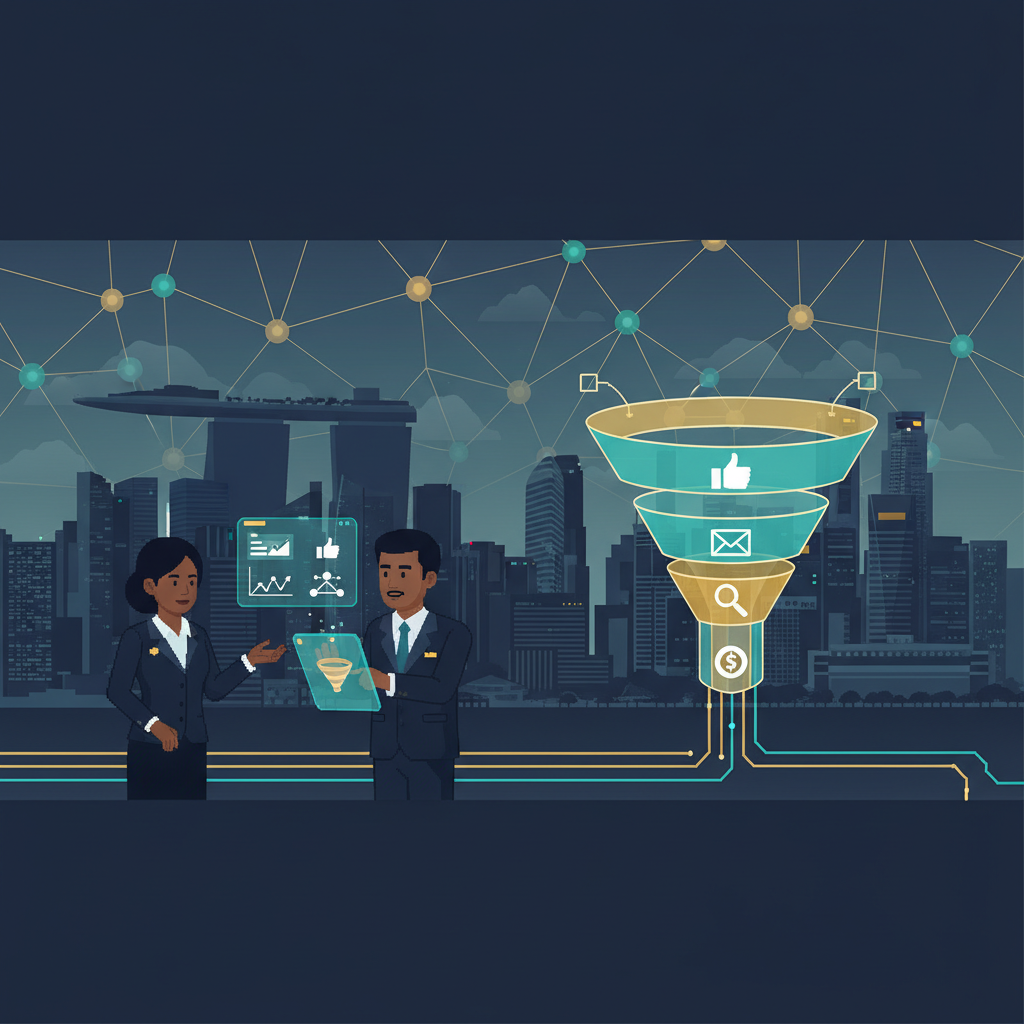
Why 2026 is the tipping point for AI-powered promotion
The convergence of three forces is reshaping how Singapore and Southeast Asian marketers operate in 2026. First, artificial intelligence has matured from a novelty into a practical necessity—78% of firms across the region now regularly use AI in some form, according to recent BCG research. Second, consumer expectations have shifted dramatically: 79% of Singaporeans prefer tailored experiences, yet only 40% trust companies to use AI responsibly. Third, data privacy regulations have tightened significantly, forcing a fundamental rethinking of how brands collect, store, and activate customer information.
This convergence creates both a challenge and an opportunity. The brands that navigate it successfully will unlock unprecedented competitive advantage. Those that don’t risk falling behind—or worse, facing regulatory penalties and customer backlash.
This article is designed for marketing leaders in Singapore and across Southeast Asia who recognize that AI marketing is no longer optional. Whether you’re running a fast-growing fintech startup, managing digital strategy for a regional ecommerce platform, or leading marketing at a traditional enterprise, you’ll find practical frameworks to evaluate AI tools, build implementation roadmaps, and measure success.
From automation to intelligence: How the discipline evolved
Key milestones that shaped today’s landscape
The journey from marketing automation to AI-powered intelligence spans roughly 15 years in the Singapore and Southeast Asian context. Understanding this arc helps explain why 2026 feels like a tipping point.
Between 2010 and 2015, cloud-based CRM platforms like Salesforce and HubSpot localized their interfaces for the region, and rule-based marketing automation took off. Banks such as DBS deployed early decision-tree engines to recommend products to customers on their digital banking platforms. These systems were powerful but rigid—they followed predetermined rules rather than learning from data.
The 2016-2019 period marked the arrival of predictive AI at scale. Grab built real-time offer-scoring systems for ride-hailing. Shopee and Lazada rolled out collaborative-filtering recommendation engines that learned which products customers were likely to buy based on browsing and purchase history. The Singapore government’s 2019 National AI Strategy explicitly named “customer-centric services” as a priority domain, signaling that AI in marketing was becoming a strategic imperative.
From 2020 to 2022, computer vision and speech models powered conversational commerce. WhatsApp Business API, combined with chatbots trained on Malay and Bahasa Indonesian, allowed SMEs in Malaysia and Indonesia to close sales directly within messaging apps. Regulators began issuing guidance: the Monetary Authority of Singapore introduced the FEAT principles (Fairness, Ethics, Accountability, and Transparency) to encourage responsible AI deployment in financial marketing.
The 2023-2025 period brought generative AI into the mainstream. In January 2023, Singtel piloted a GPT-powered ad-copy generator for SMEs, cutting the creative production cycle from five days to 30 minutes. By late 2023, the IMDA and AI Verify Foundation opened a Generative AI Evaluation Sandbox where regional martech vendors could test large language model (LLM) optimization tools. Today, leading ecommerce platforms like Shopee and Tokopedia are deploying “autonomous campaign engines”—LLMs that draft, budget, and A/B-test ads with minimal human intervention.
Shifts in consumer expectations and data privacy
The evolution of technology has been matched by a profound shift in what customers expect—and what regulators demand.
On the consumer side, the paradox is striking. Singaporeans rank among the highest globally in their preference for personalized experiences. Yet only 40% trust companies to use AI responsibly, and 58% fear misuse of their data. This trust gap is critical: brands that fail to address it will struggle to activate the very personalization that customers claim to want.
Behavior has shifted too. Direct feedback is declining—only 39% of customers complain after a bad experience. This means marketers must learn to read “silent signals”: social media sentiment, chat transcripts, browsing paths, and engagement patterns. Silence no longer equals satisfaction.
Customers also want a hybrid experience. Fifty-four percent still prefer human-assisted channels. Brands that blend automation with empathetic agents achieve 91% satisfaction, compared to just 28% for price-focused, purely automated interactions. The lesson is clear: AI marketing works best when it augments human judgment, not replaces it.
On the regulatory front, the landscape has tightened considerably. Singapore’s Personal Data Protection Act (PDPA) amendments, in force since 2021, increased penalties to up to 10% of revenue and introduced mandatory breach notification. The Personal Data Protection Commission (PDPC) issued specific advisory guidelines in March 2024 on using personal data in AI recommendation and decision systems, urging anonymization and safe synthetic-data generation.
Cross-border data flows have become more complex. The Transfer Limitation Obligation requires “comparable protection” for data moving across borders. Many firms now rely on ASEAN Model Contractual Clauses or APEC Cross-Border Privacy Rules certifications. Vietnam’s Personal Data Protection Decree (2023) requires security assessments before exporting databases, prompting regional data management platforms to run “clean rooms” in Singapore for audience modeling rather than transferring raw data.
Thailand’s PDPA (2022) and Indonesia’s Personal Data Protection Law (2022) introduced GDPR-style consent requirements and data localization rules. The cumulative effect: SEA brands are shifting from third-party cookie reliance to first-party and zero-party data strategies, building loyalty apps, and partnering with super-apps to access customer data in privacy-compliant ways.
Core technologies and data foundations
Machine learning, NLP, and predictive analytics explained in plain English
For marketers without a technical background, AI terminology can feel overwhelming. Let’s demystify the three core technologies powering modern AI marketing.
Machine learning is fundamentally about pattern recognition at scale. Imagine you’re a marketer trying to predict which customers are most likely to buy a new product. Traditionally, you’d create segments based on rules: “customers aged 25-35 who bought similar products in the past.” Machine learning does something more sophisticated. You feed the system historical data about who bought and who didn’t, and it identifies patterns you might never have thought to look for. Perhaps it discovers that customers who browsed product pages on Tuesday evenings and clicked through at least three times are 3x more likely to convert. Or that a specific combination of past purchases predicts future behavior better than age alone. The system learns these patterns automatically, and as new data arrives, it refines its understanding.
Natural language processing (NLP) teaches machines to understand human language. In marketing, this powers several applications. Chatbots use NLP to understand customer questions and generate helpful responses. Sentiment analysis tools scan social media and review sites to understand how customers feel about your brand. Content generation tools use NLP to draft email copy, social media posts, or ad headlines based on your brand voice and campaign objectives. The technology has advanced dramatically—modern LLMs can now generate marketing copy that’s indistinguishable from human-written content, and they can do it in multiple languages including Bahasa Indonesian, Thai, and Vietnamese.
Predictive analytics combines machine learning with business logic to forecast future outcomes. A bank might use predictive analytics to identify customers at risk of churning, so it can proactively offer retention incentives. An ecommerce platform might predict which customers are most likely to make a high-value purchase in the next 30 days, allowing the marketing team to prioritize budget toward those segments. A SaaS company might forecast which trial users will convert to paid plans, enabling sales teams to focus on the most promising prospects. The key insight: predictive analytics turns historical patterns into actionable forecasts.
Building the right data stack without breaking the bank
Many Singapore and SEA marketers assume that deploying AI requires massive infrastructure investment. In reality, smart choices can deliver sophisticated AI capabilities without excessive spending.
Start with your data foundation. You need a central repository where customer data from all sources—your website, CRM, email platform, social media, ecommerce system—can be unified. For SMEs, this doesn’t mean building a custom data warehouse. Cloud-based solutions like Segment, mParticle, or even simpler tools like Zapier can consolidate data from multiple sources into a single customer view. The cost is typically a few hundred to a few thousand dollars per month, depending on data volume.
Next, consider a Customer Data Platform (CDP). A CDP is specifically designed to unify customer data and activate it across marketing channels. Solutions like Segment, Tealium, or Treasure Data offer tiered pricing that scales with your needs. For early-stage companies, open-source alternatives like Rudderstack can reduce costs further. The CDP becomes your single source of truth for customer information, making it easier to build segments, personalize campaigns, and comply with privacy regulations.
For analytics and reporting, you don’t need expensive enterprise tools. Google Analytics 4 is free and increasingly powerful. For deeper analysis, tools like Mixpanel or Amplitude offer affordable plans for startups. If you need SQL-based analysis, cloud data warehouses like Snowflake or BigQuery offer pay-as-you-go pricing that’s accessible to smaller teams.
The critical principle: start with the data infrastructure that connects your existing tools, then layer in AI capabilities incrementally. Many platforms now embed AI features natively—HubSpot includes predictive lead scoring, Shopify has built-in product recommendations, and Meta’s advertising platform uses machine learning to optimize ad delivery. You don’t need to buy separate AI tools; often, the platforms you already use have AI capabilities you haven’t fully activated.
For teams with more sophisticated needs, consider building partnerships with regional AI agencies or consultants who can help you fine-tune models on your specific data. Singapore-based agencies increasingly offer this service, and the cost is often lower than building in-house AI teams—addressing the skills gap that 43% of Singapore firms cite as their top constraint.
Real-world use cases across the customer funnel
Acquisition: Smart targeting and programmatic ads
AI is transforming how brands find and reach new customers. The old approach—broad audience targeting with manual bid management—is giving way to intelligent, data-driven acquisition.
Consider programmatic advertising. Traditionally, a marketer might define an audience (e.g., “women aged 25-40 interested in fitness”) and set a bid price. The ad platform would show ads to that audience at that price. AI changes this fundamentally. Modern programmatic platforms use machine learning to predict which specific users are most likely to convert, and they adjust bids in real-time based on that prediction. A user browsing fitness content at 7 AM on a weekday might receive a higher bid than the same user browsing at 11 PM on a weekend, because the system has learned that morning browsers convert at higher rates.
Shopee and Lazada have deployed similar systems for their seller partners. When a seller launches a new product, the platform’s AI automatically identifies the most promising audience segments, allocates budget across channels (search, display, social), and optimizes bids hourly. The result: faster payback on ad spend and lower customer acquisition costs.
Smart targeting goes beyond programmatic ads. Brands are using machine learning to build “lookalike” audiences—finding new customers who resemble their best existing customers. Traditionally, this required uploading customer lists to ad platforms, raising privacy concerns. Privacy-respecting alternatives are emerging: some platforms now use on-device modeling (similar to Apple’s differential privacy approach) to build segments without uploading personally identifiable information.
For SMEs in Malaysia and Indonesia, WhatsApp Business API combined with AI-powered chatbots is becoming a powerful acquisition channel. A customer might discover a product on TikTok, click a link, and land in a WhatsApp conversation with a bot that answers questions and facilitates purchase—all without leaving the messaging app. The bot learns from each conversation, improving its responses over time.
Engagement: Dynamic content and journey orchestration
Once you’ve acquired a customer, AI helps you engage them more effectively throughout their journey.
Dynamic content personalization is the most visible application. Imagine a customer visits your ecommerce site. AI systems analyze their browsing history, past purchases, and behavior patterns to determine which products to show them. A customer who previously bought running shoes might see running apparel and accessories. Another customer who browsed but didn’t buy might see a discount offer. The content adapts in real-time based on what the system predicts will resonate.
Journey orchestration takes this further. Instead of sending isolated emails or ads, AI systems map out the entire customer journey and optimize each touchpoint. A customer might receive an email on Monday, see a retargeting ad on Wednesday, get a personalized product recommendation on Friday, and receive a special offer on Sunday—all timed and sequenced based on when the system predicts they’re most likely to engage.
Behavioral triggers power much of this. When a customer abandons a shopping cart, an AI system might immediately send an email with a product image and a discount code. When a customer views a product page three times without buying, the system might trigger a live chat offer. When a customer hasn’t visited in 30 days, the system might send a “we miss you” email with personalized recommendations. These triggers are no longer hard-coded rules; they’re learned patterns that the system continuously refines.
Conversational AI is another critical engagement tool. Chatbots powered by large language models can now handle complex customer service inquiries, answer product questions, and even facilitate upsells—all in natural, human-like language. For regional brands, multilingual chatbots trained on local languages are becoming standard. A customer in Bangkok can chat in Thai, a customer in Jakarta in Indonesian, and the system handles both seamlessly.
Retention: Churn prediction and next-best action
The most valuable AI applications often focus on retention—keeping existing customers engaged and preventing them from switching to competitors.
Churn prediction is the foundation. Machine learning models analyze customer behavior patterns to identify who’s at risk of leaving. A SaaS company might notice that customers who haven’t logged in for 14 days and haven’t used a key feature are 5x more likely to churn. A telecom company might identify that customers who’ve called customer service three times in a month are at elevated risk. Once identified, these at-risk customers can receive targeted retention offers: a discount, a feature upgrade, or a personal outreach from a customer success manager.
Next-best action systems take this further. Rather than sending the same retention offer to all at-risk customers, AI determines which offer is most likely to work for each individual. A price-sensitive customer might receive a discount. A feature-focused customer might receive a free upgrade to a premium tier. A customer who’s been with the company for years might receive a personalized thank-you and exclusive benefits. The system learns which interventions work best for different customer segments and continuously optimizes.
Loyalty programs are being reimagined with AI. Instead of static point systems, modern loyalty programs use machine learning to predict which rewards will most motivate each customer. A customer who frequently buys premium products might be offered exclusive early access to new launches. A customer who buys in bulk might be offered volume discounts. A customer who engages with the brand on social media might be offered exclusive content or community access. The rewards adapt to individual preferences, dramatically increasing engagement.
Regional examples abound. DBS Bank uses AI to predict which customers are likely to churn and proactively offers relevant financial products or service improvements. Grab uses churn prediction to identify drivers at risk of leaving the platform and offers targeted incentives. These applications have delivered measurable results: companies deploying churn prediction typically see 15-25% improvements in retention rates.
Evaluating AI marketing tools and local agencies
Feature checklist: Data integration, automation depth, and UX
When evaluating AI marketing tools or agencies, focus on three critical dimensions.
Data integration is foundational. Can the tool connect to your existing systems—your CRM, email platform, ecommerce system, analytics tools? Does it support real-time data sync, or only batch imports? Can it handle data from multiple sources and unify it into a single customer view? Poor data integration means you’ll spend months in implementation and never fully activate the tool’s potential. Look for platforms that offer pre-built connectors to common tools (Salesforce, HubSpot, Shopify, Google Analytics) and APIs for custom integrations.
Automation depth determines how much manual work you’ll still need to do. At the basic level, a tool might automate email sends based on triggers. At a more sophisticated level, it might automatically segment audiences, optimize send times, personalize content, and even adjust offers based on predicted conversion probability. Ask vendors: what decisions does your system make autonomously, and what decisions require human approval? The best tools find a balance—automating routine decisions while flagging important decisions for human review.
User experience matters more than you might think. A powerful AI tool that requires SQL queries or complex configuration will sit unused. Look for tools with intuitive interfaces, drag-and-drop campaign builders, and clear dashboards that show what the AI is doing and why. Can non-technical marketers use the tool, or does it require data science expertise? For regional teams, does the interface support local languages?
Vendor comparison framework tailored for Singapore SMEs
When comparing vendors, use this framework:
Fit with your tech stack. Does the vendor integrate with your existing tools? What’s the implementation timeline? Will you need to hire consultants, or can your team handle it?
Pricing model. Is it per-user, per-contact, or usage-based? Does it scale affordably as you grow? Are there hidden costs for premium features or high data volumes?
Regional support. Does the vendor have local presence in Singapore or Southeast Asia? Can they support you in English and local languages? Do they understand regional compliance requirements?
Proof of concept. Ask for a pilot program. Can you test the tool with a subset of your data before committing? What metrics will you use to evaluate success?
Customer references. Ask for references from similar companies in your region. What results did they achieve? How long was implementation? Would they recommend the vendor?
Roadmap alignment. Where is the vendor investing? Are they building features that matter to you? How often do they release updates?
For many Singapore SMEs, the best approach is to start with a platform you already use—HubSpot, Salesforce, Shopify—and activate its built-in AI features. These platforms have invested heavily in AI and offer good value for money. As you grow and your needs become more sophisticated, you can layer in specialized tools or partner with a local AI marketing agency.
Speaking of agencies: Singapore has a growing ecosystem of AI-enabled marketing agencies. When evaluating an agency, look for:
- Demonstrated expertise. Have they deployed AI marketing for companies in your industry? Can they show case studies with measurable results?
- Team composition. Do they have data scientists, engineers, and strategists? Or just marketers with AI training?
- Transparency. Will they explain their approach in plain language? Can you understand what they’re doing and why?
- Flexibility. Will they work with your existing tools, or do they insist on their own stack?
- Accountability. Are they willing to commit to specific KPIs and outcomes?
Crafting a roadmap: Strategy, budget, and compliance
Setting realistic goals, KPIs, and change-management plans
Successful AI marketing deployments start with clear strategy. Before you buy any tools or hire any agencies, answer these questions:
What problem are you solving? Are you trying to reduce customer acquisition costs? Improve retention? Increase average order value? Accelerate sales cycles? Different problems require different AI applications. Be specific.
What’s your baseline? What are your current metrics? If you’re trying to reduce CAC, what’s your current CAC? If you’re trying to improve retention, what’s your current churn rate? You need a baseline to measure progress.
What’s your target? What improvement are you aiming for? A 10% reduction in CAC? A 5% improvement in retention? Be realistic—AI typically delivers 10-25% improvements in key metrics, not 10x gains.
What’s your timeline? When do you need to see results? Most AI marketing initiatives take 3-6 months to show meaningful results. Plan accordingly.
What’s your budget? AI marketing tools range from a few hundred dollars per month to tens of thousands. Agencies range from SGD 5,000-10,000 per month for smaller engagements to SGD 50,000+ for comprehensive programs. Allocate budget for tools, people, and implementation.
Once you’ve defined strategy, establish KPIs. These should be specific, measurable, and tied to business outcomes. Examples:
- Reduce customer acquisition cost by 15% within 6 months
- Improve email open rates from 22% to 28% within 3 months
- Increase customer lifetime value by 20% within 12 months
- Reduce churn rate from 5% to 4% within 6 months
- Improve conversion rate from 2.5% to 3.2% within 4 months
Change management is often overlooked but critical. AI marketing changes how your team works. Your email marketers might need to learn new tools. Your product team might need to understand how AI recommendations work. Your leadership might need to trust algorithms with budget allocation decisions. Plan for this:
- Education. Invest in training. Many platforms offer free courses. Consider bringing in external trainers.
- Pilot programs. Start small. Test AI on a subset of your audience before rolling out broadly.
- Quick wins. Identify opportunities for fast results. Early wins build momentum and buy-in.
- Governance. Establish clear decision-making processes. Who approves AI-driven campaigns? What’s the escalation path if something goes wrong?
- Communication. Keep stakeholders informed. Share results regularly. Celebrate wins.
Navigating data and privacy expectations
Data privacy is no longer a compliance checkbox—it’s a competitive advantage. Customers increasingly choose brands they trust with their data.
Start with a data audit. What customer data do you collect? Where is it stored? Who has access? How long do you keep it? This audit will reveal gaps and risks.
Next, implement privacy by design. This means building privacy into your systems from the start, not bolting it on later. When you’re designing an AI marketing campaign, ask: what data do we really need? Can we achieve the same result with less data? Can we anonymize or aggregate the data?
First-party data should be your focus. Rather than relying on third-party cookies or data brokers, build direct relationships with customers. Loyalty programs, email subscriptions, and account creation all generate first-party data that customers knowingly share. This data is more valuable anyway—it’s more accurate and more privacy-compliant.
Consent management is critical. Ensure you have clear, documented consent for how you use customer data. Be transparent about what you’re doing. If you’re using AI to personalize recommendations, tell customers that. If you’re using predictive analytics to identify churn risk, be honest about it.
For regional operations, understand local requirements. Singapore’s PDPA is strict but clear. Thailand’s PDPA and Indonesia’s Personal Data Protection Law are similar. Vietnam requires security assessments before data export. Malaysia is developing its own framework. If you operate across multiple countries, implement the strictest standard across all markets—it’s simpler than maintaining different processes for each country.
Consider working with a data protection officer or consultant, especially if you’re handling sensitive data (financial, health, etc.). The cost is modest compared to the risk of non-compliance.
Measuring success and scaling wins
Attribution models, incrementality testing, and ROI tracking
Measuring AI marketing success is more nuanced than traditional marketing measurement. You need to understand not just what happened, but what would have happened without your AI intervention.
Attribution modeling answers the question: which touchpoints deserve credit for a conversion? Traditional last-click attribution gives all credit to the final touchpoint before conversion. But a customer might have seen your ad, visited your website, received an email, and then converted. Which touchpoint drove the conversion?
Multi-touch attribution models distribute credit across multiple touchpoints. Linear attribution gives equal credit to each touchpoint. Time-decay attribution gives more credit to recent touchpoints. Data-driven attribution uses machine learning to determine the optimal credit distribution based on historical conversion patterns.
For AI marketing, data-driven attribution is ideal. It can account for complex interactions between touchpoints and learn which combinations are most effective. However, it requires sufficient data—typically at least 15,000 conversions per month to be reliable.
Incrementality testing answers a deeper question: did your AI marketing campaign actually drive incremental sales, or would those sales have happened anyway? This is critical for understanding true ROI.
The gold standard is randomized controlled testing. You divide your audience into a test group (who receives the AI-driven campaign) and a control group (who doesn’t). You measure the difference in conversion rates between the two groups. That difference is the incremental impact of your campaign.
For example, you might run an AI-driven email campaign to 100,000 customers and hold out 10,000 as a control group. If the test group converts at 3% and the control group at 2.5%, the incremental lift is 0.5 percentage points. If your average order value is SGD 100, that’s SGD 500 in incremental revenue from the 100,000 test group. Subtract the cost of the campaign, and you have your ROI.
ROI tracking should be ongoing, not a one-time exercise. Set up dashboards that track:
- Cost per acquisition (CPA) for AI-driven campaigns vs. baseline
- Customer lifetime value (CLV) for customers acquired via AI campaigns
- Return on ad spend (ROAS) for programmatic campaigns
- Email engagement metrics (open rate, click rate, conversion rate)
- Churn rate for customers targeted with retention campaigns
- Average order value for customers who received AI-driven recommendations
Compare these metrics to your baseline and your targets. Are you on track? If not, investigate why. Is the AI model underperforming? Is the campaign poorly targeted? Is the offer not resonating?
Scaling wins requires discipline. Once you’ve identified a winning campaign or tactic, resist the urge to immediately scale it 10x. Instead, scale gradually:
- Week 1-2: Test at 2x current volume
- Week 3-4: Scale to 5x if results hold
- Week 5-6: Scale to 10x if results hold
- Ongoing: Monitor closely for degradation
Why? Because AI models can degrade as they scale. A model trained on 10,000 customers might perform differently on 100,000 customers. Audience saturation can occur—you run out of high-quality prospects and start reaching lower-quality ones. Market conditions change. By scaling gradually and monitoring closely, you catch problems early.
Key takeaways for getting started
The convergence of technology, consumer expectations, and regulation in 2026 creates a genuine inflection point for AI marketing in Singapore and Southeast Asia. Here’s how to move forward:
Start with strategy, not tools. Define the business problem you’re solving, set realistic targets, and establish clear KPIs. Only then evaluate tools and vendors.
Prioritize data quality and privacy. Your AI is only as good as your data. Invest in data infrastructure, implement privacy by design, and build customer trust through transparency.
Begin with quick wins. Identify opportunities where AI can deliver fast results—email optimization, churn prediction, product recommendations. Build momentum with early wins before tackling more complex initiatives.
Invest in your team. The skills gap is real. Allocate budget for training, hire or partner with AI expertise, and create a culture where your team is comfortable experimenting with new tools.
Measure rigorously. Use attribution modeling and incrementality testing to understand true ROI. Track metrics continuously. Scale gradually based on results.
Partner strategically. Whether you choose tools, agencies, or a combination, select partners who understand your business, your market, and your constraints. Look for local expertise and regional support.
Stay compliant. Understand data privacy requirements in each market where you operate. Build compliance into your processes from the start, not as an afterthought.
The brands that master AI marketing in 2026 won’t be those with the biggest budgets or the most sophisticated technology. They’ll be those that combine intelligent technology with human creativity, that respect customer privacy while delivering personalization, and that measure results rigorously while remaining flexible enough to adapt.
Ready to transform your marketing with AI?
The path from traditional marketing to AI-powered intelligence is clearer than ever, but it’s not a journey you need to take alone. At Hamilton & Sherwind, we combine deep creative expertise with cutting-edge AI capabilities to help Singapore and Southeast Asian brands unlock the full potential of intelligent marketing.
Whether you’re just beginning to explore AI marketing, looking to optimize existing campaigns, or ready to build a comprehensive AI-driven strategy, our team can guide you through every step. We understand the regional landscape—the regulatory nuances, the consumer expectations, the competitive dynamics—and we know how to translate AI capabilities into measurable business results.
We also bring integrated capabilities across digital marketing, social media, branding, advertising, and video production, so your AI strategy connects seamlessly with real-world campaigns and creative assets.
Explore our recent work in the digital marketing portfolio and social media portfolio to see how data, creativity, and technology come together in practice, and learn more about our story on the Who We Are page.
Let’s talk about your AI marketing opportunity. Contact us today to discuss how we can help you navigate 2026’s tipping point and build a marketing engine that’s both intelligent and human-centered.